
Demo Wizard is the Ultimate Store Sampling & Demonstration management software for Brick and Mortar Retailers and CPG Vendors.
Chat with us

Phone
Copyright © 2026 Demo Wizard
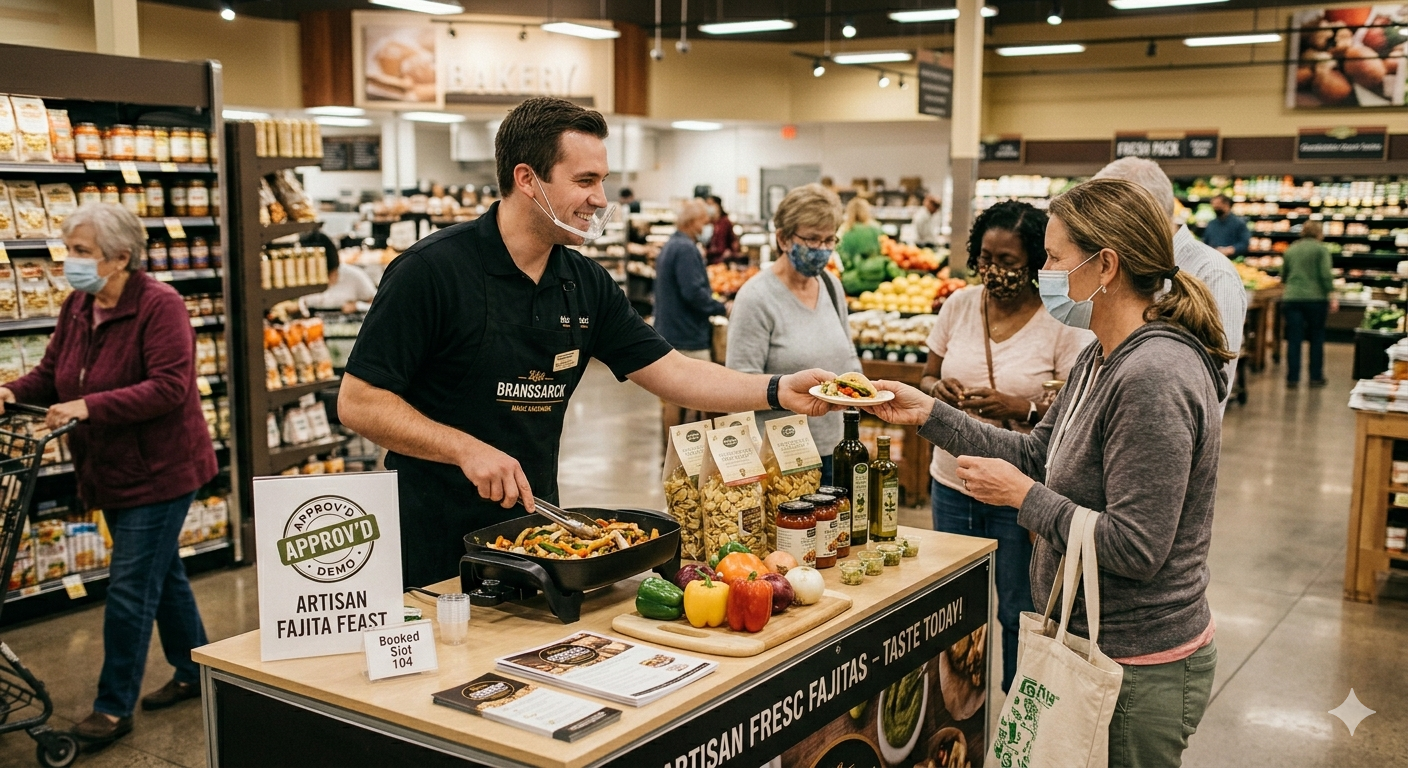
For years, major retailers have treated vendor-sponsored experiential marketing as an external activity managed through a fragmented web of spreadsheets and ad-hoc emails. It is time for retail executives to look at a better approach: transforming physical floorspace into a coordinated, automated asset that supports store managers rather than adding to their workload.
If you walk into any major grocery storefront on a Saturday afternoon, you will see a bustling theater of retail. Sizzling skillets, artisanal cheese displays, and brand ambassadors are actively turning passing foot traffic into paying customers through the power of in-store sampling.
To the marketing team at corporate, a weekend in-store demo looks like a beautiful win for shopper engagement.
But if you ask the store manager, they will tell you a completely different story. To them, that same in-store sampling event represents an unmanaged administrative headache. It’s a third-party contractor who showed up unannounced, an unexpected scramble to find an extension cord, a frantic search through the backroom for missing inventory, and a stack of unvetted compliance paperwork stuffed into a messy desk drawer.
For years, major retailers have treated vendor-sponsored experiential marketing as a passive sideshow—a floor activity managed through a chaotic web of corporate spreadsheets, ad-hoc emails, and frantic, last-minute phone calls to store operations.
It is time for retail executives to face an uncomfortable truth: Your sales floor is your highest-value asset. Leaving your in-store demo coordination to chance isn't just inefficient; it’s an operational risk.
Store managers are not cynical; they are intensely focused on what they can control. They are evaluated on a rigid, uncompromising set of metrics: labor efficiency, inventory shrink, shelf compliance, and store safety.
When a brand coordinator schedules an in-store demo, they typically hire a specialized third-party service provider to handle the labor, the food prep, and the execution. But while these service providers take the labor liability off the retailer's plate, a massive execution gap remains at the local store level.
Because the store manager rarely has advance visibility into the in-store sampling calendar, they get hit with the operational fallout. They become the emergency logistics coordinators and the cleanup crew.
When experiential marketing feels like an unbudgeted tax on store labor, store managers naturally withdraw. They become a passive, disinterested welcome party. An in-store demo fails because the featured product is stuck on a pallet in the back, cross-merchandised basket-builders aren’t pulled to the floor, and the event becomes a wasted opportunity for the brand, the service provider, and the store.
The solution isn't to force store managers to have "more vision." The solution is to deploy lightweight automation that bridges the communication gap.
Retailers don’t need to manage brand ambassadors or handle background checks to fix this. They simply need to replace fragmented manual workflows with an inexpensive, centralized communication and scheduling hub that links vendors, service providers, and store managers.
By treating physical floorspace with the same structure an airline treats seats or a hotel treats rooms, a retailer can transform a chaotic chore into an automated, streamlined workflow that actively protects store-level KPIs.
Instead of store managers playing phone tag with brand coordinators or field agencies to confirm dates, the platform acts as an automated receptionist. Retailers set the capacity rules for every store in the chain (e.g., Store #104 has two dry spots and one hot-cooking spot available on weekends). Authorized service providers log in, view real-time availability, and request their in-store sampling slots directly. The store manager doesn't manage schedules; they simply glance at a clean dashboard.
One slip-and-fall incident or an expired food safety license from an unvetted brand ambassador can cost a retailer hundreds of thousands of dollars. A dedicated platform serves as an automated digital velvet rope. A service provider physically cannot finalize an in-store demo request until the system forces them to attach and upload a current Certificate of Insurance (COI) and the necessary local health permits. By making these uploads a strict technical prerequisite to requesting a slot, the software completely insulates store operations from unauthorized, unpapered contractors—ensuring all necessary documentation is securely archived and accessible long before anyone steps onto the sales floor.
The biggest breakdown on the sales floor happens when the ambassador arrives but the product isn't ready or the store has a conflicting local promotion.
This platform solves that by introducing a clean, two-step request and approval loop. The vendor or service provider submits a highly detailed booking request, providing exact product SKUs, timing, and compliance attachments. The store manager or retail coordinator receives a simple "Approve/Deny" notification on their dashboard, ensuring they maintain 100% control over their calendar.
Once the retailer clicks "Approve," the system takes over—automatically pushing proactive, automated alerts directly to the specific store department heads days in advance (e.g., "Dairy Manager: Request approved. Pull 3 cases of SKU X for Saturday’s authorized in-store sampling".) It ensures the shelves are aligned to capture the natural multi-item basket-building momentum of the event.
When retail executives deploy a lightweight, automated communication hub, they aren't giving store managers more to do. They are automating a critical floor activity that is currently slipping through the cracks.
Corporate teams get predictable register rings from boosted baskets and zero operational drag. Store managers get an operational shield that eliminates administrative friction, protects their labor budget, and keeps their focus where it belongs: running a safe, profitable, beautifully stocked store.
It’s time to stop looking at the in-store demo as a passive, external event, and start managing your sales floor like the premium, high-yield retail real estate it actually is.
Demo Wizard is the Ultimate Store Sampling & Demonstration management software for Brick and Mortar Retailers and CPG Vendors.
Chat with usPhone