
Demo Wizard is the Ultimate Store Sampling & Demonstration management software for Brick and Mortar Retailers and CPG Vendors.
Chat with us

Phone
Copyright © 2026 Demo Wizard
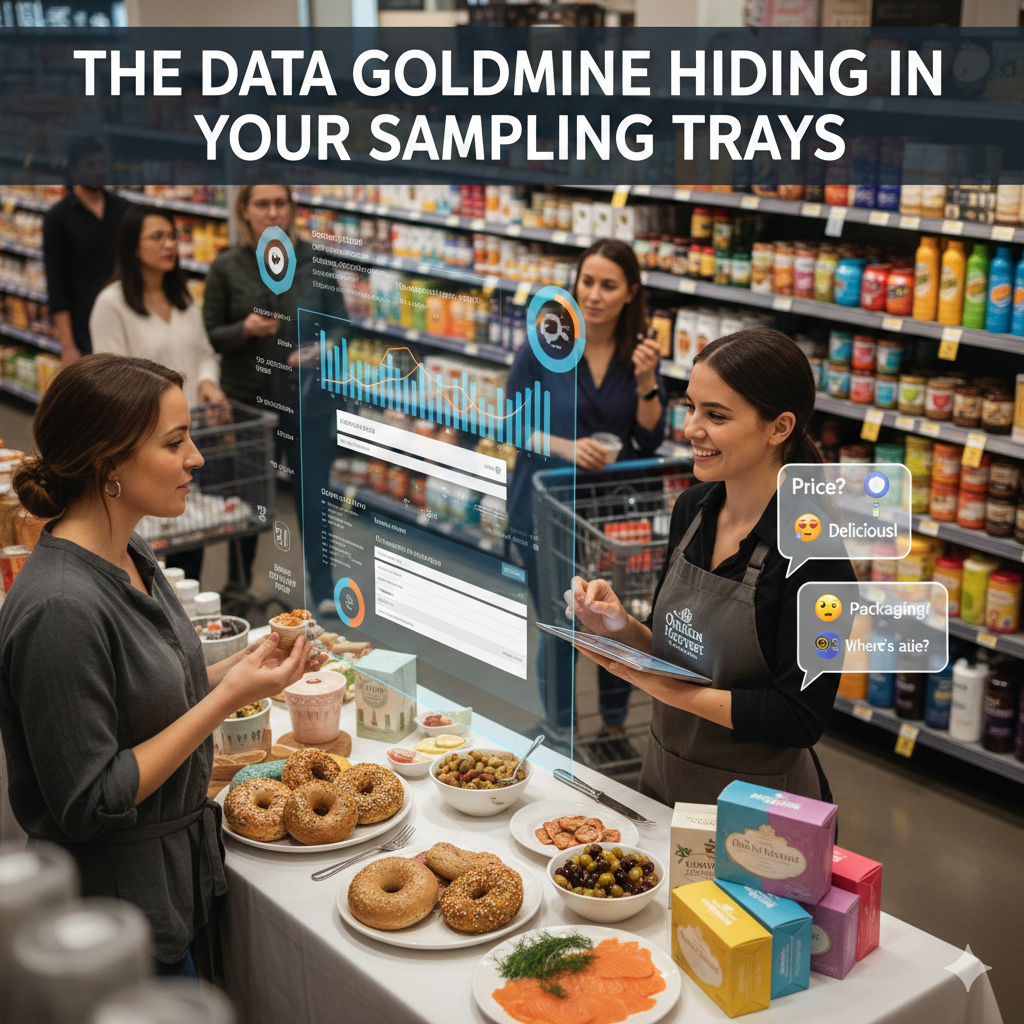
In the CPG world, we are often starving for information while drowning in samples.
Brand Founders and Sales Directors spend a small fortune getting products onto shelves, only to be met with a "data black hole." You know what was shipped to the distributor, and if you have the budget for SPINS, you know what crossed the scanner.
But you don’t know why.
Most brands view in-store demos with a certain level of healthy skepticism. They see the "nibble" as the only goal. They invest in a demo hoping for a temporary sales boost during those specific four hours, but they harbor a quiet, cynical belief: the sales won't last once the table is packed up.
Because they don't believe in the long-term ROI of a sample, they treat the post-demo report as a useless piece of paper—a "quasi-proof of life" to ensure the Brand Ambassador actually showed up. They glance at the total units sold, ignore the comments, and file it away.
They are missing the most valuable asset they’ve already paid for.
There is a classic sentiment in the industry that perfectly captures the hidden value of the in-store demo:
"Brand ambassadors are trained to address a barrage of questions as to the freshness of the lox, the consistency of the bagels, and the origin story of the olives. The food is nibbled on, but the opinion is devoured."
For the savvy, data-driven brand, the "opinion" is the real prize. The problem? Most brands have no way to capture, centralize, or "devour" that data. They are flying blind because the truth is veiled by retailers, distributors, and brokers.
If you think demo reports provide no value, you’re likely right—if you’re receiving them as inconsistent, anecdotal PDFs from three different agencies. When data is scattered, it’s impossible to analyze. You can’t spot a trend across 50 stores if the feedback is buried in 50 different email attachments.
This is where Demo Wizard Software shifts the strategy from "marketing expense" to "competitive intelligence."
In-store demos are one of the highest costs in a CPG marketing budget. If you only use them for a four-hour sales spike, you are overpaying for a temporary result.
By utilizing management software to centralize reporting, you stop treating demos as a "hand-out" and start treating them as your most honest, raw, and actionable source of consumer research.
Don't just chase the temporary boost. Stop letting the "opinions" go to waste and start devouring the data.
Demo Wizard is the Ultimate Store Sampling & Demonstration management software for Brick and Mortar Retailers and CPG Vendors.
Chat with usPhone