
Demo Wizard is the Ultimate Store Sampling & Demonstration management software for Brick and Mortar Retailers and CPG Vendors.
Chat with us

Phone
Copyright © 2026 Demo Wizard
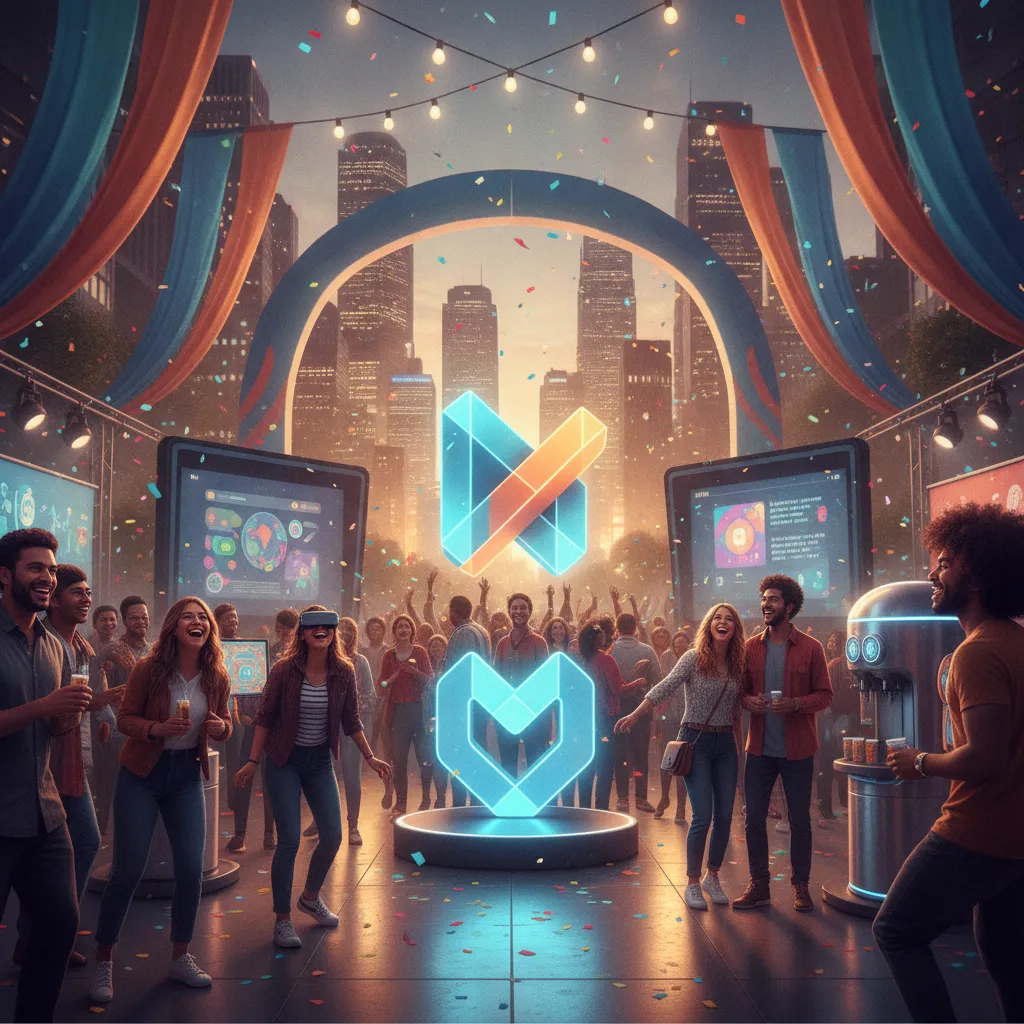
Understanding what is brand activation is essential. Brand activation is a marketing strategy that turns passive brand awareness into direct consumer action, through experiences, events, or campaigns that get people to engage with a brand in a meaningful, memorable way. Unlike general advertising, activation creates a two-way interaction: a product demo, a pop-up event, a sampling campaign. The goal is to move someone from knowing a brand exists to trying it, buying it, or advocating for it.
Brand activation is the process of driving consumer action through direct, interactive brand experiences, not passive impressions or reach alone.
Where general advertising builds familiarity over time, activation demands a response: a purchase, a trial, a sign-up. It converts the awareness a brand has already built into a measurable behavior change. That distinction matters because awareness and action are not the same thing, and most marketing budgets treat them as if they are.
"Brand activation is about creating meaningful moments that bridge the gap between a consumer knowing your brand and actually choosing it." — Marc de Swaan Arons, Co-founder, EffectiveBrands
Brand awareness is passive, a consumer sees an ad and recognizes a logo. Customer engagement is ongoing, a loyalty program, a social community, a newsletter relationship. Brand activation sits between the two: it is a discrete moment designed to trigger a specific behavior.
Think of it as a bridge. Awareness gets someone to the edge; activation gets them across. A shopper who has seen a product on a shelf dozens of times may still never buy it. But hand that same shopper a sample, let them taste or try it, and the conversion dynamic shifts entirely. That in-store product demo, where someone touches, tastes, or tests a product before buying, is what brand activation looks like in its purest retail form [2].
This is why activation is especially critical for CPG, food and beverage, and consumer brands. In these categories, trial drives purchase. A first-hand product experience removes the uncertainty that no amount of display advertising can address. According to Dentsu's research on brand activation, activation campaigns consistently produce higher conversion rates than passive advertising precisely because they eliminate that gap [1].
Understanding what is brand activation, and what it is not, is the starting point for building campaigns that actually move product off shelves.
A brand activation campaign runs through six repeatable steps: define the target consumer action, choose a format, select locations, staff ambassadors, run the event, and measure results.
The process starts with a specific behavioral goal, a purchase, a sign-up, a trial, not a vague awareness objective. Every subsequent decision flows from that target action.
Once the format is set, brands select locations or channels that concentrate their target audience: a grocery aisle, a trade show floor, or a digital onboarding screen. Staffing comes next. Brand ambassadors are the human face of any activation, their product knowledge, consistency, and ability to handle objections directly determine conversion rates. A poorly briefed ambassador at a sampling station loses sales that a well-trained one would close.
After the activation runs, capturing post-event data is where most programs fall short. Attendance counts, conversion rates, and store-level sales lifts need to be collected systematically, not reconstructed from memory.
Logistics, scheduling, ambassador coordination, retailer compliance, are where most activations break down operationally, not in the creative concept [2]. Modern activation programs use software to coordinate hundreds of simultaneous events, track attendance, and collect real-time field data. Demo Wizard, for example, automates scheduling across multiple retail locations, manages ambassador assignments, and generates post-demo conversion analytics, so a single coordinator can run hundreds of monthly events without additional headcount.
Understanding what is brand activation means recognizing that the format changes significantly by industry. Retail CPG brands rely on in-store demos and product sampling, physical, sensory, and immediate. B2B brands favor trade show experiences and executive briefings, where the goal is a qualified conversation, not an impulse purchase. Tech companies typically activate through free trials and live product walkthroughs, converting curiosity into hands-on usage before asking for a commitment.
The underlying mechanics, target action, format, staffing, measurement, remain consistent across all three. The execution context is what shifts.
"The most effective brand activations are those that meet consumers where they are — physically, emotionally, and in their purchase journey." — David Aaker, Vice Chairman, Prophet Brand Strategy
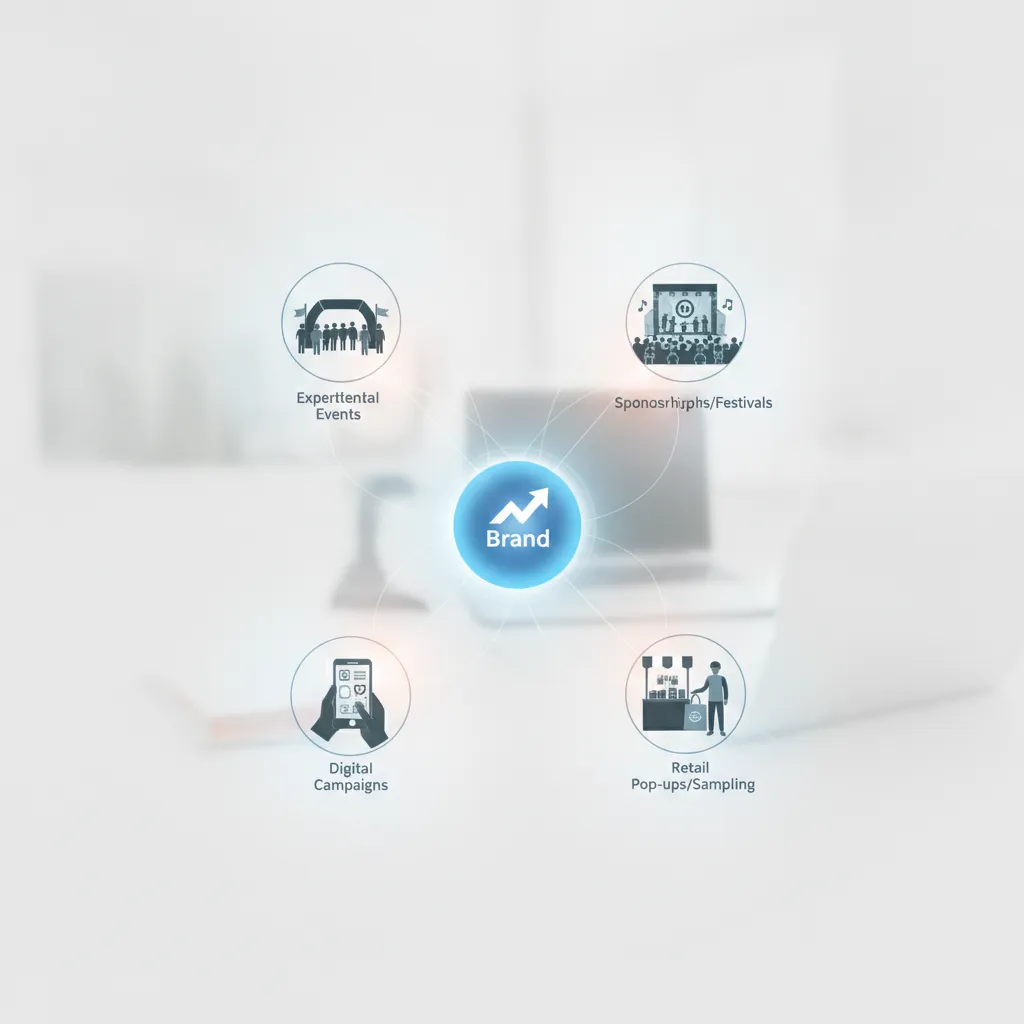
Brand activation strategies fall into five main formats: experiential events, in-store product demonstrations, sampling campaigns, digital/social activations, and sponsorship activations. According to ZoomInfo's beginner's guide to brand activation, each format serves a distinct role in the consumer decision journey and should be selected based on the specific behavioral outcome a brand wants to drive.
Matching the format to the goal is where most brands go wrong. The most common mistake is choosing an activation because it looks impressive, a flashy experiential event, when the actual objective is driving trial among grocery shoppers who need a reason to switch brands at the shelf.
For CPG and food brands specifically, in-store demonstrations are the highest-converting format because they intercept shoppers mid-decision, when purchase intent is already present. Sampling builds repeat purchase by creating product familiarity. Experiential builds emotional brand affinity over time. Digital activations extend reach cost-efficiently but rarely close the gap at the point of sale.
A poorly executed demo, under-staffed, or run by an ambassador who doesn't know the product, actively damages brand perception rather than building it. Understanding what is brand activation means understanding that the execution quality of each format matters as much as the format choice itself.
Measuring brand activation success requires tracking conversion rates, brand lift, cost per trial, and repeat purchase behavior—not just same-day sales.
Start with the five core activation metrics: units sampled or demoed, experience-to-purchase conversion rate, cost per trial, brand lift (measured via pre- and post-activation surveys), and ambassador performance scores. Each one answers a different question about whether the activation worked.
For in-store demos specifically, the clearest proof of ROI is conversion attribution by location. Compare sales velocity at demo locations against control stores running no activation during the same period. A measurable gap between the two confirms the demo drove purchase—not a seasonal trend or a price promotion.
Well-executed in-store demos routinely produce experience-to-purchase conversion rates that far exceed the industry average for digital display ads, which the Association of National Advertisers has tracked at well under 1%. That gap makes cost-per-acquisition comparisons favorable for physical activation when the data is captured correctly.
Short-term metrics—same-day sales lift, units moved per demo hour—tell you whether the event worked on the day. Long-term metrics—repeat purchase rate and new household penetration over 90 days—tell you whether it built a customer. Both matter when justifying activation spend to finance or a retail partner.
Brands running 50 or more events per month cannot rely on manual reporting. Spreadsheet-based data capture introduces lag and transcription errors that make store-level optimization impossible. Platforms like Demo Wizard automate post-demo analytics, capturing experience-to-purchase conversion rates and ambassador performance scores by store and time period—so a single coordinator can identify which locations drive the highest returns without waiting for end-of-month reconciliation.
Understanding what is brand activation becomes fully actionable only when the measurement framework is in place before the first event runs, not after.
"You can't manage what you don't measure. Brand activation without a clear attribution model is just spending money on hope." — Les Binet, Head of Effectiveness, adam&eveDDB
Brand activation budgets range from a few dollars per consumer trial to hundreds of thousands for large experiential events—format, scale, and operational efficiency determine where you land.
In-store demo programs carry five core cost components: ambassador labor, product used for sampling, retailer placement fees, coordination overhead, and post-event reporting. When those programs run at scale with scheduling software, the all-in cost can reach as low as $3 per demo—a figure that makes high-frequency, multi-location campaigns financially viable for mid-market CPG brands.
Experiential events carry high fixed costs—venue, production, staffing—but generate broad reach and press coverage in a single activation window. In-store demos have variable costs that scale directly with event volume, giving brands more control over spend. Digital activations carry the lowest per-unit cost but consistently produce lower purchase conversion rates than physical trials, where consumers can taste, smell, or test a product before buying.
Coordination overhead is where budgets quietly erode. When scheduling, ambassador management, and compliance tracking are handled manually, those administrative tasks consume 30–40% of total activation spend without generating a single consumer trial. Platforms built for retail activation—such as Demo Wizard, which automates scheduling, ambassador payroll, and ROI reporting in one system—cut that overhead significantly and redirect budget toward actual consumer touchpoints.
The clearest budget framework starts with your target cost-per-trial. Set that number first, then work backward to determine event volume, staffing ratios, and channel mix. If your target is $4 per trial and each demo converts 60 samples into 20 purchases, you can model the exact number of events needed to hit a sales goal.
Investing in measurement infrastructure pays for itself over time. Brands that track post-demo sales data by store location can identify which sites consistently outperform and shift budget toward them—compounding ROI across every subsequent campaign cycle. Understanding what brand activation actually costs, at that level of granularity, is what separates brands that scale efficiently from those that repeat the same underperforming events quarter after quarter.

Red Bull's Stratos space jump in 2012 and Coca-Cola's "Share a Coke" personalized bottle campaign are two of the most cited examples. Red Bull live-streamed Felix Baumgartner's freefall from 128,000 feet, generating 8 million concurrent YouTube viewers and reinforcing the brand's extreme-sports identity. Coca-Cola replaced its logo with 150 common first names, driving a 2% sales increase in the U.S. after more than a decade of declining sales. Both campaigns turned a brand idea into a direct consumer experience.
A marketing campaign broadcasts a message; brand activation creates a two-way experience that prompts a specific consumer action. A TV ad builds awareness passively, while a brand activation, such as an in-store product demonstration or a pop-up event, puts the product in the consumer's hands and measures the response. Brand activation is typically shorter in duration, tied to a defined trigger moment, and evaluated on behavioral outcomes like trial, purchase, or sign-up rather than reach or impressions alone.
The right brand ambassador matches your product category, communicates confidently with strangers, and represents the brand consistently across multiple locations. Product knowledge matters more than charisma alone, an ambassador who can answer ingredient or usage questions converts more shoppers than one who simply hands out samples. For in-store demo programs, reliability and punctuality are also critical selection criteria, since a no-show at a scheduled demonstration wastes retailer goodwill and campaign budget. Platforms like Demo Wizard track ambassador performance by store so you can identify and redeploy your highest-converting staff.
Yes, small brands can run effective activations by concentrating resources on fewer, higher-traffic locations rather than spreading thin across many stores. A single well-executed in-store product demonstration at a regional grocery chain costs far less than a national sampling tour and still generates measurable trial-to-purchase data. Demo Wizard's per-demo pricing, starting at $3 per demo, makes it practical for smaller CPG brands to automate scheduling and track ROI without committing to enterprise software contracts or hiring a dedicated coordinator.
Understanding what is brand activation in the context of long-term equity means recognizing that each activation event contributes to a cumulative brand impression. When consumers have a positive, direct experience with a product, they are more likely to repurchase, recommend it to others, and develop genuine brand loyalty. Research from the American Marketing Association consistently shows that experiential and trial-based interactions generate stronger memory encoding than passive advertising, meaning the brand stays top-of-mind longer. Over dozens or hundreds of activation events, this compounds into measurable gains in household penetration and brand preference scores.
Brand activation works when it closes the gap between brand awareness and consumer action, through a product trial, a live experience, or a direct interaction that a passive ad cannot replicate. The brands that get the most from activation treat it as a measurable discipline, not a one-off event: they track conversion by location, redeploy their best-performing ambassadors, and use post-activation data to sharpen the next campaign.
If you manage in-store demonstrations, start by auditing which store locations and time slots actually drive purchase, not just foot traffic. Tools like Demo Wizard give you that store-level conversion data automatically, so your next activation is built on evidence rather than assumption. Run one location as a controlled test, measure the result, and scale from there.
Explore more from our content library:
Demo Wizard is the Ultimate Store Sampling & Demonstration management software for Brick and Mortar Retailers and CPG Vendors.
Chat with usPhone