
Demo Wizard is the Ultimate Store Sampling & Demonstration management software for Brick and Mortar Retailers and CPG Vendors.
Chat with us

Phone
Copyright © 2026 Demo Wizard
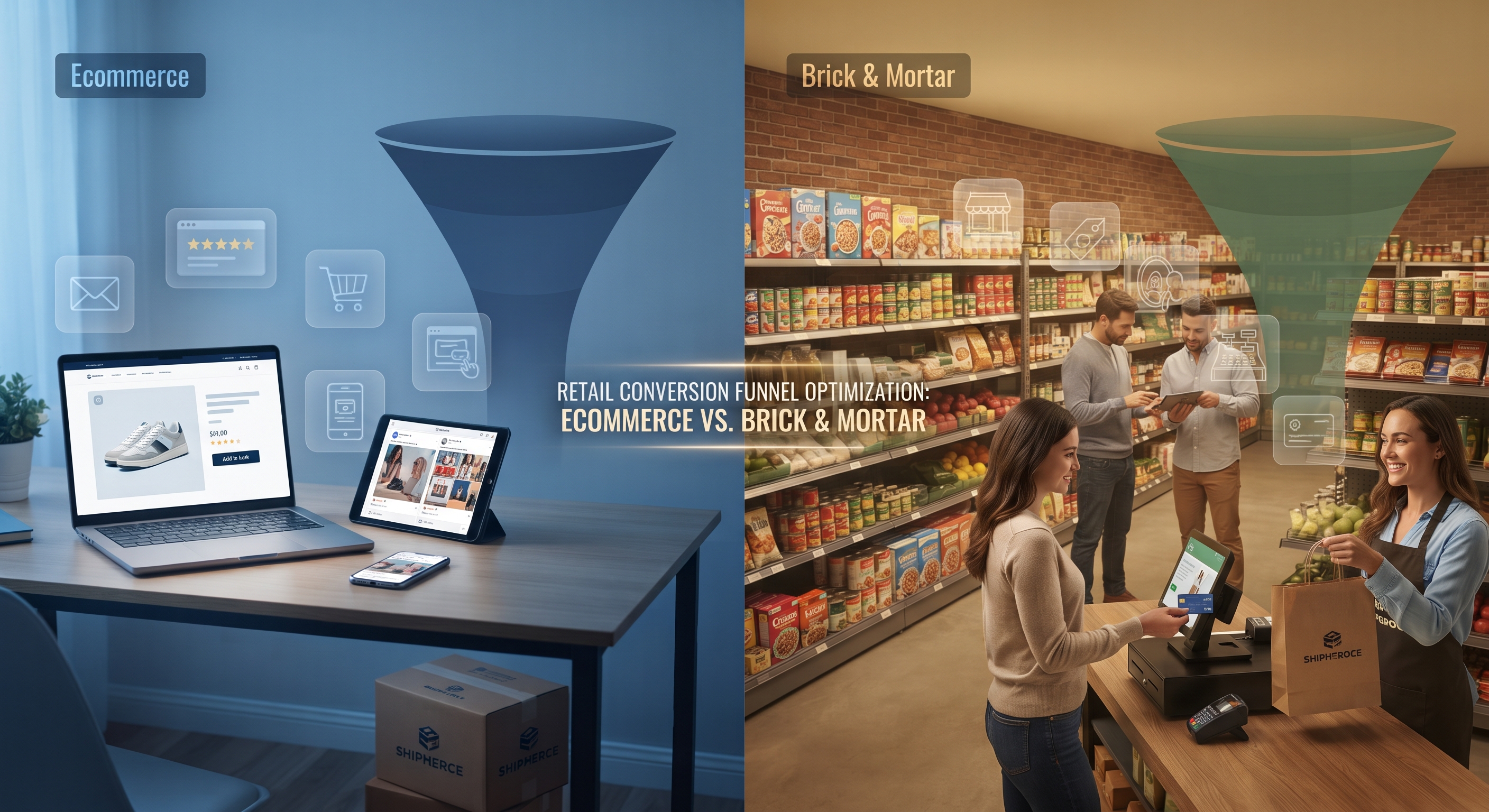
Conversion funnel optimization retail is the practice of systematically removing the friction that stops shoppers from moving from awareness to purchase, whether in-store, online, or across both. For brick-and-mortar retailers, this includes every touchpoint from foot traffic and shelf discovery to trial and checkout. Optimizing each stage increases the share of visitors who actually buy, making existing traffic more valuable without spending more to acquire it.
Retail conversion funnel optimization in e-commerce maps every stage a shopper passes through, from first exposure to final purchase, and removes the friction that causes drop-off at each transition. Applying conversion funnel optimization retail principles means treating every stage transition as a measurable, improvable event rather than an invisible handoff.
The retail funnel begins with awareness: a shopper sees an ad, visits a site, or notices a product on the shelf. From there, they move through consideration, trial, and purchase. Each stage where a shopper exits represents revenue lost from traffic you already paid to acquire. A shopper who picks up a product, examines it, and puts it back is a conversion failure at the trial stage, not a traffic problem.
eCommerce conversion optimization focuses heavily on digital signals: page load speed, cart abandonment sequences, and checkout UX [3]. Physical retail operates on a different set of levers entirely.
In a brick-and-mortar environment, the factors that move a shopper from consideration to purchase include product placement, packaging, staff interaction, and sensory experience, tasting a sample, handling the product, or receiving a recommendation from a brand ambassador. None of those variables appear in a website heatmap.
In-store demo programs sit squarely at the trial stage of the funnel. A shopper who samples a product converts at a measurably higher rate than one who only reads the label, which is why CPG brand marketing invest in physical activations as a direct funnel intervention.
Conversion rate optimization (CRO) typically targets one action, getting a shopper to complete a purchase [3]. Funnel optimization is broader: it audits every stage transition and improves each one, not just the final step.
The unit economics case for this approach is direct. When conversion rates improve at multiple stages simultaneously, the cost per acquired customer falls without any increase in the marketing budget. This mechanism means a 10% improvement at three consecutive stages compounds into a materially larger revenue gain than a 30% improvement at checkout alone.
The omnichannel dimension adds another layer of complexity. Shoppers increasingly research a product online and buy it in a physical store or discover it in-store and complete the purchase later through a brand's website. A retail funnel that only tracks single-channel journeys misses those cross-channel handoffs and systematically underreports where conversion is actually happening.
A retail conversion funnel moves shoppers through five stages: Awareness, Consideration, Intent, Purchase, and Retention, each with distinct drop-off risks.
At Awareness, a shopper learns a product exists through a social ad, shelf placement, or a friend's recommendation. At Consideration, they compare options, read reviews, and may visit a store to evaluate. Intent is the critical middle stage: the shopper picks up a product, adds it to a cart, or attends an in-store demo. Purchase is the completed transaction. Retention follows, repeat buying, loyalty program enrollment, and advocacy.
In-store product demonstrations sit squarely at the Intent stages. A live demo lets a shopper experience a product before committing, which compresses the gap between consideration and purchase. A shopper who was passively browsing becomes an active buyer once they taste, touch, or see a product perform. This is why demo-to-purchase conversion rates are a direct lever in conversion funnel optimization retail strategy.
The largest volume of drop-off in physical retail typically occurs between foot traffic entering the store and shoppers engaging with a specific category. Three mechanisms drive this: poor product placement, no trial opportunity, and insufficient staff engagement at the shelf. A shopper who never interacts with a product cannot convert.
Micro-conversions, picking up a product, asking a staff member a question, and stopping at a demo station are leading indicators of final purchase. CPG retail activation managers who measure these intermediate actions can identify exactly where shoppers disengage and fix the specific friction point, rather than guessing at the aggregate conversion rate.
A shopper's path rarely runs through a single channel. A typical omnichannel sequence: a social ad creates Awareness, a retailer's app review section drives Consideration, a live in-store demo triggers Intent, and a shelf purchase closes the transaction. Each handoff between online and offline is a separate optimization opportunity and a separate drop-off risk.
Tracking these handoffs requires connecting data across channels. A platform like Demo Wizard captures in-store demo performance, attendance, engagement, and experience-to-purchase conversion rates by store and time, and feeds that data back into the broader campaign picture. Without that store-level data, the online-to-offline handoff remains a blind spot in the funnel.
Each stage of the retail conversion funnel requires a distinct tactic. Fixing the wrong stage wastes budget while the real drop-off point goes unaddressed. Effective conversion funnel optimization in retail work starts with diagnosing which stage is leaking before applying any tactic.
Targeted local advertising, geofenced social ads, retailer co-op placements, and neighborhood-level search campaigns bring in shoppers who already match your buyer profile. Raw foot traffic numbers are misleading; a smaller crowd of genuinely interested shoppers converts at a higher rate at every stage downstream.
Social proof accelerates this. Ratings, user-generated content, and visible community engagement give undecided shoppers a reason to choose your aisle over a competitor's before they even enter the store.
Shoppers routinely research products on their phones while standing in the aisle, so mobile friction at the consideration stage kills conversions that were close to closing. Fast-loading product pages, QR codes that link directly to verified reviews, and in-app store maps that surface your product's exact location all reduce the effort a shopper must spend to say yes.
Conversion funnel optimization in retail increasingly depends on closing the gap between digital research and physical shelf. The brands that bridge that gap with frictionless mobile touchpoints win the consideration battle before the shopper reaches the product.
Live product demos are one of the highest-impact tactics at the intent stage. A trial moment collapses the consideration window by combining three forces simultaneously: sensory experience with the product, real-time social proof from a knowledgeable brand ambassador, and immediate on-shelf availability. Skepticism that survives weeks of digital advertising often dissolves in 30 seconds of tasting or trying.
Platforms like Demo Wizard are built specifically for this moment, scheduling brand ambassadors across multiple retail locations, tracking which store-and-time combinations produce the highest experience-to-purchase conversion rates, and feeding that data back so future demos run where they perform best.
AI-driven product recommendations based on purchase history and dynamic shelf placement informed by sales velocity data, surface the right product to the right shopper at the right moment. This matters most at the consideration and intent stages, where a relevant prompt can move a browsing shopper to a buying decision without any additional persuasion.
Personalization also extends to post-visit retargeting. When a shopper interacts with a product in-store but does not purchase, a well-timed digital follow-up, a targeted social ad, or a loyalty app notification can re-engage them before they settle on a competitor. This kind of closed-loop personalization is one of the more advanced applications of conversion funnel optimization in retail, and it requires connecting in-store behavioral data to digital marketing systems.
Retail conversion benchmarks differ by vertical, traffic source, and funnel stage. Tracking only the final purchase rate leaves most optimization opportunities invisible. Effective conversion funnel optimization retail practice requires measuring performance at every stage, not just at the register.
The metrics that matter shift as shoppers move through the funnel: foot traffic and category entry rate signal how well awareness is working; product interaction rate and demo attendance indicate intent; transaction rate and average basket size measure purchase; repeat visit rate and loyalty enrollment track retention.
A conversion rate that signals strong performance in groceries would indicate underperformance in consumer electronics, and the reasons are structural. Grocery shoppers visit frequently, buy on routine, and make low-consideration decisions. Electronics shoppers research extensively, visit fewer times, and spend more per transaction. Fashion sits between the two: purchase cycles are seasonal, basket sizes are mid-range, and trial access (fitting rooms, in-store displays) drives a disproportionate share of conversions.
These differences mean retailers must benchmark against their own vertical, not a generic retail average. A drop in category entry rate in a grocery aisle points to a placement or signage problem. The same drop in an electronics department may reflect a longer consideration cycle playing out online before the shopper returns in-store.
Traffic source compounds this further. A shopper arriving via a targeted promotion, a direct mailer, a loyalty app push, or a retailer-coordinated demo event converts at a meaningfully higher rate than one who walked in without prior exposure. Segmenting funnel metrics by traffic source is the only way to diagnose accurately whether a drop-off reflects weak creative, poor placement, or the wrong audience.
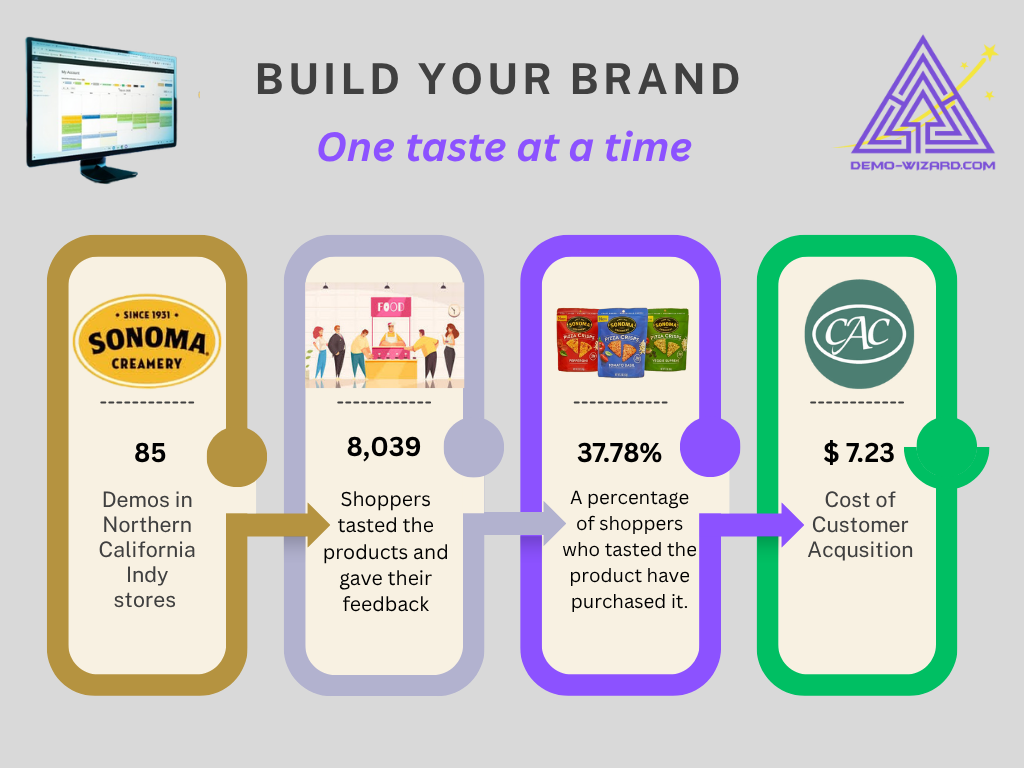
In-store demo programs generate a concrete micro-conversion metric that connects directly to the Intent stage: units sold per demo hour and sales uplift in the days following a demo event. Platforms like Demo Wizard measure experience-to-purchase conversion rates by store and time period, so teams can identify which locations and scheduling windows produce the strongest funnel movement, rather than assuming all activations perform equally.
If drop-off occurs between category entry and product interaction, the fix is placement or trial access, not a checkout improvement. Chasing the final purchase rate without diagnosing where shoppers exit the funnel wastes budget on the wrong stage.
No single tool covers the full retail funnel. Effective conversion funnel optimization in retail work requires matching the right platform category to each stage of the shopper journey.
Web analytics and tag management tools (Google Analytics, Adobe Analytics) capture digital behavior at the top of the funnel: traffic sources, product page views, and search-driven awareness. Heat-mapping and session recording tools diagnose where shoppers abandon product detail pages or stall at checkout. POS and loyalty platforms capture purchase data and repeat-visit patterns at the bottom of the funnel. Each category does one job well and hands off poorly to the next.
Free analytics tools are blind to everything that happens inside a physical store [1]. They cannot record foot traffic, product interaction, demo attendance, or shelf conversion, the moments that drive the majority of revenue for brick-and-mortar retailers.
Retail-specific platforms fill some of those gaps. In-store traffic counters measure zone-level shopper flow; planogram compliance tools verify shelf placement; and eCommerce platforms with built-in funnel reporting connect digital browse behavior to online purchase. The persistent problem is integration: these tools rarely share data natively, so you end up with siloed reports that don't form a coherent funnel picture.
In-store demo management platforms address a specific gap at the Intent stage. When a shopper watches a brand ambassador demonstrate a product, that interaction is a high-intent moment the rest of the stack cannot see. Demo Wizard sits at exactly this point: it coordinates when and where brand ambassadors run demonstrations, tracks outcomes, units sold, samples distributed, and shopper interactions, and feeds that data back to CPG brand marketing managers and retailers as documented evidence of sales uplift. That closes a meaningful blind spot without claiming to replace the broader analytics stack.
Tool selection should reflect funnel complexity. Budget-friendly options handle single-channel tracking adequately. Mid-range platforms add cross-channel attribution. Premium and enterprise solutions integrate POS, traffic counter, and activation data into a unified funnel view. Retailers running high-volume in-store programs should weigh whether their current stack can actually see the in-store stages, because optimizing only what's measurable leaves the largest revenue channel unmanaged.
A typical brick-and-mortar retail conversion rate falls between 10% and 40%, though this varies significantly by category and store format. Grocery and convenience stores tend to sit at the higher end because shoppers enter with clear purchase intent. Specialty and apparel retailers often see lower rates, closer to 4–15%. The more useful benchmark is the specific store's baseline: track it weekly, segment by location and time of day, and measure improvement against that internal baseline rather than an industry average spending.
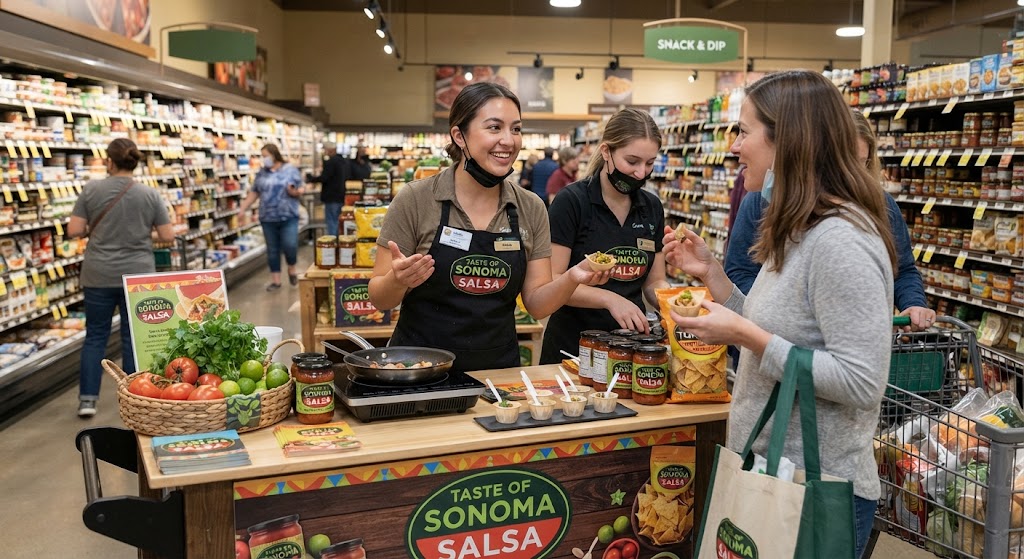
In-store product demonstrations improve conversion rates by giving shoppers a direct sensory experience with a product before they commit to buying it. A shopper who tastes, smells, or handles a product is far more likely to place it in their cart than one who reads a shelf label. Demonstrations also create a moment of personal engagement that digital channels cannot replicate. When tracked properly—by store, time slot, and ambassador—demo data shows exactly which activations drove purchases, letting brands concentrate spend on the highest-converting locations.
A sales funnel tracks the steps a retailer or brand takes to close a deal, while a conversion funnel tracks the path a shopper takes from first awareness to purchase. In practice, the terms overlap heavily in retail contexts. The key distinction is perspective: a sales funnel is seller-facing (prospecting, pitching, closing), while a conversion funnel is shopper-facing (awareness, consideration, decision, purchase). Most retail optimization work focuses on the conversion funnel because it maps directly to in-store behavior and revenue.
Mobile optimization affects in-store conversion because shoppers routinely use their phones while standing in the aisle—checking prices, reading reviews, or scanning QR codes on shelf tags. A slow or poorly formatted mobile experience at that moment can push a shopper toward a competitor's online listing instead of completing the in-store purchase. Retailers who ensure their product pages, loyalty apps, and digital coupons load quickly on mobile reduce this friction and keep purchase intent focused on the physical shelf.
Retailers should conduct a structured funnel audit at least quarterly, with lighter monthly reviews of key stage metrics. Seasonal shifts in shopper behavior, new product launches, and changes in store layout can all alter drop-off patterns quickly. A quarterly audit lets teams identify which stage has deteriorated since the last review and apply a targeted fix before the problem compounds. High-volume retailers running ongoing in-store activation programs benefit from reviewing demo-level conversion data monthly to reallocate ambassador time toward the best-performing locations.
Retail conversion funnel optimization is not a one-time project—it is a continuous cycle of measuring, adjusting, and testing across every stage where shoppers drop off. Three actions move the needle most reliably: map your funnel by store location rather than in aggregate, identify the specific stage where traffic stops converting, and run controlled changes at that stage before scaling them chain-wide.
For CPG brands running in-store demonstrations, the most concrete next step is to audit your current demo data by store and time slot. If you cannot answer which locations produced the highest experience-to-purchase conversion rates last quarter, a platform like Demo Wizard gives you that visibility so your next campaign budget goes where the data points, not where the spreadsheet guesses.
Explore more from our content library:
About the Author
Written by the SaaS / Retail Marketing Technology experts at Demo Wizard. Our team brings years of hands-on experience helping businesses with SaaS / Retail Marketing Technology, delivering practical guidance grounded in real-world results.
Demo Wizard is the Ultimate Store Sampling & Demonstration management software for Brick and Mortar Retailers and CPG Vendors.
Chat with usPhone