
Demo Wizard is the Ultimate Store Sampling & Demonstration management software for Brick and Mortar Retailers and CPG Vendors.
Chat with us

Phone
Copyright © 2026 Demo Wizard
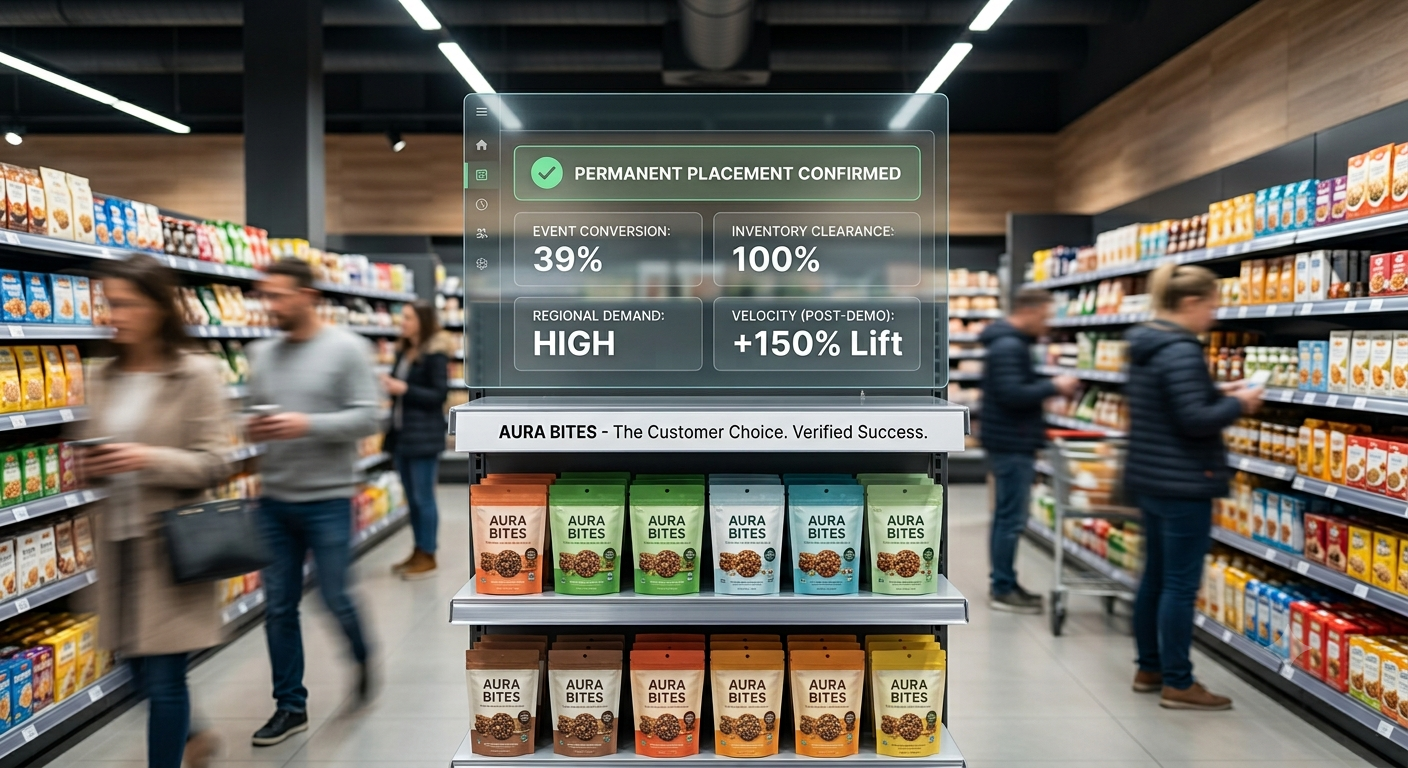
Let’s be honest about how most CPG brands treat in-store sampling. All too often, demos are treated as a defensive chore—a costly line item designed to placate an annoyed retailer, satisfy a mandatory promotional co-op, or quietly liquidate stale inventory sitting in a regional warehouse.
When you approach sampling with that mindset, you get exactly what you put into it: a brief, one-day spike in register sales that instantly flatlines the moment the Brand Ambassador packs up their table.
The Shift: Demos aren't just brand activation events—they are real-time market research and proof-of-concept campaigns for category managers.
When structured with clear intent, a single sampling event gives you the real-time conversion data, inventory velocity proof, and shopper sentiment needed to transform temporary shelf presence into permanent, multi-store distribution.
You cannot prove product velocity to a category buyer if your shelves go dark two hours into the activation. Winning permanent placement starts with proactive communication and aligning store operations with sampling events weeks before anyone pours a sample.
Same-day unit sales are a vanity metric if they don't tell a broader story. Because a demo is real-time market research, your field team should collect the data points that drive a data-driven retail marketing strategy to prove true brand pull:
Don't let post-event data sit unused in an internal spreadsheet. Leverage your post-demo analytics to build a compelling report that turns your post-demo report into a velocity forecast for the retail buyer or distributor.
The Retail Pitch Rule: Category managers don't buy products—they buy proven velocity and category growth. Frame your demo results as a controlled, successful trial run.
When presenting your post-demo results, pivot the conversation toward long-term growth:
Stop burning your field marketing budget on reactive, transactional demos. When you stop viewing sampling as an obligation and start leveraging in-store demo management software as a data-generation engine, every event becomes a stepping stone toward permanent retail distribution.
Demo Wizard is the Ultimate Store Sampling & Demonstration management software for Brick and Mortar Retailers and CPG Vendors.
Chat with usPhone