
Demo Wizard is the Ultimate Store Sampling & Demonstration management software for Brick and Mortar Retailers and CPG Vendors.
Chat with us

Phone
Copyright © 2026 Demo Wizard
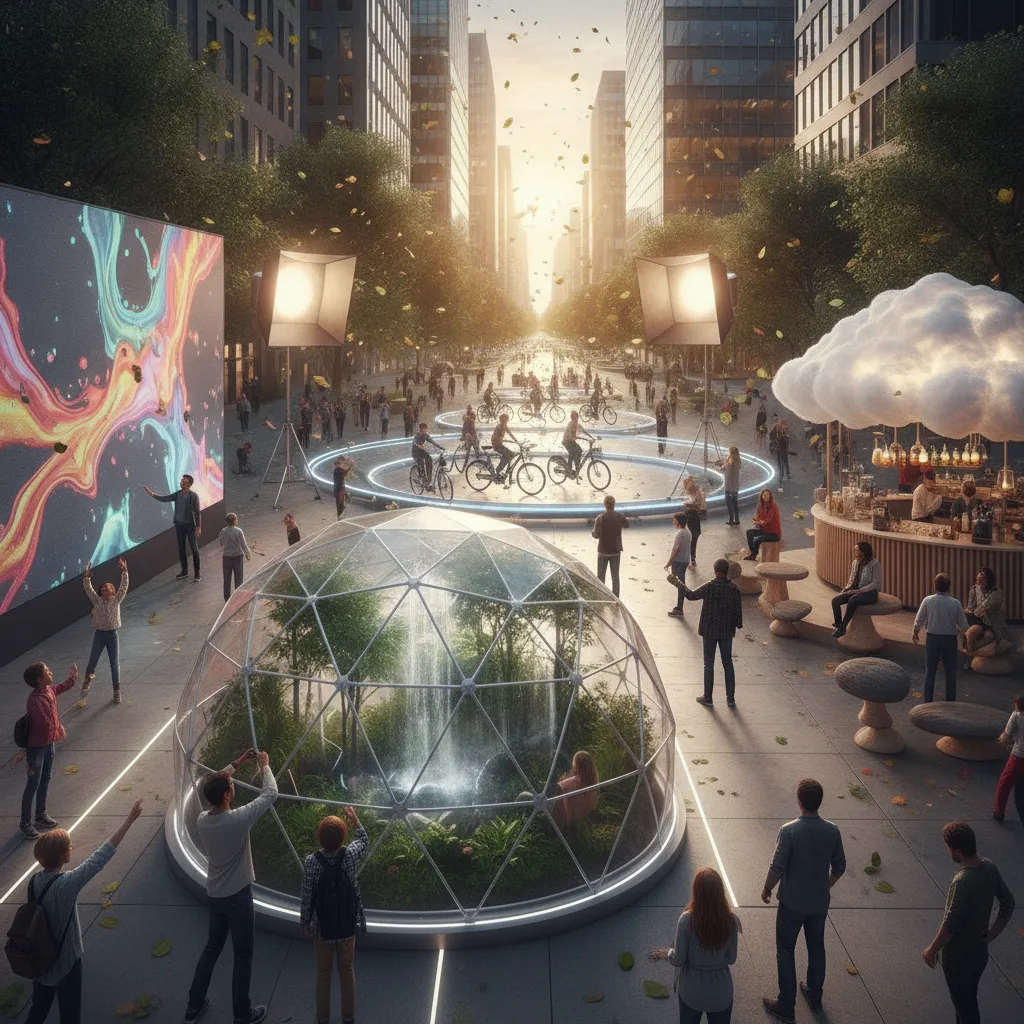
Understanding what is experiential marketing is essential. Experiential marketing is a strategy that puts consumers inside a brand experience rather than broadcasting a message at them, think live product demos, pop-up events, and interactive installations. Unlike a TV ad or a banner, it creates a two-way moment the participant actively chooses to engage with. That direct involvement drives stronger emotional recall, higher purchase intent, and word-of-mouth sharing that paid media rarely replicates.
Experiential marketing is brand-initiated, participation-based engagement, the consumer does something, not just sees something.
When marketers ask what is experiential marketing, the answer comes down to one structural difference: the consumer is an active participant, not a passive recipient. A billboard delivers a message. An experiential campaign asks someone to taste, touch, play, or decide.
That distinction matters neurologically. Direct sensory involvement triggers episodic memory formation, the brain encodes the event as something that happened to you, not something you observed. Research links that encoding to 70%+ higher brand recall compared to passive ad exposure [1]. A 30-second TV spot competes with dozens of other ads in memory; a product you sampled in a store aisle does not.
For CPG and retail brands, in-store product demonstrations are the highest-frequency and most measurable form of experiential marketing available. A demo runs in minutes, targets a shopper already in a buying mindset, and generates a conversion signal, purchase or no purchase, that most experiential formats cannot match. According to Amazon Ads' overview of experiential marketing, brands that invest in participatory formats consistently see stronger emotional connection and purchase intent than those relying solely on digital impressions.
Practitioners use the 5 C's framework to move a campaign from idea to consumer interaction. Each stage maps to a concrete decision:
Concept: Define the experience. A food brand might choose a live cooking demo over a branded pop-up because it fits a 10-minute retail window.
Connection: Match the experience to the right audience and location, a grocery aisle on a Saturday afternoon, not a Tuesday at 9 a.m.
Creativity: Design the moment to be memorable. Unusual flavors, a surprising format, or a compelling brand ambassador story all raise engagement.
Communication: Extend the experience beyond the moment, social sharing, follow-up offers, or retailer co-promotion amplify reach.
Conversion: Measure what changed. Did the participant buy? Return? Recommend? Conversion is the stage that separates accountable experiential marketing from brand theater.
The 5 C's scale with the format. A 10-minute in-store demo and a multi-day branded festival both follow the same sequence, the budget, staffing, and measurement complexity simply grow. Platforms like Demo Wizard apply this logic specifically to in-store activations, tracking experience-to-purchase conversion rates so brands can close the loop at the Conversion stage with actual sales data rather than foot-traffic estimates.
High-performing experiential campaigns share four non-negotiable elements: a clear participation mechanic, trained brand ambassadors, a defined conversion moment, and a data capture method.
Strip out any one of these and the campaign becomes a brand awareness exercise at best, and an expensive one. Each element does a specific job: the participation mechanic draws people in, ambassadors guide them toward a decision, the conversion moment turns interest into action, and data capture ensures the next campaign is smarter than the last.
A trained demo representative consistently outperforms an untrained one by 2–3x on trial-to-purchase metrics. That gap is not a training budget problem, it's a staffing strategy problem. Brands that treat ambassador selection as a logistics detail rather than a performance lever routinely underperform on conversion.
Scalable scheduling and ambassador management form the operational backbone that separates repeatable multi-location campaigns from one-off stunts. Platforms like Demo Wizard automate ambassador assignment, track availability across locations, and tie individual rep performance to post-demo conversion data, so a single coordinator can manage hundreds of monthly events without losing visibility into who is actually driving sales.
Industry guidance places 60–70% of an experiential marketing budget toward staffing and logistics, 15–20% toward creative and build, and 10–15% toward measurement and follow-up [1]. Most brands underinvest in that final bucket, and then cannot prove ROI when finance asks.
Measurement spending covers post-activation surveys, sales lift analysis, and CRM data integration. Cutting it to save money is the same as running the campaign blind. The Salesforce experiential marketing guide emphasizes that brands which build measurement infrastructure before launch consistently report higher confidence in campaign ROI and are more likely to reinvest in experiential channels the following year.
Understanding what experiential marketing can achieve starts with knowing where campaigns fail. Three mistakes account for the majority of underperforming activations.
Choosing high-foot-traffic venues without audience fit. A busy shopping mall generates impressions; a store where your target customer actually shops generates conversions. Foot traffic and qualified traffic are not the same metric.
Deploying untrained ambassadors. An ambassador who cannot engage a passing shopper, answer product questions or guide a shopper through a trial moment kills conversion at the point of contact, the only moment that matters.
Running events with no post-activation data collection. Without capturing trial rates, purchase intent, or sales lift by location and time, there is no basis for optimizing the next campaign. The event happened; the learning did not.

Experiential marketing works across every sector—but the mechanic each industry uses differs sharply based on audience, scale, and conversion goal.
B2C retail: in-store sampling. CPG brands running product demonstrations at grocery chains see same-day purchase rates lift by 25–30% for new product launches. A shopper who tastes a new snack at a Costco or Whole Foods demo station makes a purchase decision in minutes—not weeks. Platforms like Demo Wizard help CPG brands schedule and track these activations across hundreds of store locations, measuring which stores and time slots convert at the highest rate.
B2B: Salesforce Dreamforce. Salesforce's annual Dreamforce conference draws over 170,000 registered attendees and generates measurable sales pipeline through multi-day workshops, product sessions, and executive networking. A brand with a trade show booth gets 90 seconds of attention; Dreamforce gives Salesforce three days of immersive contact with decision-makers. The conversion timeline is longer, but the depth of engagement is incomparable.
Luxury: Hermès and Louis Vuitton pop-up ateliers. Both brands have staged pop-up spaces where consumers watch master craftspeople build products by hand. Scarcity and exclusivity are the participation mechanic—invitation-only access replaces mass sampling. The goal is brand affinity, not same-day sales.
Hybrid: live plus livestream. Post-pandemic, brands began pairing in-store activations with simultaneous social livestreams, multiplying reach beyond the physical audience without diluting the live experience for attendees on-site.
Understanding what experiential marketing is across these contexts reveals a shared core: participation drives the outcome. Scale, exclusivity, and conversion timeline simply vary by industry.
Experiential marketing ROI is measured through conversion rates, brand recall lift, and social amplification—tracked against a pre-activation baseline to isolate true sales impact.
Five primary KPIs define whether an experiential campaign paid off: trial-to-purchase conversion rate, cost per trial, brand recall lift (measured via post-event survey), social amplification rate (UGC posts per 100 attendees), and repeat purchase rate within 90 days of the event.
For in-store demos specifically, three secondary metrics sharpen the picture: units sold per demo hour, retailer reorder rate following the activation, and ambassador performance score. Platforms like Demo Wizard track two of the three in real time—so a coordinator can see which ambassador at which store is converting at the highest rate before the campaign ends, not after.
The most reliable measurement structure sets a baseline sales velocity at the target store during the four weeks before activation, then compares the four-week post-demo window to that figure. That comparison isolates the lift attributable to the experience, rather than seasonal trends or unrelated promotions.
Most brands fail measurement at the data-capture step, not the analysis step. If ambassadors don't collect emails or scan receipts during the event, no analytics platform can reconstruct that data afterward—the gap is permanent.
Hybrid activations now require two parallel measurement tracks: physical conversion data from the in-store or live event, and digital engagement metrics—livestream views, hashtag reach, and email captures from the online component [1]. Brands that measure only one track systematically undercount total ROI.
Understanding what experiential marketing delivers across both channels means building reporting that connects physical trial data to digital follow-through. A consumer who samples a product in-store and then engages with a branded livestream represents a higher-value touchpoint than either channel alone—but only shows up in the data if both tracks are active.
Experiential, traditional, and digital marketing each do a different job, the right mix depends on whether you need reach, depth, or conversion efficiency.
A national TV spot can reach 10 million viewers in 30 seconds. A 200-person brand activation generates 5–10 minutes of active engagement per attendee. Those are not interchangeable outcomes, they serve different stages of the purchase decision. Understanding what is experiential marketing means recognizing it as a depth channel, not a reach channel.
CPM for a 30-second TV spot runs $25–$35. Cost per engaged interaction for an in-store demo falls between $3–$15; large-scale events typically run $50–$150 per person. The gap narrows sharply once you factor in conversion rates: passive TV exposure converts at a fraction of the rate that a hands-on brand experience does.
Digital paid social and display advertising excel at precise targeting and retargeting at scale, but they produce low emotional intensity. A consumer who scrolls past a banner ad is not the same as one who tastes a product, speaks with a brand ambassador, and walks away with a sample. Studies show consumers who participate in a brand experience are 74% more likely to make a purchase [1], a conversion signal that display advertising rarely approaches.
The strongest campaigns treat experiential as the trust-building entry point, then close the loop with digital. Activating in-store and retargeting the same audience digitally within 48 hours consistently outperforms either channel alone. Platforms like Demo Wizard capture store-level conversion data from in-store demos, giving marketing teams the audience signal they need to make that retargeting spend more precise.
Experiential is not a replacement for digital, it's the top-of-funnel moment that makes downstream digital spend more efficient by reaching consumers who already have a real memory of the brand.

Event marketing promotes a brand at a scheduled event; experiential marketing turns the event itself into a two-way interaction the audience actively participates in. A trade show booth with a banner is event marketing. A trade show booth where visitors taste, build, or co-create something is experiential marketing. The distinction matters because participation drives memory and purchase intent in ways passive exposure does not.
Costs range from a few thousand dollars for a localized sampling campaign to several million for a large-scale branded installation or multi-city tour. A regional in-store sampling program across 20 locations might run $5,000–$0,000 when you factor in staffing, product, and logistics. Platforms like Demo Wizard reduce the administrative cost of in-store activations to as little as $3 per demo, which meaningfully lowers the floor for CPG brands running high-frequency campaigns.
Yes, smaller brands often see stronger returns from experiential marketing because a single well-executed activation can generate word-of-mouth and trial that paid media budgets cannot match at the same scale. In-store product demonstrations are a proven entry point: they put the product directly in a shopper's hand at the moment of purchase decision, which is particularly valuable when brand awareness is still building.
Start by identifying one channel where your target customer already spends time, a retail aisle, a farmers market, a community event, and design a single hands-on interaction around your product. Run a small pilot, measure conversion and feedback, then scale what works. For CPG brands, in-store sampling is the most direct starting point because it connects the experience to an immediate purchase opportunity and produces measurable sales data from day one.
When brands ask what is experiential marketing's place in an omnichannel plan, the answer is that it functions as the high-trust, high-engagement anchor. A live product demo or branded event creates a genuine memory that digital touchpoints alone cannot replicate. Pairing that in-person moment with email follow-up, social retargeting, and loyalty program enrollment turns a single activation into a multi-stage conversion journey. Brands that integrate experiential data into their CRM consistently report higher lifetime value from customers acquired through live events than from purely digital acquisition channels.
Experiential marketing works because participation creates memory, and memory drives purchase. The brands that execute it well share three habits: they design for active involvement rather than passive viewing, they choose channels where their target customer already shows up, and they measure outcomes, trial rates, conversion, repeat purchase, rather than just impressions.
If you manage in-store activations for a CPG brand, the most concrete next step is to audit your last five demos: did you capture conversion data by store and time slot? If not, that gap is where to start. Demo Wizard's per-demo analytics dashboard is built specifically to surface that data, visit demo-wizard.com to see how it tracks experience-to-purchase conversion across every location you run.
Experiential Marketing: What It Is & Why It Works | Mailchimp
What is Experiential Marketing? Definition, examples and types | Amazon Ads
Explore more from our content library:
About the Author
Written by the SaaS / Retail Marketing Technology experts at Demo Wizard. Our team brings years of hands-on experience helping businesses with SaaS / Retail Marketing Technology, delivering practical guidance grounded in real-world results.
Demo Wizard is the Ultimate Store Sampling & Demonstration management software for Brick and Mortar Retailers and CPG Vendors.
Chat with usPhone