
Demo Wizard is the Ultimate Store Sampling & Demonstration management software for Brick and Mortar Retailers and CPG Vendors.
Chat with us

Phone
Copyright © 2026 Demo Wizard
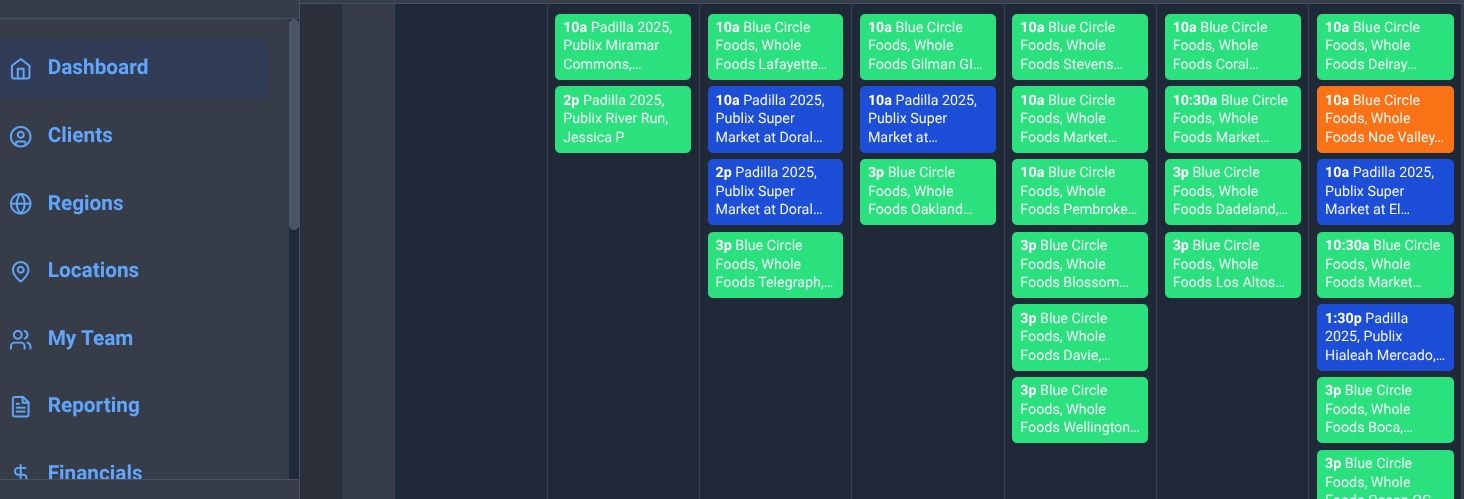
A sales demo management tool is software that coordinates, schedules, tracks, and measures product demonstrations so teams can run more demos with less administrative overhead. For CPG brands and retailers managing in-store activations, the right tool replaces manual scheduling, scattered spreadsheets, and guesswork with a centralized system that shows which demos drive real sales uplift, and which don't.
The term covers two distinct software categories serving very different teams, and confusing them leads to buying the wrong tool.
One category of demo management platform serves SaaS sales teams: tools that let account executives build interactive product walkthroughs, personalize them by buyer role, and share them asynchronously between calls [1][2]. These tools solve a digital problem, scaling personalized software demonstrations without engineering support.
The other category serves CPG brands, distributors, and grocery retailers running physical product demonstrations in brick-and-mortar stores. This article covers both definitions, but anchors on the in-store activation context, because that's where the coordination problem is most acute and least served by generic software.
Without a dedicated tool, scheduling a single in-store demo means back-and-forth between a brand manager, a distributor, a store manager, and a brand ambassador, across email threads, phone calls, and shared spreadsheets. Multiply that across 50 or 100 monthly events and the system breaks down fast.
The administrative burden typically falls on one coordinator who manually chases confirmations, reschedules no-shows, and compiles post-demo reports by hand. That workload doesn't scale linearly, doubling the number of events more than doubles the coordination effort, because each new location and ambassador adds its own communication chain.
Grocery retailers face the same problem from the opposite direction. Each week, multiple CPG vendors request demo slots, creating scheduling conflicts, compliance gaps, and unplanned demands on store staff who weren't expecting a demonstration crew to arrive. A demo management tool centralizes the full calendar, giving store managers, vendors, and ambassadors a single view of what's scheduled, confirmed, and compliant.
The teams that benefit most: brand activation managers at mid-market CPG companies, demo companies and distributors coordinating events across many retail accounts, and grocery retailers managing vendor activations across multiple store locations.
A purpose-built demo management platform connects scheduling, ambassador coordination, compliance tracking, and post-demo analytics inside one system, replacing disconnected spreadsheets and manual follow-up.
The scheduling engine is where capable platforms separate from basic calendar tools. Instead of a coordinator manually cross-referencing availability, a purpose-built tool matches open demo slots at specific store locations to brand ambassadors based on availability, product training status, and any required certifications.
Conflict detection runs automatically. If an ambassador is already booked, unqualified for a product, or unavailable on a given date, the system flags it before the slot is confirmed, not after a no-show has already cost the brand a demo window.
The centralized calendar acts as a shared visibility layer for every actor in the activation chain. CPG brand managers, distributors, store managers, and ambassadors all view the same live schedule. That single source of truth eliminates the version-control problem of emailed spreadsheets and cuts the volume of inbound coordination calls store staff would otherwise field. Demo Wizard applies this model directly: one coordinator can manage hundreds of monthly events across multiple retail locations without additional hiring.
Automated pre-demo checklists, photo capture requirements, and real-time check-in confirmation replace the store manager's manual oversight role. Brand standards are enforced at the point of execution, not discovered to be missing in a post-event review.
Post-demo data capture closes the measurement loop. Sales figures, units sampled, ambassador performance notes, and any consumer feedback are collected immediately after each event. Data entered at the point of execution produces an accurate ROI calculation; data reconstructed days later produces an estimate.
Integration with existing retail POS systems or distributor platforms matters here. A tool that connects to those data sources closes the gap between demo activity and actual sales lift automatically. One that operates in isolation pushes that reconciliation work back onto the coordinator.

The right demo management solution depends entirely on where your demos happen — a physical store shelf or a browser window are two completely different problems.
General software-presales demo tools, the category covered by platforms built around interactive product tours, sandbox environments, and video walkthroughs [2], are designed for remote B2B selling cycles. They help account executives show SaaS products to procurement teams over video calls. They have no scheduling engine, no ambassador assignment logic, no store-location data, and no mechanism to track sales uplift at a specific retail location after a demo ends.
That is not a gap these tools can patch. It is a fundamental difference in what they were built to do.
CPG brands often try to manage in-store activations through a CRM or shared calendar, and the failure modes are predictable. Ambassadors in the field get no role-based visibility into their assignments. There are no automated compliance triggers to confirm a demo met retailer conditions. Post-demo data collection relies on manual follow-up, which means conversion data by store and SKU rarely gets captured at all.
The decision criterion is straightforward: if your demos happen at physical retail locations, involve third-party ambassadors or demo companies, and need to produce ROI data tied to specific stores and SKUs, you need a purpose-built in-store demo management platform, not a repurposed project tool.
Demo Wizard is built for exactly that context. It handles scheduling across multiple retail locations, manages ambassador assignments, and tracks experience-to-purchase conversion by store — none of which a general sales tool addresses.
SaaS and B2B technology teams do have a legitimate need for software-presales demo tools. But that is a separate category, with different buyers, different workflows, and different success metrics. Conflating the two leads to choosing a tool that solves the wrong problem. For a broader overview of software-presales options, see this comparison of top sales demo software tools and this guide to the best demo software for sales and presales teams.
Match the platform to your buyer type first, then assess implementation complexity and cost tier before committing to a trial or contract.
Each buyer profile has a different primary concern, and a tool that scores well for one may fall short for another.
CPG brands should prioritize ambassador management, brand compliance enforcement, and the ability to schedule demos across multiple retail banners from a single dashboard. A brand running activations in 20 states needs store-level scheduling control and post-demo conversion data, not just a calendar.
Grocery retailers care most about vendor coordination, a centralized demo calendar visible to all relevant parties, and a system that reduces the time store staff spend managing communications with vendors and brand ambassadors. The goal is visibility without administrative burden.
Demo companies and distributors need multi-brand scheduling, ambassador payroll processing, and client-level reporting they can share across accounts. A distributor managing hundreds of monthly events across multiple retail chains requires role-based data access so each client sees only their own results.
During any demo or trial, ask these four questions to test platform fit: Can the tool reflect your specific store-location hierarchy? Does it support your ambassador payment workflow? Can store managers access only their location's schedule? Does reporting segment by brand, store, and time period independently?
Onboarding time scales directly with event volume and the number of stakeholders the platform must coordinate.
A CPG brand running a handful of demos per month can configure a dedicated demo management platform quickly, often within days, with minimal data mapping required. A distributor managing hundreds of monthly events across multiple retail chains needs structured onboarding: role permissions, location hierarchies, payroll integrations, and client-reporting templates all require deliberate setup before go-live.
On cost, expect three broad tiers. Budget-friendly tools cover scheduling and basic reporting but offer limited customization. Mid-range platforms, where most dedicated retail activation tools sit, add ambassador management, compliance workflows, and third-party integrations. Premium or enterprise tiers include advanced analytics, multi-brand or multi-retailer hierarchy management, and dedicated implementation support. Demo Wizard's per-demo pricing model is structured to stay predictable as event volume grows — an important consideration for teams scaling from 50 to 500 monthly activations.
A well-chosen demo management platform produces measurable return by cutting coordination overhead, raising demo execution rates, and making sales uplift attributable to each event.
Four overhead mechanisms inflate costs when teams coordinate demos manually. First, changeover time between events at different stores — confirming logistics, briefing ambassadors, and resetting schedules — consumes coordinator hours that compound across dozens of monthly activations. Second, duplicate communication across email and phone to confirm the same details with stores, ambassadors, and distributors adds friction at every step. Third, manual report compilation after each event delays decisions and introduces errors. Fourth, missed or poorly executed demos generate no sales data at all, making that budget invisible to finance. A demo management tool addresses each mechanism directly: automated scheduling eliminates changeover duplication, centralized messaging replaces fragmented email chains, post-demo analytics populate automatically, and execution tracking flags at-risk events before they fail silently.
Demo execution rate — the percentage of scheduled demos that actually run as planned, with a qualified ambassador, at the right store, with the right product — is the first metric to track after implementation. A high schedule count means nothing if a significant share of events run late, use unqualified staff, or display the wrong SKU. This rate is the earliest signal that the platform is working, and it sets the floor for every downstream ROI calculation.
Sales uplift is calculated by comparing units sold during and immediately after a demo against baseline sales at the same location on comparable days. That comparison produces a per-demo ROI figure — but only when the data is captured at execution time through the tool. Reconstructing it afterward from store reports introduces gaps and timing errors that make the figure unreliable.
Ambassador performance data adds a compounding efficiency layer. When Demo Wizard tracks which ambassadors consistently produce higher uplift at specific store types, brands can concentrate budget on the highest-performing combinations. That allocation advantage grows with each event cycle, because every new data point sharpens the model.
The break-even point for a demo management platform arrives when reduced coordinator time and improved execution rates together offset the platform cost. For brands running frequent activations across multiple locations, that crossover typically occurs within the first few months of consistent use — before any long-term ambassador optimization has even begun to compound.

Yes, purpose-built demo management tools coordinate activations across hundreds of locations and multiple retail chains from a single dashboard. A platform like Demo Wizard lets one coordinator schedule, assign brand ambassadors, and track performance across every store without location-based restrictions. Post-demo analytics segment results by chain, region, and individual store, so you can compare conversion rates at a Kroger location against a Costco location and reallocate budget accordingly.
Demo management software removes store employees from the coordination loop almost entirely. Instead of fielding calls from vendors, confirming ambassador arrival times, and manually logging demo activity, store staff access a centralized calendar that shows every scheduled activation in real time. Compliance rules are built into the booking flow, so ambassadors arrive briefed on store conditions and behavior requirements. The result is fewer interruptions to daily operations and no back-and-forth between store managers and CPG vendors.
Demo scheduling software handles booking and calendar coordination only, while a full demo management platform covers the entire activation cycle. A complete platform adds brand ambassador assignment, payroll processing, post-demo ROI analytics, and store-level performance reporting on top of scheduling. The distinction matters when you need to prove conversion impact to a retail buyer or finance team — scheduling alone cannot produce that evidence.
CPG brands connect demo activity data to sales outcomes at the store and time-period level, then rank locations by experience-to-purchase conversion rate. Demo Wizard, for example, generates performance reports by store and time slot so a brand activation manager can identify that a Saturday afternoon demo at a specific location converts at twice the rate of a Tuesday morning slot elsewhere. That data drives budget decisions, concentrating future activations on the highest-converting store-and-time combinations rather than spreading spend evenly.
For smaller CPG brands running even a modest number of monthly activations, the coordination overhead of manual scheduling can quickly outweigh the platform cost. A dedicated tool reduces the time a single coordinator spends on logistics, freeing them to focus on strategy and ambassador coaching instead. The key threshold is whether your current process produces reliable post-demo sales data — if it doesn't, you're making budget decisions without evidence, which is a cost in itself.
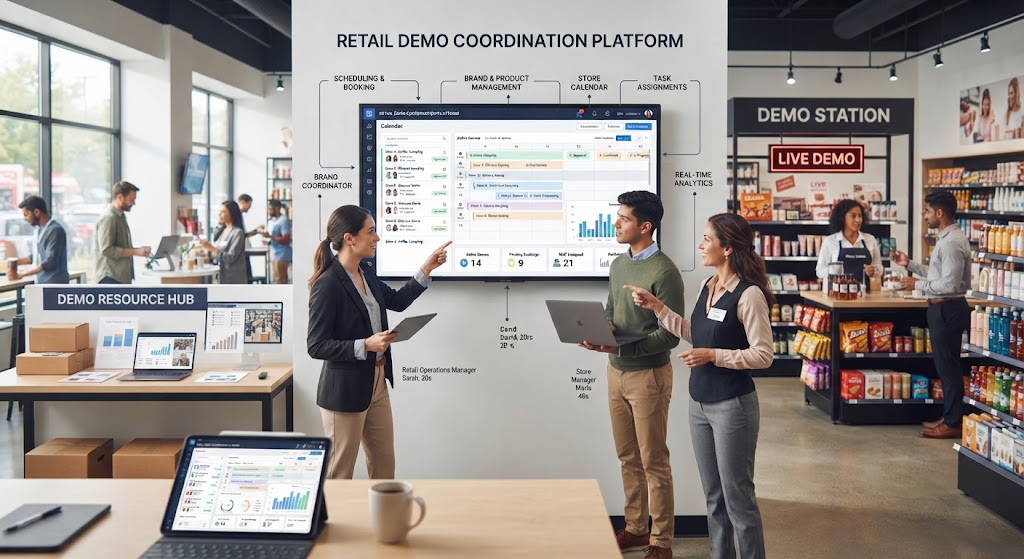
A sales demo management tool earns its place when it does three things: removes scheduling complexity from coordinators and store employees, connects ambassador activity to measurable sales outcomes, and gives CPG brands the store-level data they need to concentrate spend where it converts. Scheduling alone is not enough — the ROI tracking layer is what turns a demo program from a cost center into a defensible budget line.
If you currently manage activations across more than ten locations using spreadsheets or a general-purpose calendar tool, audit one recent campaign: calculate how many coordinator hours went to logistics versus strategy. That number is your baseline. Then request a Demo Wizard demo to see what a per-demo pricing model and single-dashboard coordination would change for your next campaign cycle.
Explore more from our content library:
About the Author
Written by the SaaS / Retail Marketing Technology experts at Demo Wizard. Our team brings years of hands-on experience helping businesses with SaaS / Retail Marketing Technology, delivering practical guidance grounded in real-world results.
Demo Wizard is the Ultimate Store Sampling & Demonstration management software for Brick and Mortar Retailers and CPG Vendors.
Chat with usPhone