
Demo Wizard is the Ultimate Store Sampling & Demonstration management software for Brick and Mortar Retailers and CPG Vendors.
Chat with us

Phone
Copyright © 2026 Demo Wizard
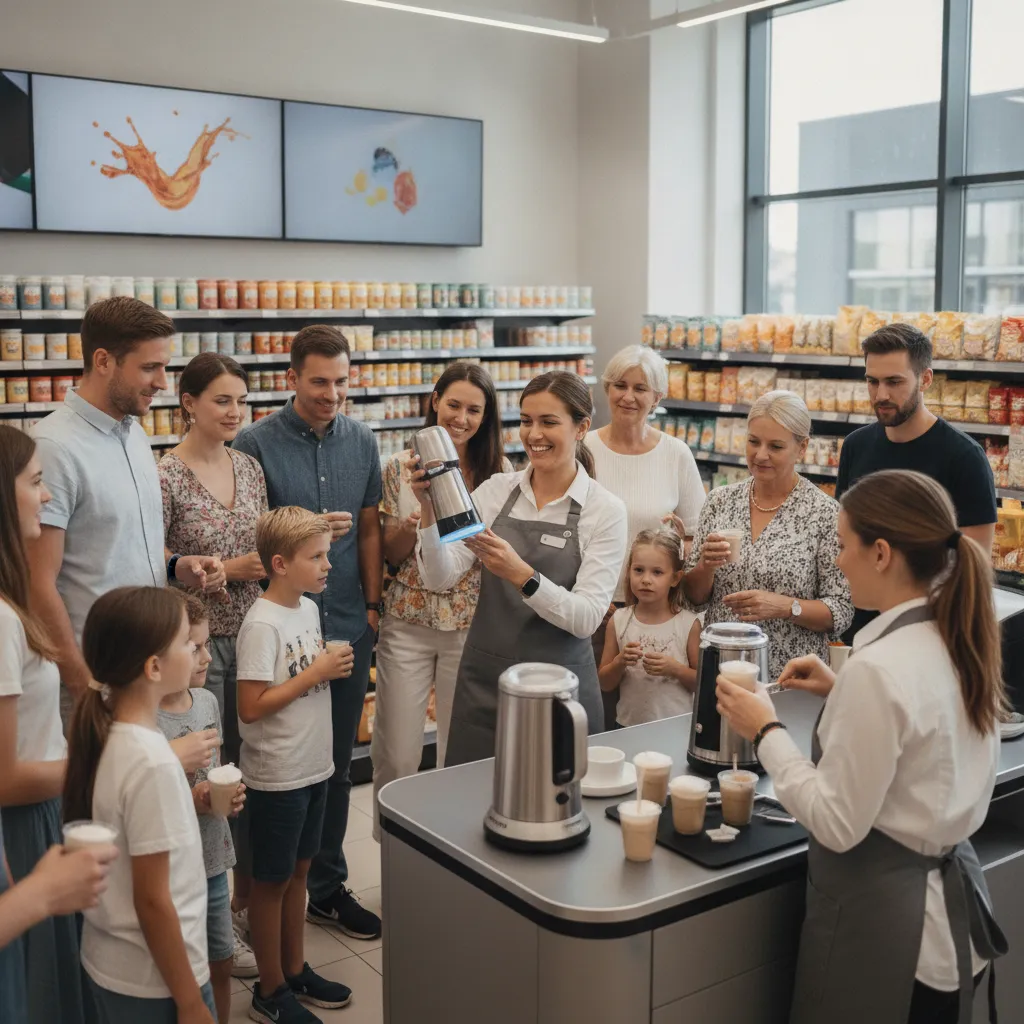
An in-store product demonstration strategy is a planned approach to showcasing products directly to shoppers at retail locations, using trained brand ambassadors to drive trial, conversion, and repeat purchase. Done well, demos consistently outperform passive shelf placement, CPG brands report 400-500% (5X-6X) average same-day sales lifts during food and beverage demo events. The strategy covers staffing, scheduling, retailer coordination, and post-demo ROI tracking to turn one-time samplers into loyal buyers.
An in-store product demonstration strategy is a structured commercial channel, not a sampling giveaway, but a conversion event with trackable trial-to-purchase outcomes.
That distinction matters. A shopper who receives a free sample at a passive table is a different outcome from a shopper who receives a sample, hears a 60-second product story from a trained ambassador, and walks to the shelf to buy. The second scenario is a designed conversion event. Nielsen field studies and POPAI benchmarks show in-store demos can lift same-day CPG sales by 25–30% when executed with trained staff and consistent messaging, a result passive shelf placement rarely matches.
"The difference between a demo that converts and one that doesn't almost always comes down to whether the ambassador was trained to tell a product story or just hand out samples." — Dr. Betsy Gelb, Professor of Marketing, C. T. Bauer College of Business
Demos also connect directly to experiential marketing and brand activation, they are the tactical, store-level execution of both disciplines. The difference is that a demo strategy adds a measurable commercial objective: trial-to-purchase rate, not just brand impression.
Three staffing models exist, each with real trade-offs in quality control and cost.
Brand-employed ambassadors deliver the highest product knowledge and brand consistency, but recruiting, training, and scheduling staff across 20+ states creates significant overhead for a single coordinator.
Third-party demo companies supply trained staff on demand and absorb scheduling complexity, the trade-off is less direct control over how your product story is told.
Retailer-managed staff (uncommon in club and grocery formats) reduce your coordination burden but give you the least control over ambassador quality and demo execution.
For mid-market CPG brands running dozens of monthly events, the staffing model is a strategic decision, not a logistics afterthought. Platforms like Demo Wizard automate ambassador scheduling, assignment, and payroll across all three models, letting one coordinator manage hundreds of monthly events without adding headcount.
Demos sit at the intersection of Promotion and People in the retail marketing mix, which makes ambassador quality a strategic variable, not a soft consideration.
Product, Price, and Place are largely fixed at the point of a demo event. The ambassador is the only variable your brand controls in real time on the store floor. A well-trained demonstrator who can answer ingredient questions, handle objections, and guide a shopper to the shelf is doing the work that no end-cap display or coupon can replicate [2].
That is why the People dimension, who runs the demo, how they are trained, and how their performance is tracked, determines whether your Promotion spend converts or simply generates impressions.
Executing an effective in-store product demonstration strategy requires three things working together: the right staff, structured training, and a scheduling system that doesn't collapse at scale.
Brands typically run demos through one of three staffing models. In-house ambassador teams offer the most brand consistency but carry higher fixed overhead. Agency-sourced staff scale faster but require more onboarding time per event. Hybrid models, a core in-house lead supported by agency staff at peak volume, balance both. The total cost per 3- to 4-hour demo typically ranges from $150 to $350 per event depending on category, market size, and staffing model, with beauty and electronics trending toward the higher end due to longer setup and technical requirements.
A high-converting ambassador needs four things before stepping onto the floor: deep product knowledge (ingredients, use cases, differentiators), rehearsed objection handling, retailer-specific compliance training, and a clear data capture protocol for post-demo reporting. Skipping any one of these directly reduces conversion rates [2].
According to the Academy of Marketing Science, structured step-by-step demo approaches consistently outperform unscripted sampling because they guide the shopper through a deliberate decision-making process rather than leaving purchase intent to chance.
Retailer rules add another layer of complexity. Costco, Whole Foods, and Kroger each enforce distinct requirements around demo timing windows, table setup dimensions, approved sampling equipment, and staffing credentials. Brands that ignore these constraints face event cancellations and damaged retailer relationships, both costly to recover from.
Scheduling 50+ monthly events manually consumes 18 or more hours per week in coordinator time. Demo scheduling software like Demo Wizard reduces that to minutes, automating ambassador assignments, store confirmations, and calendar coordination across locations so one coordinator can manage hundreds of monthly events without additional hiring. For more information, see Terra.
Execution mechanics differ by category. CPG demos, food, beverage, household, center on taste or trial conversion: the ambassador's job is to get the product into a shopper's hand and close with a shelf location. Electronics demos require technical fluency; an ambassador who can't answer a spec question on the floor loses the sale immediately. Beauty demos depend on personalization, skin-tone matching, live application, and tailored recommendations drive purchase far more than a generic pitch [2].
Brands running across multiple categories need category-specific training tracks, not a single generic script. A one-size ambassador program is one of the most common reasons multi-category CPG brands see inconsistent conversion results across their retail footprint.
"Retail demonstrators who receive category-specific training rather than a generic product script show measurably higher conversion rates — the product story has to match the shopper's actual decision criteria." — Anne Zybowski, VP of Retail Insights, Kantar Retail
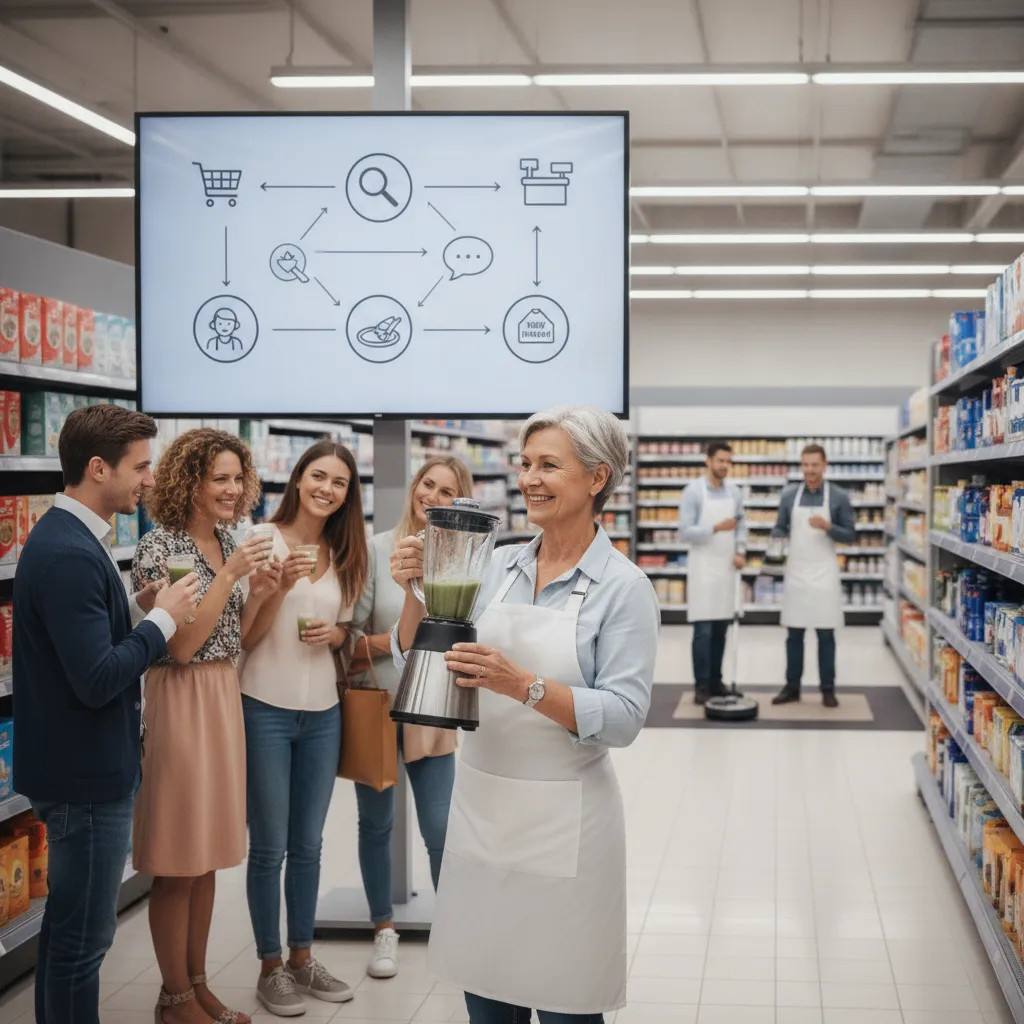
Most in-store demos fail for the same five reasons, and each one directly cuts into conversion rates and wastes activation budget.
Treating demos as one-off events is the most expensive habit in retail marketing. Brands that don't track store-level performance can't identify which locations drive the majority of conversions, and end up spreading budget evenly across sites that perform very differently.
Understaffing or deploying untrained ambassadors does more damage than running no demo at all. Salesforce CX research found that 73% of consumers form their opinion of a brand based on staff interactions. A disengaged demonstrator doesn't just miss a sale, they actively erode brand perception.
Skipping post-demo data capture is a structural flaw in many in-store product demonstration strategies. Without consumer feedback forms or digital sign-ups collected at the event, brands can't attribute sales to specific activations or build audiences for follow-up marketing.
Wrong store selection skews every metric. Placing a premium organic product in a discount grocery environment misaligns the audience, wastes budget, and produces performance data that doesn't reflect the product's actual potential [2].
Ignoring retailer compliance requirements causes last-minute cancellations that burn ambassador travel costs and damage the retail partnerships brands depend on for shelf space.
The fix starts with treating every demo as one data point in a repeatable program. Platforms like Demo Wizard track performance by store and time period, so coordinators can cut underperforming locations and double down on sites that convert, without hiring additional staff to manage the analysis.
Calculate demo ROI by subtracting demo cost from incremental sales revenue, dividing by demo cost, then multiplying by 100 to get a percentage return.
For example: a $500 demo event that generates $1,200 in same-day incremental sales returns an ROI of 140%, ($1,200 − $500) ÷ $500 × 100. That single figure gives finance a defensible number and gives your in-store product demonstration strategy a benchmark to beat on the next activation.
Track five core metrics across every event: trial-to-purchase conversion rate, cost per converted shopper, average basket size on demo day versus a matched control day, repeat purchase rate within 30 days, and ambassador productivity measured as demos completed per hour.
For attribution, use a difference-in-differences approach, compare scanner data for the demo SKU on event days against matched non-event days at the same store. That comparison isolates the sales lift driven by the demo from normal baseline velocity, rather than crediting the demo with sales that would have happened anyway.
Same-day lift tells only part of the story. Track repeat purchases at 30, 60, and 90 days using retailer loyalty card data or CRM matching to measure whether the demo converted a one-time trialist into a repeat buyer [2].
Pulling this data manually from multiple store locations takes hours per week. Platforms like Demo Wizard surface store-level conversion rates, ambassador productivity so one coordinator can identify top-performing stores and shift budget toward them without touching a spreadsheet. The post-demo sales impact data can be obtained from your retail partners. EMI documented the 10% to 25% sustained lift during weeks 1-4 post-event as the trial converts into repeat purchases. For a broader look at how software supports this type of analysis, see our guide to consumer engagement software.
In-store demos convert at 20–40%, digital product videos at 2–5%, but cost-per-reach is far higher in-store, so the right channel depends on your product, budget, and goal.
Physical trial wins on conversion because taste, touch, and smell cannot be replicated on a screen. A shopper who samples a new snack or tests a skincare texture at the shelf is far more likely to buy than one who watches a 60-second product video. That gap makes store selection the most consequential decision in any in-store product demonstration strategy, a poorly chosen location erases the conversion advantage.
Virtual demos, live-streamed or on-demand video, scale reach at a fraction of the cost but sacrifice sensory engagement. They work best for electronics, software, or any product where seeing the output is enough to drive purchase intent.
Hybrid programs pair a physical demo with a digital follow-up, QR code, SMS, or email, and consistently outperform single-channel approaches. Brands using hybrid execution report 15–20% higher 30-day repeat purchase rates than in-store-only programs, because the in-store moment drives trial while the digital touchpoint sustains the relationship.
The decision framework is straightforward: choose in-store when the product requires taste, touch, or smell; choose digital when geography or budget limits physical reach; choose hybrid when building long-term repeat purchase is the goal.
Hybrid execution does add operational complexity. Ambassadors must capture consumer opt-ins at the demo point in real time, which requires both structured training and a technology stack that records consent and contact data on-site. Platforms like Demo Wizard support this by equipping ambassadors with the scheduling, assignment, and post-demo data capture tools needed to feed that digital follow-up pipeline, without adding coordinator headcount.
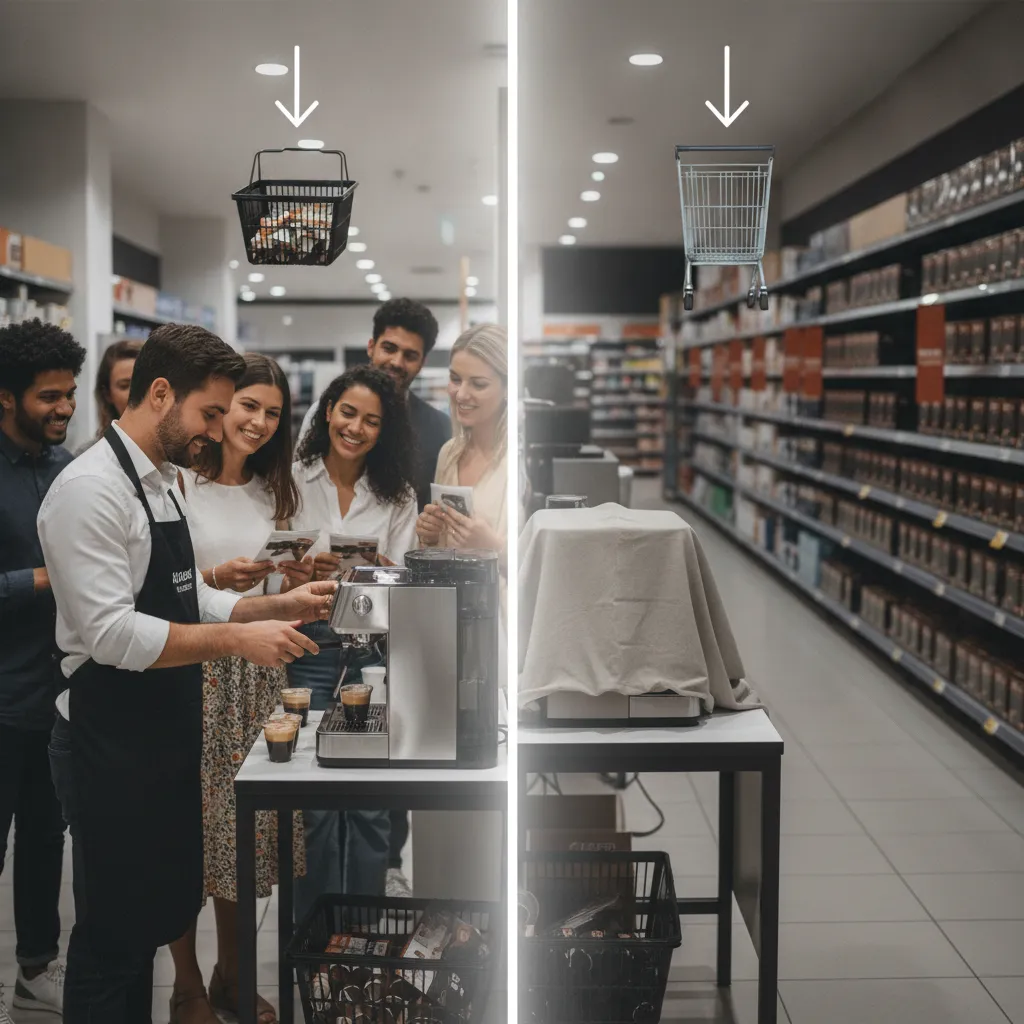
A single in-store demo typically costs between $150 and $500, depending on ambassador pay rates, product sampling costs, and the retailer's fee structure. Staffing is usually the largest line item, running $18–$40 per hour for a trained brand ambassador. Platform costs add a small overhead, Demo Wizard, for example, starts at $3 per demo, which is negligible compared to the labor and sampling budget. Brands running high demo volumes can reduce per-event costs significantly through scheduling efficiency.
Most CPG brands see measurable velocity gains with two to four demos per store per month, though the right number depends on store traffic, category, and product price point. Brands that share data report sales increases of 60% or more during active demo periods [1]. Running fewer than two demos per month in a given location makes it harder to separate demo-driven lift from baseline sales noise.
Ambassadors should record units sampled, shopper conversations held, units sold during the event, and any objections or questions that came up repeatedly. Post-demo, pairing that field data with POS sales figures for the same store and time window lets you calculate a real experience-to-purchase conversion rate. That store-level data, aggregated across locations, is what separates a demo program with provable ROI from one that relies on gut feel.
Prioritize stores with high category foot traffic, a history of strong velocity for adjacent products, and retailer relationships where demo access is already approved. After your first wave of activations, let conversion data drive the decision, stores that consistently convert samplers to buyers at above-average rates deserve more demo slots. Platforms that track performance by store and time period make this analysis straightforward, removing the guesswork from budget allocation.
Most major retailers require demo scheduling requests submitted four to eight weeks in advance, particularly for high-traffic periods like holidays or seasonal resets. Submitting requests late risks losing preferred time slots and can strain retailer relationships. Brands running ongoing programs benefit from locking in recurring monthly slots rather than scheduling event by event, which reduces administrative burden and ensures consistent store-level presence throughout the year.
A strong in-store product demonstration strategy comes down to three decisions made before a single sample is poured: choosing the right store locations based on traffic and category fit, briefing ambassadors on a process-focused demo approach that walks shoppers through how the product works rather than just the outcome [3], and building a data collection system that ties each event to measurable sales impact.
"Brands that treat in-store demonstrations as a repeatable, data-driven program rather than a one-off promotional event are the ones that build lasting retail partnerships and prove ROI quarter after quarter." — Mark Heckman, Principal, Mark Heckman Consulting and former VP of Marketing, Marsh Supermarkets
The brands that consistently prove demo ROI to retail partners are the ones tracking conversion rates at the store level, not just counting samples distributed. As a concrete next step, pull your last three months of demo records and calculate cost-per-converted-shopper by location, that single metric will show you exactly where to concentrate your next campaign budget.
In-Store Product Demonstrations: Value, Benefits & Best Practices
Why Step-by-Step Product Demos Drive More Sales, Academy of Marketing Science
Explore more from our content library:
About the Author
Written by the SaaS / Retail Marketing Technology experts at Demo Wizard. Our team brings years of hands-on experience helping businesses with SaaS / Retail Marketing Technology, delivering practical guidance grounded in real-world results.
Demo Wizard is the Ultimate Store Sampling & Demonstration management software for Brick and Mortar Retailers and CPG Vendors.
Chat with usPhone