
Demo Wizard is the Ultimate Store Sampling & Demonstration management software for Brick and Mortar Retailers and CPG Vendors.
Chat with us

Phone
Copyright © 2026 Demo Wizard

Understanding how to scale product demos is essential. To scale product demos, build a repeatable demo asset, self-guided, recorded, or automated, that runs without a live rep, then distribute it across every GTM channel simultaneously. The use comes from decoupling demo delivery from headcount: one coordinator can run hundreds of monthly activations when the right platform handles scheduling, ambassador management, and post-demo analytics in one place. Scaled demos consistently outperform live-only approaches on cost-per-demo and pipeline velocity.
Scaling product demos means decoupling delivery from rep time, one coordinator managing hundreds of monthly events, not dozens.
Most teams confuse volume with scale. Running 30 live demos instead of 10 is not scaling, it is just more of the same labor cost. True scale happens when the system does the work: scheduling, assignment, and tracking run automatically while your team focuses on strategy. That is the benchmark worth building toward.
The cost gap is stark. Live demos average $50–$150 per interaction in labor alone. Ambassador-led or automated demos, coordinated through a purpose-built platform, can bring that figure down to $3–$10 per demo, a 10x cost reduction that compounds across hundreds of monthly activations.
"The brands that win at scale are the ones that treat their demo program like a product — they iterate on it, measure it, and invest in making it repeatable before they ever think about adding headcount." — Lori Richardson, Founder at Score More Sales
The highest-value points sit at three stages: top-of-funnel awareness demos that run without a rep, mid-funnel self-guided product walkthroughs, and in-store activations running in parallel across multiple retail locations. Each stage can operate simultaneously when built on a reusable core demo rather than a custom one-off.
GTM teams lose the most ground when they treat every demo as a bespoke event [1]. Building a reusable core story with channel-specific adaptations, one version for video, one for a live walkthrough, one for an in-store ambassador, is how teams that know how to scale product demos actually do it. According to research on scaling demos across GTM teams, brands that standardize their demo narrative before expanding channels see 40% faster ramp times for new ambassadors and sales reps.
A scaled demo has three jobs: qualify interest, communicate one core use case clearly, and hand off a warm lead. It does not replace every live touchpoint, it protects rep time for the conversations that actually require it.
For CPG brands running in-store activations, platforms like Demo Wizard handle scheduling across locations, ambassador deployment, and post-demo conversion tracking at $3 per demo, so a single coordinator can manage hundreds of monthly events without the overhead that kills margin at scale.
To scale product demos, build one master demo around a single outcome, then cut and adapt it for every channel, persona, and team that needs it.
Step 1: Nail one core use case. Pick the single problem your product solves fastest and build the entire demo around that outcome. A feature tour loses audiences; a before-and-after story around one specific result keeps them watching.
Step 2: Script for the 90-second attention window. The first 90 seconds must deliver three things in order: the problem, the proof, and the next action. Everything after that is optional depth for buyers who want it.
Step 3: Build modular segments from one master recording. Cut a 2-minute top-of-funnel version, a 5-minute mid-funnel version, and a 10-minute deep-dive. One shoot, three assets, each matched to where a buyer actually is in their decision process.
Step 4: Adapt for channel and persona. In-store ambassador demos need a physical flow and a leave-behind, a QR code card or a sample with a printed proof point works well. Self-guided web demos need interactive hotspots so visitors explore at their own pace. Email demos need a 60-second video thumbnail that plays on click. For CPG brands running in-store activations, platforms like Demo Wizard let coordinators assign channel-specific demo scripts to brand ambassadors across dozens of store locations simultaneously.
Step 5: Standardize ambassador training. Any trained rep must deliver the same core message. Build a scoring rubric with at least five observable behaviors, for example: opens with the problem statement, names the product benefit within 30 seconds, handles one objection, presents the leave-behind, and asks for the purchase or next step. Score every rep against it before deployment.
Step 6: Run a pre-launch checklist. Before any demo goes live, confirm message clarity, CTA placement, tracking pixel or QR code setup, and a fallback plan if tech fails in-store. A demo that crashes on launch day without a backup costs more than the time it takes to prepare one.
When all six steps are followed in sequence, the result is a demo system that can be handed off to a new coordinator or expanded to a new region without rebuilding from scratch. The modular structure means updates to one segment, say a new pricing claim or a refreshed proof point, propagate across all channel versions without requiring a full reshoot. For more information, see Us Marine Corps Veteran Official Corps Product.
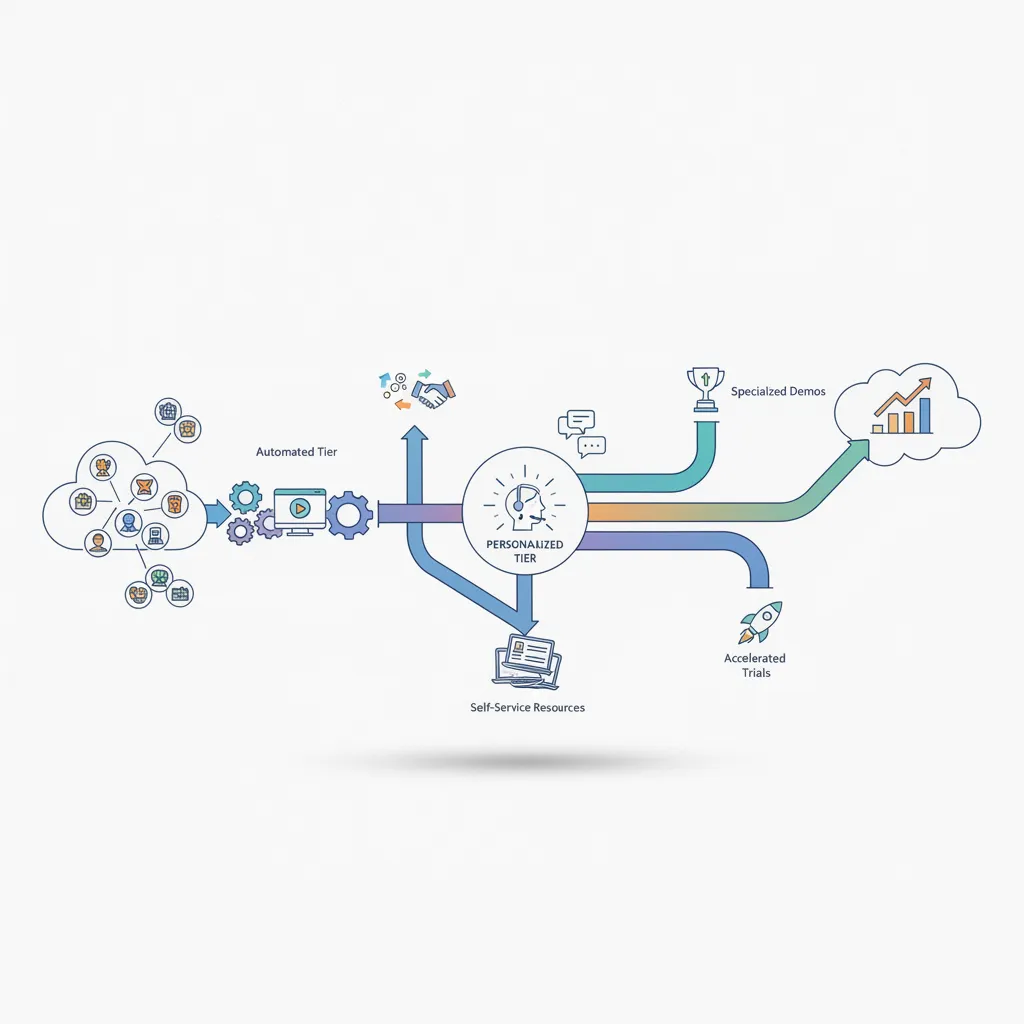
Three tool categories cover most of what teams need to scale product demos: interactive demo platforms, in-store demo management software, and async video tools.
Interactive demo platforms, Navattic, Storylane, and Reprise, build self-guided, clickable product tours for web and SaaS products. Technical setup is straightforward: embed the demo on a landing page, gate it with a minimal form (name and email only), connect to your CRM via Zapier or a native integration, and fire a retargeting pixel on demo completion. That four-step setup takes most teams under a day.
Async video tools like Loom and Vidyard serve a different job: sales reps record short walkthroughs and send them as part of outbound sequences. They require no integration beyond a screen recorder and a link.
In-store demo management platforms handle a different problem entirely, coordinating brand ambassadors, retail locations, and post-demo data at scale. The critical technical requirements here are mobile-first ambassador check-in, real-time reporting per store location, and photo and compliance capture. Scheduling alone is not enough.
Demo Wizard bundles scheduling automation, ambassador management, payroll, and post-demo analytics in one system with no restrictions on users or locations, pricing starts at $3 per demo regardless of team size. That single-platform approach eliminates the three-tool stack most CPG brands cobble together from separate scheduling, payroll, and analytics tools, cutting coordinator admin time by 60–70%.
When evaluating any platform in this category, check whether the pricing tier caps users or locations. Per-user or per-location pricing creates real friction once a brand runs 100 or more monthly activations across multiple states.
Key features to evaluate when selecting a demo automation platform include:
"Scalability in sales enablement isn't about doing more — it's about building systems that do the repetitive work so your people can focus on the judgment calls that actually move deals." — Scott Brinker, VP Platform Ecosystem at HubSpot and Editor at Chief Martec
Scaling demos without measuring them wastes budget, track completion rate, conversion rate, cost-per-demo, and pipeline influenced to know what's working.
Four KPIs anchor any scaled demo measurement framework. Demo completion rate should exceed 60% for self-guided formats, anything lower signals a drop-off problem in the content itself, not the channel. Experience-to-purchase conversion rate benchmarks at 20–30% for in-store demos, giving you a floor to evaluate individual locations against.
Cost-per-demo and pipeline influenced per demo round out the picture. Cost-per-demo tells you whether your scaling model is actually getting cheaper at volume. Pipeline influenced per demo tells finance whether the program earns its budget, without it, every renewal conversation becomes a negotiation based on gut feel.
For web and self-guided demos, also track drop-off by module (which step loses viewers), CTA click rate immediately after the demo ends, and CRM stage progression within 30 days of completion. These three signals together show whether a demo is building intent or just filling time.
In-store attribution requires unique QR codes or promo codes assigned per store location, tied directly to basket data or retailer POS reports. Without this link, ROI is unverifiable, you have attendance data, not impact data. Platforms like Demo Wizard generate store-level performance reports that connect demo activity to conversion metrics, so coordinators can identify which locations drive the highest returns and reallocate budget accordingly.
Across all channels, assign demo touchpoints as "influenced" in your CRM rather than "last touch." Deals that include a demo touchpoint close 2–3x faster than those without one, last-touch attribution erases that signal entirely and undervalues the demo's role in the pipeline.
This data loop is what makes learning how to scale product demos compound over time: post-demo analytics identify high-performing stores or segments, budget shifts toward them, and each new campaign cycle starts from a higher baseline than the last.
Scaled demos cut cost-per-demo by up to 97% compared to live reps, but the highest-performing brands combine both models rather than choosing one.
A skilled live demo rep converts 25–40% of shoppers at the shelf—strong numbers. The cost runs $50–$150 per demo in labor, and a single rep maxes out at 4–6 demos per day. That ceiling is the problem: live-only programs don't scale without a proportional increase in headcount and budget.
Scaled ambassador-led in-store demos bring conversion rates of 20–30%—a modest dip—at $3–$15 per demo. One coordinator managing a platform like Demo Wizard can run hundreds of monthly events across dozens of store locations without adding staff. The math shifts decisively: more events, lower unit cost, comparable conversion.
Self-guided web demos sit at the other end of the spectrum. Conversion runs 5–15%, but the marginal cost per view is effectively zero and the content runs 24/7. That profile makes web demos the right tool for top-of-funnel qualification—not for closing high-value accounts or working through complex objections.
The before/after picture for brands that figure out how to scale product demos is consistent: adding a scaled demo layer typically produces a 3–5x increase in total demo volume within 90 days without increasing headcount, and deals that include a demo touchpoint show a 20–35% shorter sales cycle.
The right model is hybrid. Use scaled in-store demos for volume and qualification. Reserve live reps for high-value accounts or situations where objections require real-time judgment. That combination outperforms either approach alone—on reach, cost, and close rate.
"The companies that scale fastest aren't the ones with the biggest sales teams — they're the ones that figured out how to make every demo interaction feel personal while running it at machine speed." — Sangram Vajre, Co-founder of Terminus and B2B Go-to-Market author

With manual scheduling tools, most coordinators max out at 20–30 demos per month before logistics consume their entire workweek. Platforms built for multi-location retail activation change that ceiling significantly. Demo Wizard, for example, is designed so a single coordinator can manage hundreds of monthly events by automating scheduling, ambassador assignments, and payroll across locations—without adding headcount.
The most common mistake is scaling volume before fixing the measurement gap—running more demos without knowing which ones actually drive purchases. Brands that add locations without post-demo conversion tracking end up spreading budget across low-performing stores. Before increasing demo frequency, confirm you can track sales impact by store and time period, so you scale what works and cut what doesn't.
Scaled demos work for complex products, but the format requires tighter structure. A food sample needs 30 seconds; a skincare device or supplement may need a 3–5 minute guided interaction with a trained ambassador. The key is standardizing the core message and ambassador training across locations while allowing enough flexibility for the ambassador to answer product-specific questions. Consistency in the story, not the script, is what scales.
A scalable in-store demo should run 2–4 minutes per shopper interaction—long enough to communicate the product's key benefit and prompt a purchase decision, short enough to repeat across high foot-traffic periods. Demos that run longer than 5 minutes rarely improve conversion rates and reduce the total number of shoppers an ambassador can reach in a single event.
The most effective onboarding approach combines a short recorded walkthrough of the core demo script, a written scoring rubric with observable behaviors, and at least one supervised practice run before live deployment. Platforms that include built-in training modules, like Demo Wizard, allow coordinators to assign onboarding content digitally and track completion before scheduling a new ambassador for their first activation. This reduces inconsistency across locations and shortens ramp time to under 48 hours for most product categories.
Scaling product demos comes down to three decisions: standardize the demo story before you add locations, build measurement into every activation so you know which stores and times convert, and automate the coordination work that otherwise caps how many events one person can run.
Brands that get this right stop treating demos as a cost and start treating them as a data source. Each activation generates store-level conversion data that sharpens the next round of scheduling decisions.
As a concrete next step, audit your last 10 demos: did you capture conversion rates by location? If not, that's the gap to close first—tools like Demo Wizard track experience-to-purchase rates by store and time period, starting at $3 per demo. For additional frameworks on aligning demo programs with broader revenue operations strategy, the Sales Management Association publishes research on field sales enablement and activation best practices that complement the approaches outlined here.
Explore more from our content library:
Demo Wizard is the Ultimate Store Sampling & Demonstration management software for Brick and Mortar Retailers and CPG Vendors.
Chat with usPhone