
Demo Wizard is the Ultimate Store Sampling & Demonstration management software for Brick and Mortar Retailers and CPG Vendors.
Chat with us

Phone
Copyright © 2026 Demo Wizard
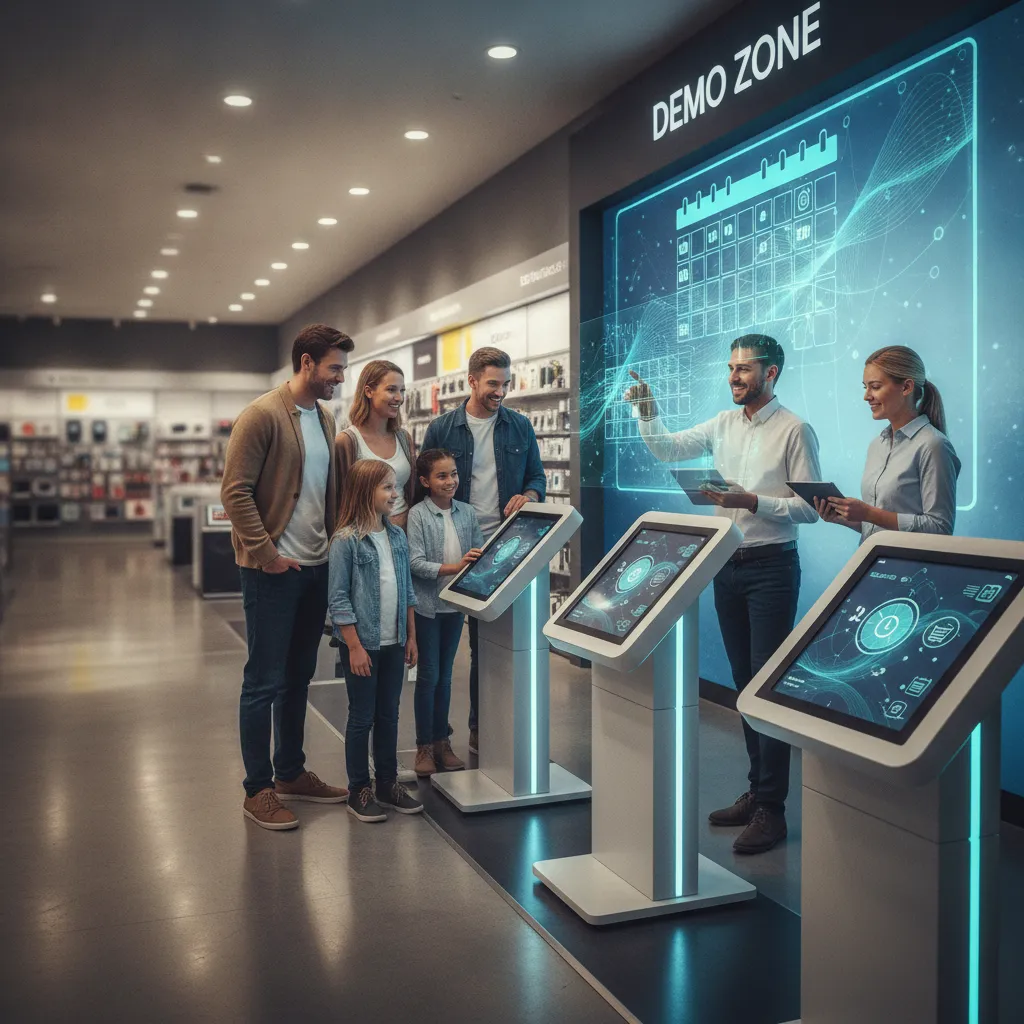
In-store demo scheduling is the process of planning, booking, and coordinating product demonstrations at retail locations, matching the right ambassador, store, and time slot to maximize sales impact. Timing is the single biggest variable: demos run during peak shopping hours and high-traffic seasons consistently outperform off-peak events by a measurable margin. Getting scheduling right reduces retailer conflicts, cuts coordinator workload, and directly lifts conversion rates.
In-store demo scheduling coordinates four variables, ambassador, store location, date, and retailer approval, into a single executable plan that drives measurable sales lift.
That definition matters because most brands treat scheduling as a calendar task. It isn't. Confirming a date means nothing if the ambassador is unavailable, the store hasn't approved the event, or the time slot falls outside peak traffic. All four elements have to align before a demo can convert shoppers into buyers.
Timing is the primary performance lever. Demos run during Saturday windows between 11am and 2pm, or across pre-holiday weekends, routinely see 2–3x the trial rate of off-peak slots [2]. The difference isn't the product or the ambassador, it's foot traffic volume at the moment of the demo.
"The brands that win at in-store demos are the ones that treat scheduling as a strategic asset, not an administrative task. Locking the right time slot at the right store is half the battle before a single sample is poured." — Tom Stein, Senior Retail Strategist, Attack Marketing
Q4 compresses available prime slots faster than any other quarter. Brands targeting high-traffic retailers like Whole Foods or Costco need to book 6–8 weeks out to secure weekend placements before competing CPG brands claim them. Waiting until October to plan a November activation is a reliable way to end up with Tuesday afternoon slots in low-traffic aisles.
Seasonal demand also shifts which categories perform. A beverage brand that peaks in summer needs its scheduling strategy locked in by April; a gifting-oriented food brand should be building its Q4 calendar in August. These windows are predictable, the brands that miss them typically do so because their coordination process is too slow, not because the opportunity wasn't visible.
One-off demos and ongoing demo programs require fundamentally different approaches to scheduling. A single launch event at one store can be coordinated manually. A recurring program running 50 or 100 demos per month across multiple states cannot, the administrative load grows faster than any spreadsheet can handle.
Recurring programs are where systematic scheduling pays off most clearly. Platforms built for in-store demo scheduling, like Demo Wizard, automate the coordination of ambassador availability, store approvals, and time-slot assignments across hundreds of monthly events, so one coordinator manages what would otherwise require a full team. This kind of automation connects directly to broader brand activation and experiential marketing strategy, where consistency of execution across locations determines whether a campaign builds brand equity or simply burns budget.
According to the automated demo scheduling research from Demo Wizard, in-store sampling programs [1] that run continuously, rather than as isolated events, also generate the longitudinal performance data needed to identify which stores and time slots produce the highest conversion rates. That data loop is only possible when scheduling is systematic enough to produce comparable, repeatable conditions.
A successful in-store demo program follows five sequential steps: define target stores, negotiate placement, recruit ambassadors, confirm compliance, and brief the team.
Start by identifying which store locations match your target shopper—club formats like Costco draw bulk buyers, specialty grocers attract ingredient-conscious consumers, and mass retailers offer volume. Once you have a target list, contact retail buyers to negotiate dates and placement. Most major grocery chains require 2–4 weeks advance notice, a certificate of insurance, and a signed demo agreement before approving any slot [2].
Retailer rejection is common and usually comes down to three causes: a competing brand already holds that demo slot, a category conflict with the store's promotional calendar, or store-level manager discretion. When a slot is denied, escalate to the regional buyer rather than the store manager, and propose two or three alternative dates immediately—showing flexibility increases approval rates.
Ambassador staffing runs parallel to placement negotiations. Match reps to store format: a club-store ambassador needs to handle high-volume sampling and crowd management, while a specialty-grocer rep must field detailed ingredient questions. Confirm availability before locking any schedule—last-minute no-shows are the most common cause of cancelled demos. Platforms like Demo Wizard let a single coordinator assign ambassadors across hundreds of monthly events, matching availability to store format without manual back-and-forth.
"Staffing is where most demo programs break down. You can have the perfect time slot and the best product in the store, but if the ambassador isn't matched to the retail environment, conversion suffers immediately." — Maria Gonzalez, Director of Field Marketing, T-ROC Global
Compliance requirements differ by retailer and cannot be treated as a single checklist. Costco mandates specific table dimensions and defined sampling portion sizes; natural grocery chains such as Sprouts or Natural Grocers typically require organic certification or non-GMO documentation before approving a product for in-store demo scheduling [1].
Before the event date, brief ambassadors with a product script, setup specifications, and retailer-specific rules. A written brief distributed at least 48 hours in advance gives reps time to ask questions and arrive prepared—reducing on-site errors that damage retailer relationships.
The U.S. Food Safety guidelines from FoodSafety.gov outline safe food handling and sampling standards that apply directly to in-store demo operations, particularly for perishable or temperature-sensitive products. Ensuring ambassadors are trained on these standards protects both the brand and the retailer from compliance violations.
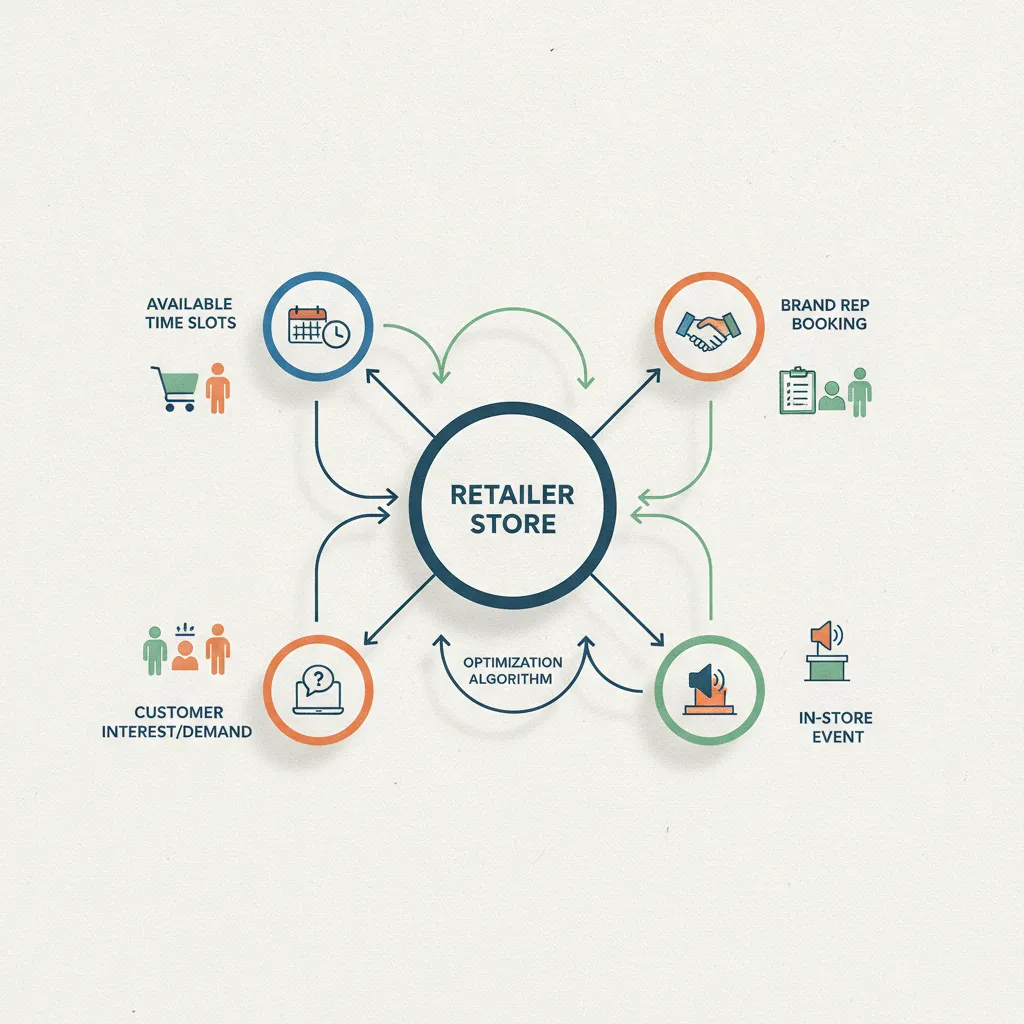
Purpose-built demo scheduling software cuts coordinator time from 15–20 hours per month to under 3 hours by replacing spreadsheets with automated workflows. For more information, see Request A Demo.
Coordinating 50 monthly demos via spreadsheets and email typically consumes 15–20 hours of coordinator time, chasing ambassador availability, confirming store slots, and manually sending reminders. Purpose-built in-store demo scheduling software collapses that to under 3 hours by automating each of those steps.
Not all platforms are built for this specific problem. Some competing tools focus on trade promotion management broadly, treating demo scheduling as a secondary feature. Others target event staffing across industries and lack retail-specific logic. Demo Wizard is built specifically for in-store demo programs, combining ambassador management, payroll processing, and post-demo analytics in one platform, starting at $3 per demo, with no restrictions on users or locations.
That last point matters at scale. A platform without per-location or per-user fees lets one coordinator manage hundreds of monthly events, growing from a 10-store regional launch to a national program, without renegotiating software pricing or adding headcount. For a broader look at how leading brands approach this, the in-store demo strategy guide from Attack Marketing covers scaling principles that complement automated scheduling systems.
Five features separate purpose-built tools from adapted workarounds:
Without store-level performance data, coordinators cannot tell which activations earned their budget, and retailers increasingly demand that proof before granting additional shelf or floor space [1].
Five KPIs determine whether a demo program pays off: units sampled, units sold, conversion rate, cost per trial, and velocity lift.
Track these five numbers for every event: units sampled, units sold during the demo window, experience-to-purchase conversion rate, cost per trial, and velocity lift, the change in weekly sales versus the baseline week before the demo ran.
Experience-to-purchase conversion rate is the most direct ROI signal. Well-executed in-store demos typically convert 20–40% of trials into a same-visit purchase [1], which means one in four shoppers who taste or try a product buys it before leaving the aisle. Cost per trial and velocity lift together tell you whether that initial conversion compounds, a store showing a 25% sales increase in the seven days after a demo is worth scheduling again.
Post-demo analytics also expose which locations underperform. When velocity lift is flat or negative at a specific store, that's a signal to reallocate budget toward higher-converting locations rather than repeat the same schedule. Brands building a structured measurement framework can find a deeper breakdown of this approach in Demo Wizard's retail demo ROI tracking and analytics resource.
According to the U.S. Small Business Administration's marketing and sales guidance, tracking measurable outcomes from promotional events is a foundational practice for any brand seeking to justify and grow its retail marketing investment.
The demo event itself is only part of the revenue window, post-demo data capture extends it. Three methods work in practice: QR codes linking to a loyalty sign-up, ambassador-collected email opt-ins at the table, and receipt validation programs that confirm purchase after the fact.
Each method feeds a retargeting pipeline. A shopper who samples a product, scans a QR code, and receives a follow-up coupon within 48 hours is far more likely to repurchase than one who tried the product and walked away with nothing. Pairing in-store demo scheduling data with post-event engagement metrics gives brands a complete picture of which activations actually move product, and which ones just move samples.
The four most common in-store demo scheduling mistakes are double-booking ambassadors, missing retailer submission deadlines, skipping store manager confirmation, and scheduling on reset or inventory days.
Double-booking happens when teams rely on shared spreadsheets to track ambassador availability. A spreadsheet has no real-time lock, two coordinators can book the same ambassador for the same slot simultaneously. The only reliable fix at scale is a scheduling system that updates ambassador availability the moment a booking is confirmed, making conflicts visible before they happen.
Missing retailer submission deadlines is a close second. Most grocery and mass-market chains require demo requests 2–4 weeks in advance. Build those deadlines into your campaign calendar at the start of each quarter, not the week before activation.
Store manager awareness is a detail brands routinely skip. An ambassador who arrives to find no table space, no product, and a manager who knew nothing about the event loses the full slot. A brief email or call to the store contact 24 hours before the demo prevents most of these situations.
Scheduling on store reset or inventory days, typically early-week mornings, drops foot traffic sharply [2]. Check with your retail account manager for blackout windows at each banner before locking dates.
Ambassador no-shows carry the full fixed cost of a demo slot with zero sales return. Automated reminders at 48 hours and again at 2 hours, each requiring a confirmation response, cut no-show rates significantly. Platforms like Demo Wizard build this confirmation workflow into the scheduling system so coordinators don't manage it manually.
When an active conflict does arise with a retailer, escalate to the brand's retail account manager, not the store level, and always have a backup date ready before making that call. Showing up to a conflict conversation without an alternative wastes everyone's time and damages the relationship.
Scaling from a 5-store pilot to a 200-store national program fails most often because teams replicate a manual process across more markets rather than replacing it with a system.
Three things must be in place before you expand. First, standardize the demo brief template, product talking points, setup requirements, reporting fields, so every ambassador in every market works from identical instructions. Second, run all markets through a single scheduling platform. Separate tools for separate regions create data silos that make performance comparison impossible. Third, assign regional leads who own retailer relationships in their geography; national coordinators can't maintain store-level trust across 200 locations alone.
Demo Wizard is built for exactly this structure, one coordinator can manage hundreds of monthly events across multiple states without additional hires, with store-level performance data aggregated into a single dashboard. That setup lets regional leads focus on retailer relationships while the platform handles scheduling logistics, ambassador assignments, and post-demo reporting automatically.
"Scaling a demo program nationally without a centralized scheduling system is like trying to run a supply chain on sticky notes. The brands that grow fastest are the ones that systematize before they expand." — James Calloway, CPG Growth Consultant and former Director of Trade Marketing, Natural Products Association
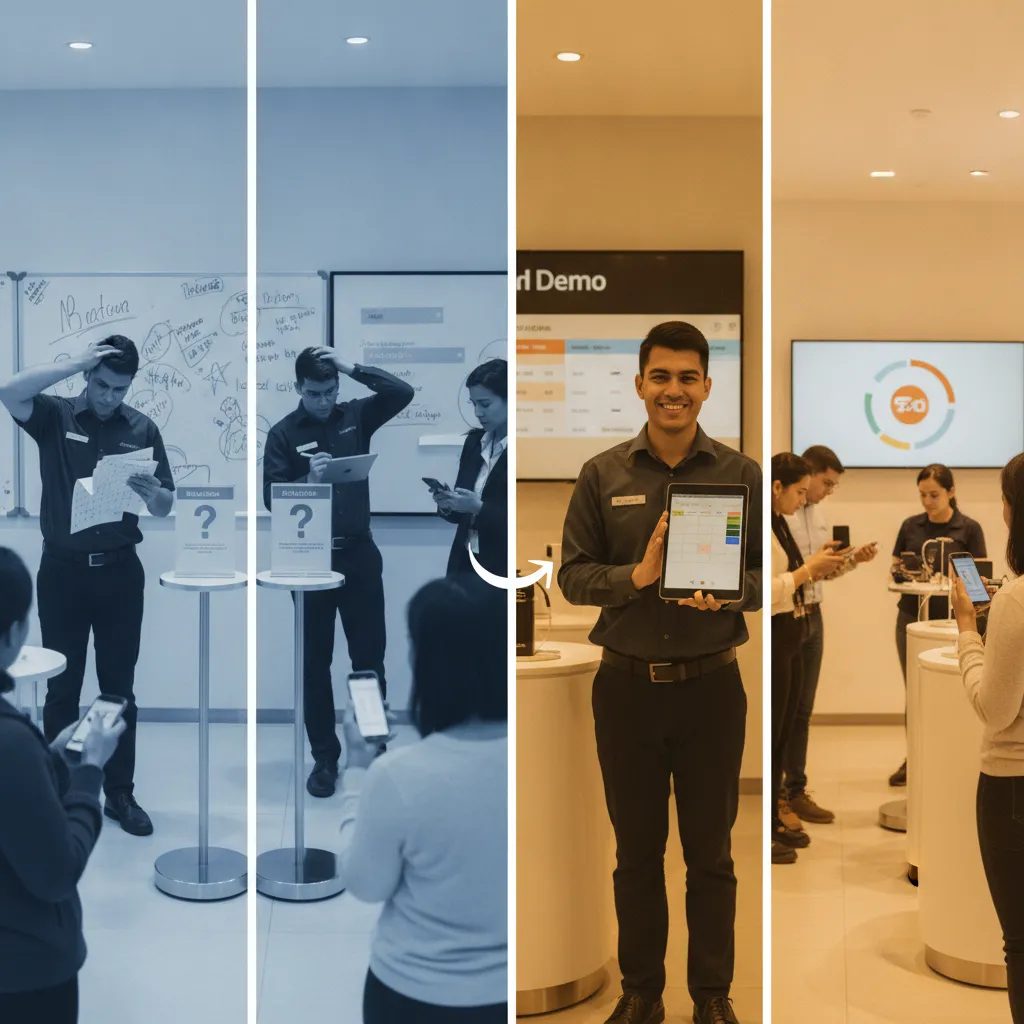
Schedule in-store demos at least 3–4 weeks ahead to secure store approval, confirm ambassador availability, and arrange product delivery. High-traffic periods like holidays or major retailer promotional windows often require 6–8 weeks of lead time. Retailers with formal demo programs, Costco and Whole Foods among them, have fixed submission windows, so missing those deadlines means waiting for the next cycle. Building a rolling 60-day scheduling calendar prevents last-minute gaps.
A single in-store demo typically costs a CPG brand $150–$500 all-in, covering ambassador pay, product samples, and materials [1]. High-frequency programs can bring that per-demo cost down through volume. Scheduling software like Demo Wizard starts at $3 per demo for platform coordination, which is a small fraction of total event cost but can significantly reduce the administrative hours spent per event.
Yes, a small brand can run a demo program without a dedicated coordinator if it uses purpose-built scheduling software to handle the logistics. Platforms that automate ambassador assignment, store communication, and post-demo reporting remove the manual overhead that otherwise requires a full-time hire. Demo Wizard, for example, is built so one person can manage hundreds of monthly events across multiple locations without additional staff.
Start by asking the retailer's demo coordinator exactly why requests are being declined, the answer is usually timing, product category saturation, or incomplete submission paperwork. Fix the specific gap: adjust your requested time slots, provide proof of liability insurance, or reformat your product information sheet to match the retailer's template. If rejections continue, request a category review meeting with the buyer rather than the demo desk. Persistence through the right channel matters more than volume of requests.
Independent retailers typically offer more scheduling flexibility and shorter lead times, often approving demos with just one to two weeks' notice and minimal paperwork. National chains, by contrast, require formal submission through centralized portals, certificates of insurance, and category buyer approval weeks in advance. For brands managing both, maintaining separate scheduling workflows for each retailer type, while tracking all events through a single platform, prevents missed deadlines and ensures compliance requirements are met for every location.
Effective in-store demo scheduling comes down to three decisions: when to run, who to staff, and how to measure what actually happened. Brands that pin down optimal store-and-time combinations, rather than booking demos by habit, consistently see stronger conversion [2]. Treating scheduling as a data problem, not a calendar problem, is what separates programs that scale from ones that stall.
If you coordinate more than 20 demos a month and still rely on spreadsheets, audit one month of your scheduling time against your demo count. Then request a Demo Wizard walkthrough to see what that same workload looks like when ambassador assignment, store coordination, and ROI reporting run from a single platform.
Explore more from our content library:
Demo Wizard is the Ultimate Store Sampling & Demonstration management software for Brick and Mortar Retailers and CPG Vendors.
Chat with usPhone