
Demo Wizard is the Ultimate Store Sampling & Demonstration management software for Brick and Mortar Retailers and CPG Vendors.
Chat with us

Phone
Copyright © 2026 Demo Wizard
In-store product demonstrations drive purchase intent by letting shoppers taste, touch, or test a product at the exact moment they're deciding what to buy, removing the gap between discovery and purchase. The strongest consumer engagement strategies at the point of sale pair a trained brand ambassador with a well-placed, well-stocked activation so trial converts immediately into a cart add, rather than a forgotten impression. Coordination across staffing, inventory, and retailer compliance is what separates a demo that lifts sales from one that just occupies floor space.
Live sampling works because it removes the one thing that stops a shopper from buying something new: risk. Letting a customer taste, touch, or test a product before paying answers the "will I actually like this" question on the spot, which is why in-store demos remain one of the most reliable consumer engagement strategies available to CPG brands at the point of sale. Brands looking to strengthen this tactic can also review broader proven strategies that boost customer engagement for ideas that extend beyond the demo table itself.
Products with sensory differentiation see the strongest response, food, beverage, and personal care items where taste, scent, or texture is the actual selling point. Commodity goods with little variation between brands see a smaller lift, because sampling doesn't resolve a meaningful uncertainty for the shopper.
A demo table near the entrance, an end-cap, or a meal-planning aisle catches shoppers while they're actively building a cart. The same table pushed to a back aisle sees a fraction of the foot traffic, regardless of how good the product tastes [2]. This tactic works best for emerging CPG brands that need fast trial numbers and velocity data ahead of a shelf review, retailers want proof a product moves before committing permanent space. For a deeper look at how placement and shoppable tools work together, see this overview of how CPG brands can drive awareness at retail with shoppable tools.
What most guidance skips: demos only convert reliably when paired with real-time inventory visibility. A brand ambassador who runs out of stock mid-shift loses every shopper who arrives afterward, the interest was there, the product wasn't.
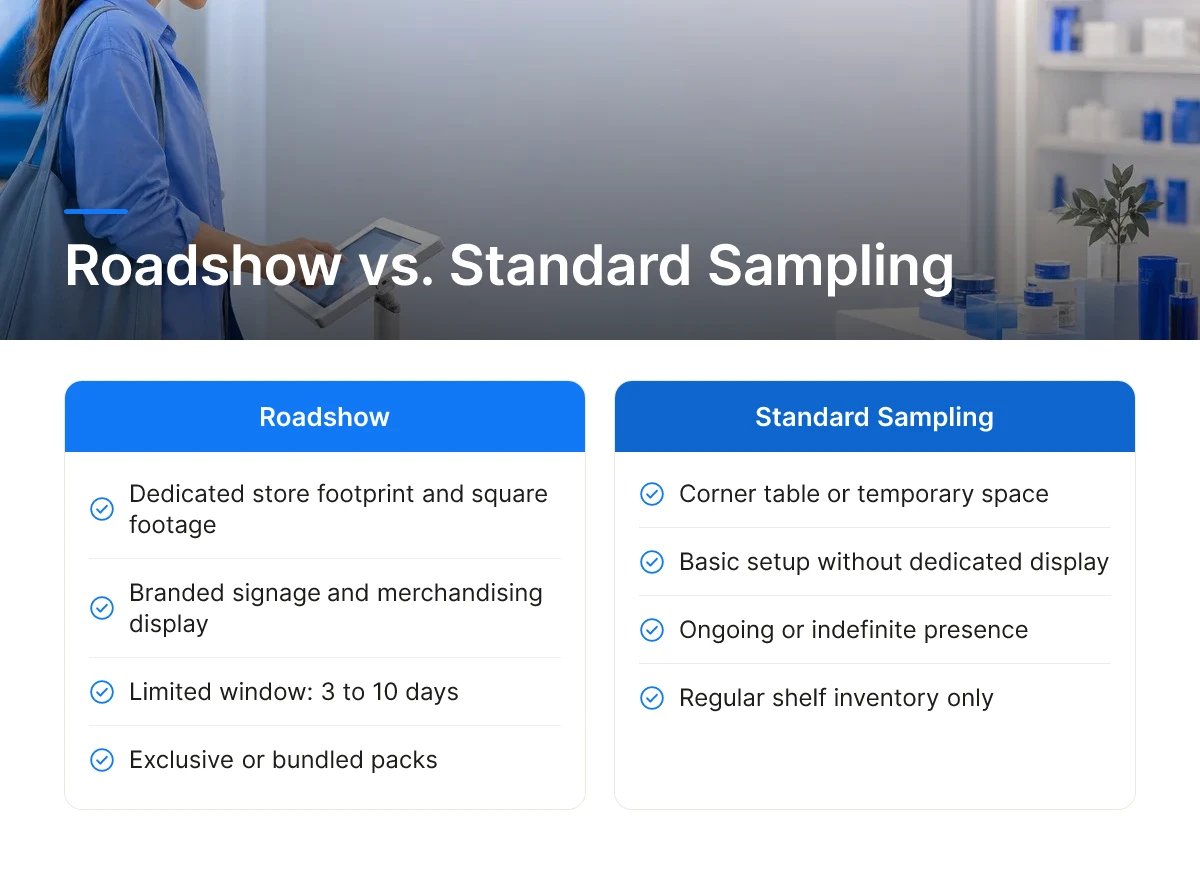
A roadshow turns a corner of the store into a temporary branded destination, dedicated footprint, staged inventory, and offers shoppers can't get anywhere else in the store.
Unlike a standard sampling table, a roadshow claims real square footage: branded signage, a merchandising display, and bundled or exclusive packs not carried on the regular shelf. The limited window, typically 3 to 10 days, creates a sense of urgency a permanent display never can. Shoppers know the deal disappears after the weekend, and that scarcity moves people who might otherwise put off the decision.
The path from sample to sale is also shorter. A shopper who likes what they tried can grab a unit straight from the pallet in front of them, rather than remembering to look for it on a regular shelf visit later, a gap where most purchase intent quietly dies.
Roadshows suit brands that already have proven trial-to-purchase performance and want to build a retailer relationship or earn a path to permanent placement. The differentiator that separates a strong roadshow from a wasted weekend is inventory forecasting tied to expected foot traffic, staffing the table well means nothing if the pallet is empty by Saturday noon. Many of the same principles apply to broader in-store brand activation strategies used across retail formats.
Ambassador quality determines conversion more than any display or offer, trained staff turn tasters into buyers, while generic staffing turns a demo into a free snack stand.
Ambassadors who know ingredients, sourcing, and how to handle a shopper's hesitation close sales that a poorly briefed staffer simply lets walk away. This matters most for brands running campaigns across dozens of stores at once, where message consistency is difficult to police store by store without a system in place.
Retailer rules vary by banner and even by region, some require supervisor sign-off before setup, others cap footprint size or restrict aisle placement. When coordination runs through phone calls and spreadsheets, these gaps surface only after a campaign ends, when it's too late to fix them. This is the piece most competing approaches to consumer engagement strategies leave out: mobile check-in and photo verification catch a missing sign-off or an oversized display in real time, not in a post-mortem report weeks later.
Common compliance gaps that undermine otherwise sound consumer engagement strategies include:
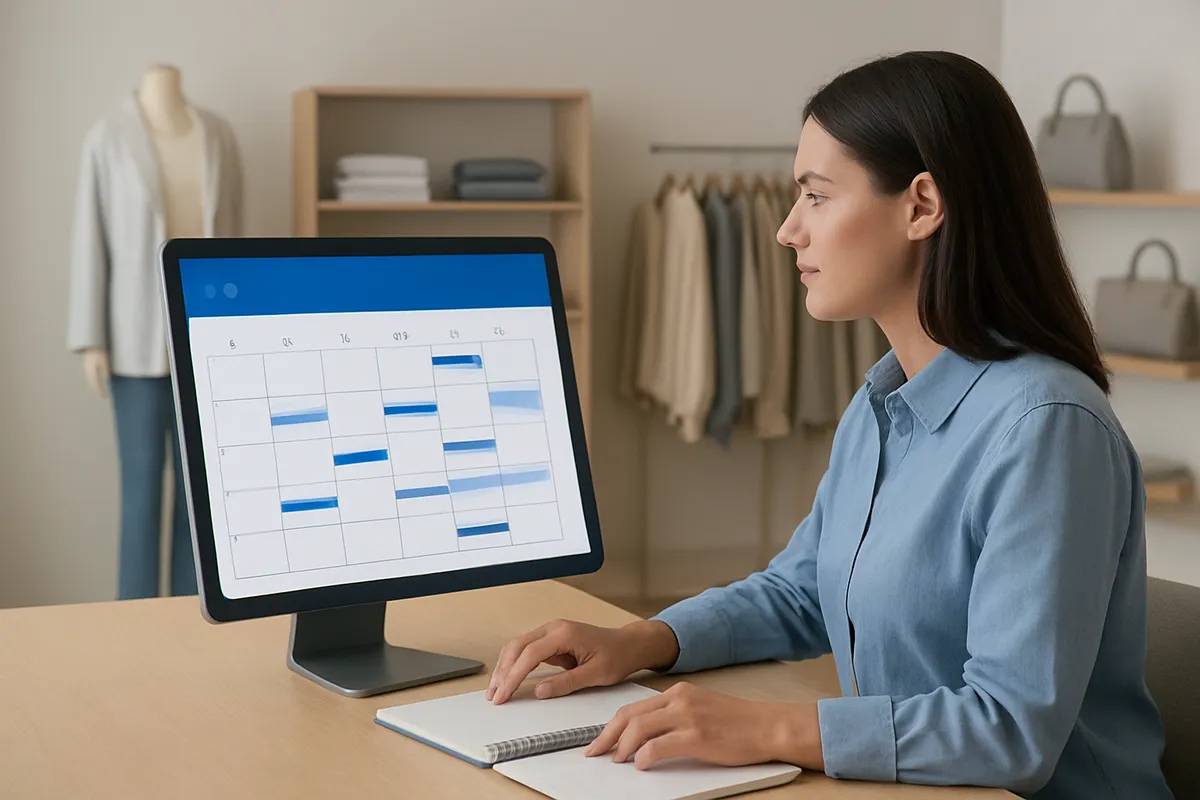
A shared calendar visible to the brand, the retailer, and demo staff stops the double bookings and last-minute cancellations that quietly kill activation ROI.
When every actor can see the same schedule, two brands can't claim the same end-cap on the same Saturday, and a distributor can't send an ambassador to a store that already declined the date. On the retailer side, this means far fewer disruptions for store employees, who otherwise field vendor requests one phone call and one email at a time.
This setup is best suited for retailers and distributors coordinating many brands across many doors at once, a single grocery banner might have a dozen CPG vendors requesting floor time in the same week. Demo Wizard's scheduling system flags conflicts automatically and gives brand, retailer, and demo staff the same view of the calendar, which is the differentiator that separates a coordinated activation from a scheduling accident. Most brand-side tools only manage the brand's own calendar, they don't solve the problem of everyone working from separate spreadsheets and email threads, which is usually where the sales uplift a demo was supposed to deliver gets lost. For additional tactics on keeping shoppers engaged once a schedule is in place, see this list of customer engagement strategies for 2026.
Automated request-to-approval workflows replace the phone calls and email chains that normally connect vendors, distributors, and store staff before a demo happens.
Instead of a store manager fielding vendor requests one at a time, an automated system routes the request, applies the store's rules, and confirms the booking without anyone picking up a phone. That's a direct time savings for store employees, who no longer manage demo logistics or vendor communications on top of their regular shift.
This approach fits retailers handling high vendor volume and brands scaling from a handful of pilot stores to hundreds of doors, the administrative load that breaks a manual process at scale simply doesn't exist here. Demo Wizard's platform, for example, lets a single coordinator manage hundreds of monthly events without hiring additional staff, applying store-specific conditions automatically so a manager never has to police an ambassador's setup by hand. That automatic enforcement of in-store rules and behavior is the differentiator: it removes a manual policing step that otherwise falls on already-stretched store staff. This kind of automation reflects some of the proven tactics behind effective customer engagement strategy used across service-driven industries.
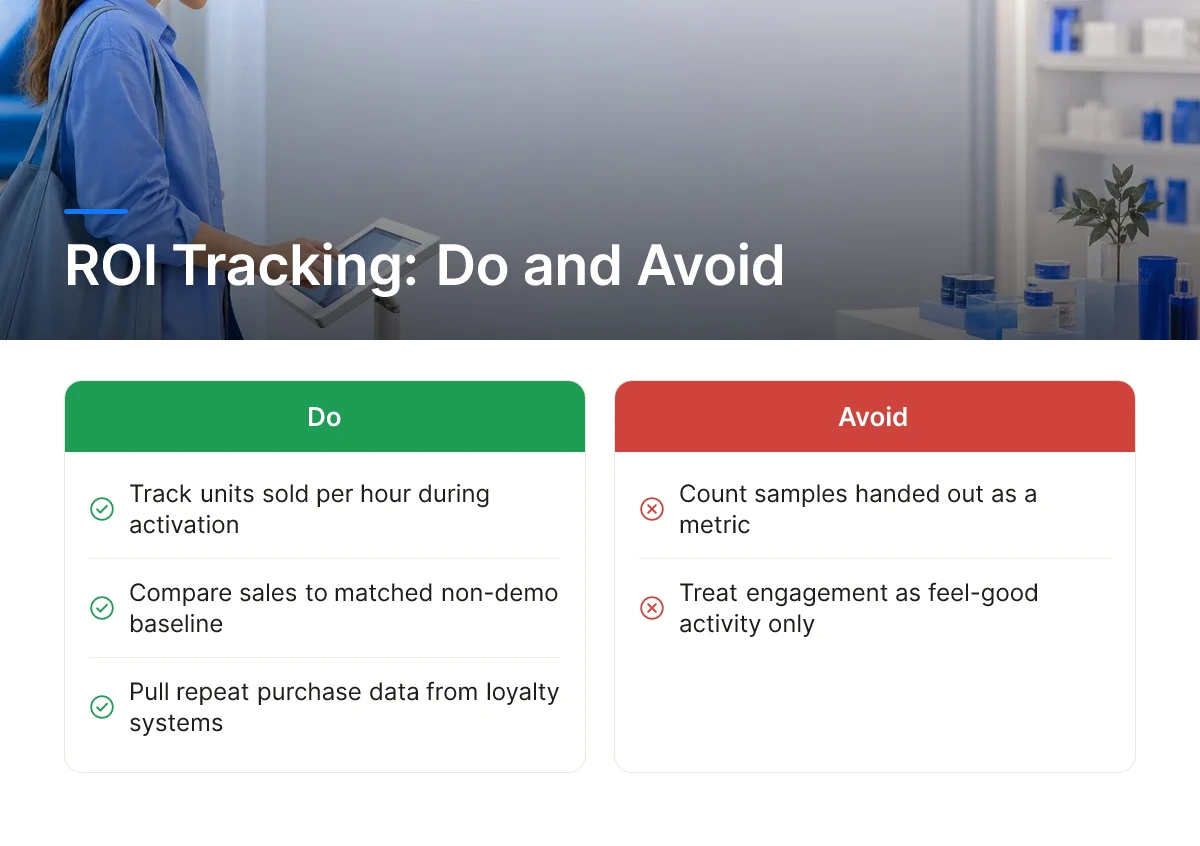
Proving a demonstration moved product means tracking units sold per hour against a non-demo baseline, not counting samples handed out. Brands that treat consumer engagement strategies as a numbers exercise, rather than a feel-good activity, are the ones who keep their shelf space.
Three numbers matter most: units sold per hour during the activation, sales uplift compared to a matched period without a demo, and repeat purchase indicators pulled from loyalty or point-of-sale data in the weeks after. In-store brand activation done well can lift category conversion meaningfully during the activation window [2], but that number only means something when it's measured against what the store would have sold anyway.
Post-demo data collection, photo proof of setup, ambassador reporting on foot traffic, and same-day sales pulls, replaces the guesswork brands used to accept from agency recaps. This data also supports benchmarking across store locations and time slots, showing which formats justify repeat investment and which ones drain budget.
Useful metrics to track for any demonstration program include:
This approach suits brands that need to prove ROI to secure renewed retailer support or win expanded shelf space. Demo Wizard's ROI tracking dashboard replaces end-of-campaign spreadsheet reconciliation with real-time reporting, so a coordinator can spot an underperforming store mid-campaign and reassign ambassadors or inventory before the weekend is lost, not three weeks later when the recap lands.
A demo only happens as planned when the brand, the distributor, and the store share the same schedule and inventory picture in advance.
Most cancellations and no-show inventory problems trace back to a simple gap: the brand booked a date, the distributor didn't confirm delivery timing, and the store's floor staff never saw the request. Shared visibility into schedules and requirements closes that gap before it becomes a wasted weekend. Supply chain alignment matters just as much, matching product delivery timing to the demo calendar avoids the out-of-stock scenario that kills momentum halfway through a Saturday rush.
This layer of coordination is built for multi-brand distributors and agencies running activations across a retailer's full store footprint, where dozens of schedules, dozens of ambassadors, and dozens of delivery trucks all have to land on the same day. Demo Wizard's differentiator here is enforcement, not communication: aisle rules and blackout dates get built into the scheduling system itself, so a retailer's conditions are applied automatically across every location instead of being relayed store by store and inevitably missed somewhere.
Match the activation type to your goal, your scale, and how much disruption the retailer will tolerate on the floor.
Start with the goal. Trial generation calls for broad sampling across many doors; proving velocity to a retailer calls for a roadshow with a dedicated footprint and bundled offers; securing permanent shelf placement calls for a sustained program with consistent, comparable data over months. Scale narrows the choice further, a single-store sampling event is a different operational problem than a multi-market roadshow, and both differ from a year-round demo program running across hundreds of doors that needs centralized coordination to function at all.
Cost follows the same logic: budget-friendly single-event staffing works for a one-off launch, mid-range recurring programs suit a regional push, and enterprise-level coordination platforms make sense once multiple brands or hundreds of monthly events are involved. Retailers weigh a parallel set of factors, minimizing disruption to store employees and requiring automatic compliance to aisle rules and scheduling windows.
Manual coordination still works at very low volume, a handful of demos a month, one region, one brand. Past that, once multiple brands, multiple doors, and a recurring cadence enter the picture, spreadsheets break down and automation becomes the only way consumer engagement strategies scale without adding headcount.
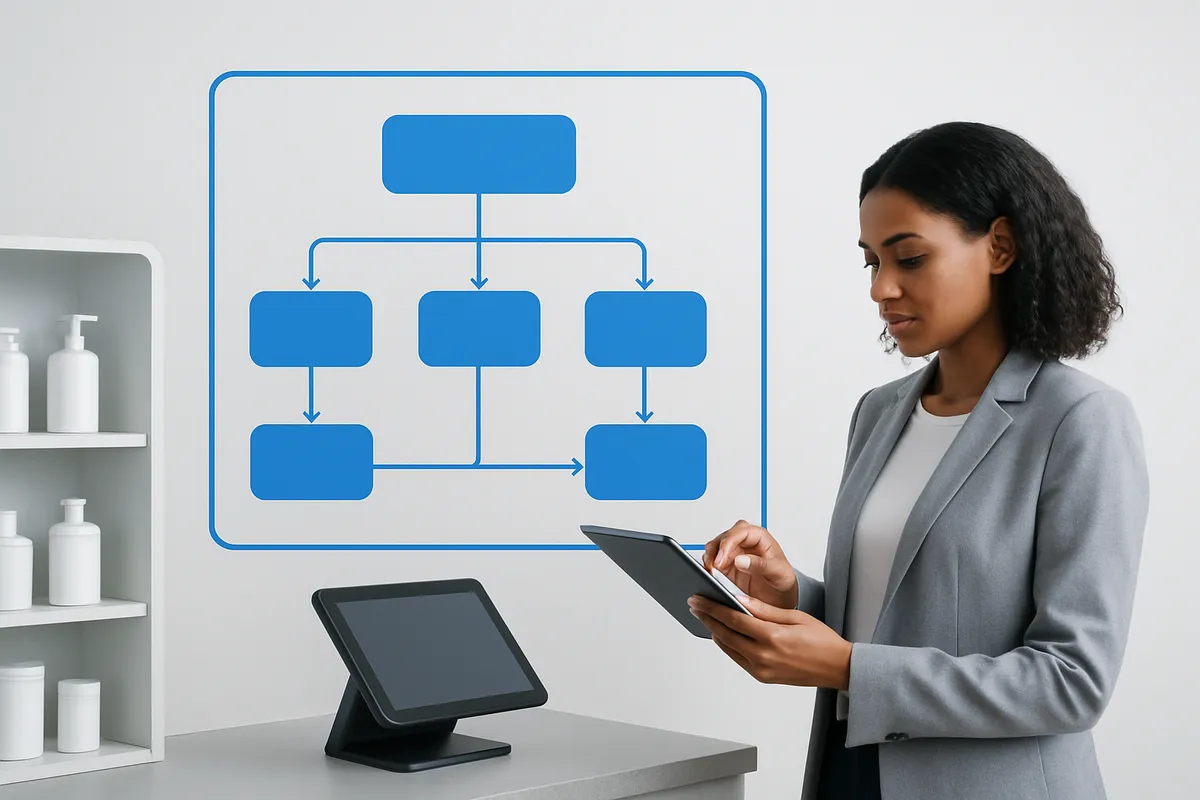
The biggest mistake is treating location and timing as an afterthought rather than a data decision. Brands often book demo slots based on retailer availability instead of foot-traffic patterns, then fail to forecast inventory correctly, leading to stockouts mid-shift and wasted ambassador hours [2].
Miscommunication between brands, retailers, and ambassadors causes no-shows, setup delays, and compliance gaps that directly reduce conversion. When schedules live in scattered emails or spreadsheets, store staff lose visibility into who's arriving and when, disrupting daily operations and weakening the shopper experience an activation is meant to create [2].
Store employees often end up fielding vendor calls, confirming schedules, and managing ambassador check-ins on top of their regular duties. This pulls staff away from customers and shelf work, and a centralized schedule visible to everyone in the store removes that burden almost entirely.
Store-level and time-of-day conversion tracking shows exactly which activations drive purchases, not just foot traffic. Demo Wizard's ROI tracking and performance insights identify top-performing locations and time slots, so brands can direct future budget toward what actually sells.
Brands generally focus consumer engagement strategies on trial, sampling, and building loyalty for a specific product line, while retailers care more about foot traffic, basket size, and minimizing disruption across many vendors at once. Effective programs balance both, giving brands trial opportunities while keeping store operations predictable and compliant.
Driving purchase intent at the shelf comes down to three things: placing demos where foot traffic and past conversion data say they'll work, keeping ambassadors, retailers, and brand teams synced so setup and compliance never slip, and measuring experience-to-purchase conversion by store and time period instead of guessing. Brands that skip the measurement step keep repeating the same underperforming activations [2].
Start with one action: pull your last quarter of demo schedules and cross-reference them against store-level sales data. Wherever that link is missing, that's the gap a coordinated scheduling and ROI-tracking system needs to close first.
Explore more from our content library:
Demo Wizard is the Ultimate Store Sampling & Demonstration management software for Brick and Mortar Retailers and CPG Vendors.
Chat with usPhone