
Demo Wizard is the Ultimate Store Sampling & Demonstration management software for Brick and Mortar Retailers and CPG Vendors.
Chat with us

Phone
Copyright © 2026 Demo Wizard
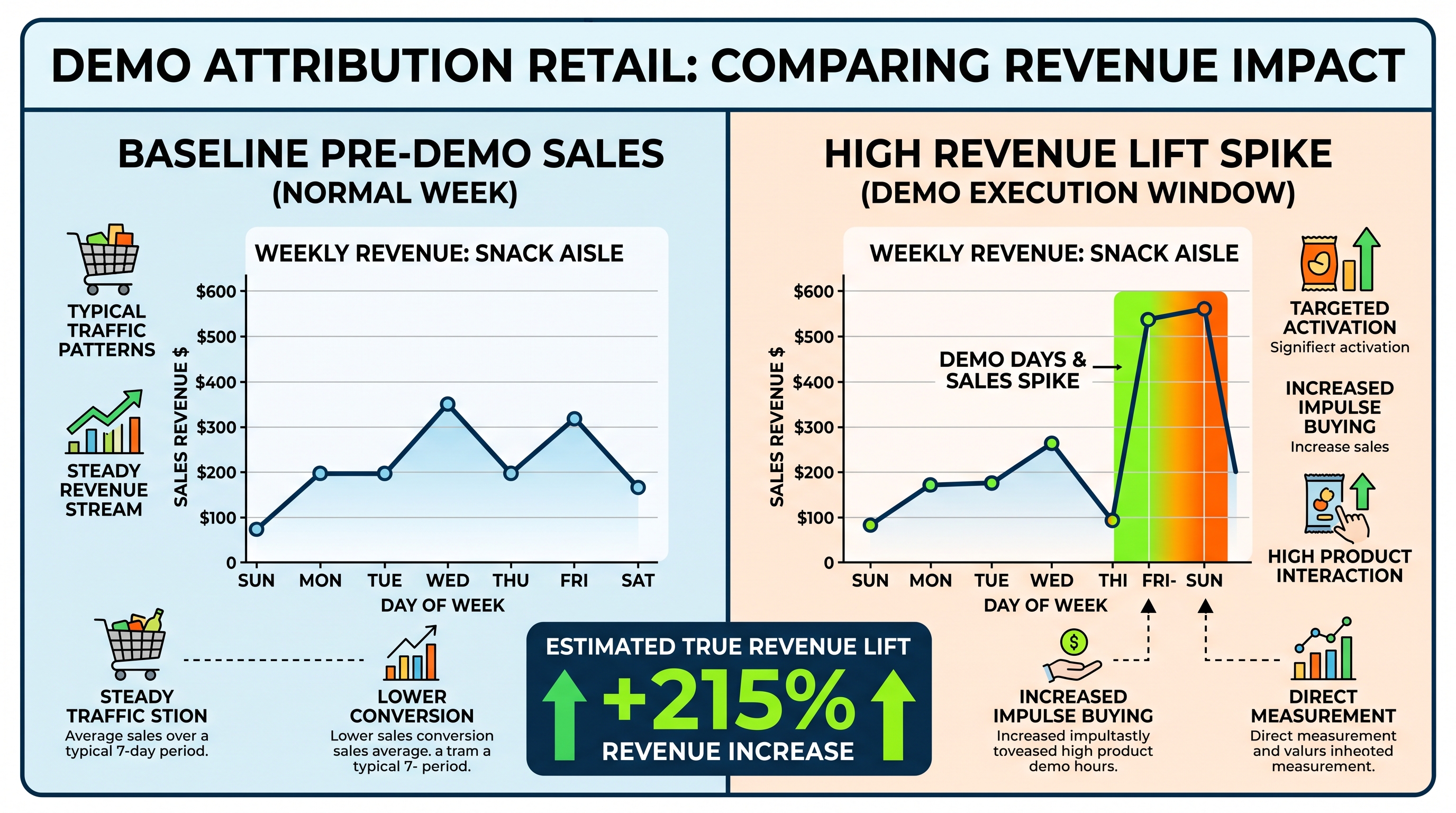
Demo workforce management is the coordination of scheduling, staffing, and ROI tracking for in-store product demonstration teams through automated systems rather than manual spreadsheets and phone calls. For CPG brands and retailers, it replaces fragmented emails and paper calendars with a shared calendar, automated staff notifications, and centralized reporting that connects demo attendance to sales uplift. This matters because unmanaged coordination creates no-shows, scheduling conflicts with store operations, and reporting gaps that make it impossible to prove which demos actually drove sales.
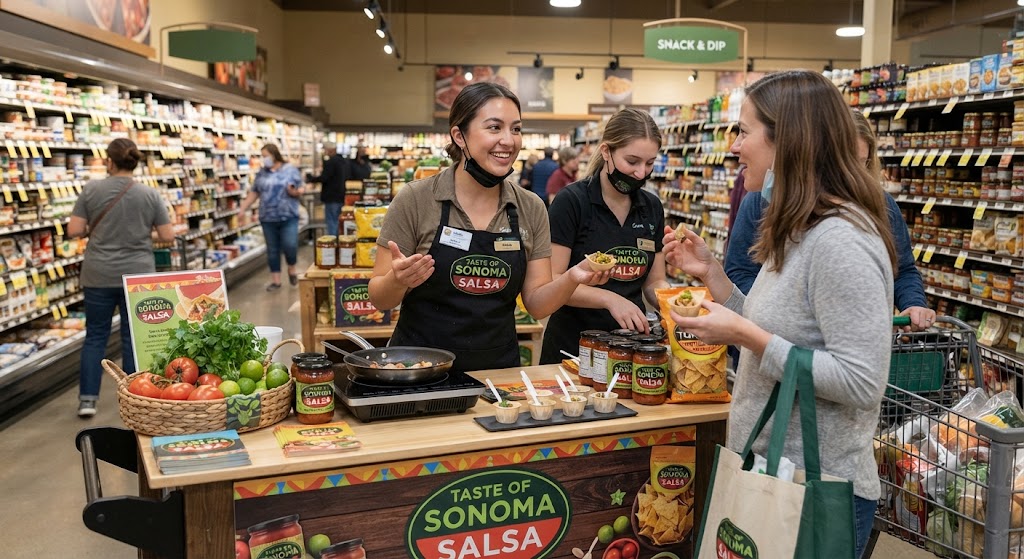
Coordinating demos across dozens or hundreds of stores works by replacing one-off phone calls and spreadsheet updates with a shared, automated scheduling system that every party can see and act on. This is the foundation of demo workforce management at any meaningful scale.
A centralized demo calendar gives brands, distributors, agencies, and store managers a single shared view of every scheduled activation, so nobody double-books a Saturday demo slot or misses a conflict with a competing brand's event. In a typical fragmented setup, a brand's regional manager, a distributor's rep, and a store's department head each keep their own version of the schedule, usually in email threads or separate spreadsheets that fall out of sync within days. When one system holds the calendar of record, a store manager can glance at upcoming activations without calling the brand, and a brand's activation manager can see which locations are already booked before assigning a new roadshow. That visibility matters most for CPG brands running roadshows: a multi-day, high-traffic activation depends on a store confirming aisle space and timing well in advance, and a shared calendar prevents the scramble that happens when a confirmation slips through a missed email.
Automated scheduling matches available brand ambassadors to open demo slots, sends confirmations, and flags coverage gaps without a coordinator making a single phone call. Instead of a manager manually checking who's free, texting three ambassadors, and waiting for replies, the system checks ambassador availability against the open slot and assigns the match automatically. Confirmations and reminders go out on their own, and if a slot goes unfilled, the gap surfaces immediately rather than being discovered the morning of the event. This is the core mechanic behind demo workforce management at scale, one coordinator overseeing hundreds of monthly events instead of a small team drowning in follow-up calls.
Multi-location scheduling adds complications that manual coordination cannot absorb at volume: store hours vary by banner and region, aisle or endcap space is only available on certain days, and regional distributors need their own delivery windows synced to the demo date. A platform like Demo Wizard handles this by centralizing store-level scheduling constraints alongside ambassador availability, so a brand expanding from 20 stores to 200 doesn't need to hire additional coordinators to keep pace.
Automated reminders and status updates also cut down on last-minute no-shows, since ambassadors receive confirmation prompts ahead of their shift and coordinators get flagged the moment someone fails to check in, reducing the coordination load that would otherwise fall on one overworked person. For a closer look at how in-store activation logistics play out in practice, this walkthrough video illustrates the coordination workflow end to end.
Effective demo workforce management across multiple locations typically depends on a few core capabilities working together:
Demo ROI comes from four numbers: units sold during and after the demo window, sample-to-purchase conversion rate, cost per demo against incremental sales lift, and store-by-store performance comparisons.
Attendance counts and photos of a nicely dressed table tell you a demo happened. They don't tell you whether it sold product. Products featured in retail and in-store demos often sell over 40% better than non-sampled items [2], which means the real measurement question is whether a given activation matched or beat that baseline, not whether the ambassador showed up and smiled.
The mechanism is comparison: pull store sales data for demo days and set it against a non-demo baseline from recent weeks, then check which SKUs moved immediately after sampling started. A roadshow running Friday through Sunday should show a visible bump in unit velocity against the prior three or four weekends at that same store.
This only works if data collection is consistent. A brand running one demo at one store can eyeball a sales report manually. A brand running demos across 50 stores in a month cannot, this is where demo workforce management systems earn their keep, aggregating store-level sales windows against demo schedules automatically instead of requiring a coordinator to reconcile spreadsheets by hand.
Brand managers and retail buyers want purchase-linked evidence, not activity evidence. Impressions, foot traffic estimates, and setup photos are useful for quality control, but they don't answer the question finance and retail partners actually ask: did this activation move product, and at what cost per incremental unit sold.
A usable report shows cost per demo weighed against sales lift, conversion rate from sample to purchase, and a ranking of which stores and time slots outperformed others. That last piece matters for planning, a demo company or brand running dozens of monthly activations needs to know which locations justify a repeat booking and which don't.
Consistent post-demo data across many locations turns individual event reports into a pattern. Over several months, that pattern shows which regions, store formats, or day-parts consistently produce the strongest lift, which is exactly the evidence needed to decide where next quarter's roadshows should go. Marketing intelligence platforms built for CPG brands, such as Ourcart's CPG solutions, reflect the same shift toward purchase-linked data over simple activity tracking.
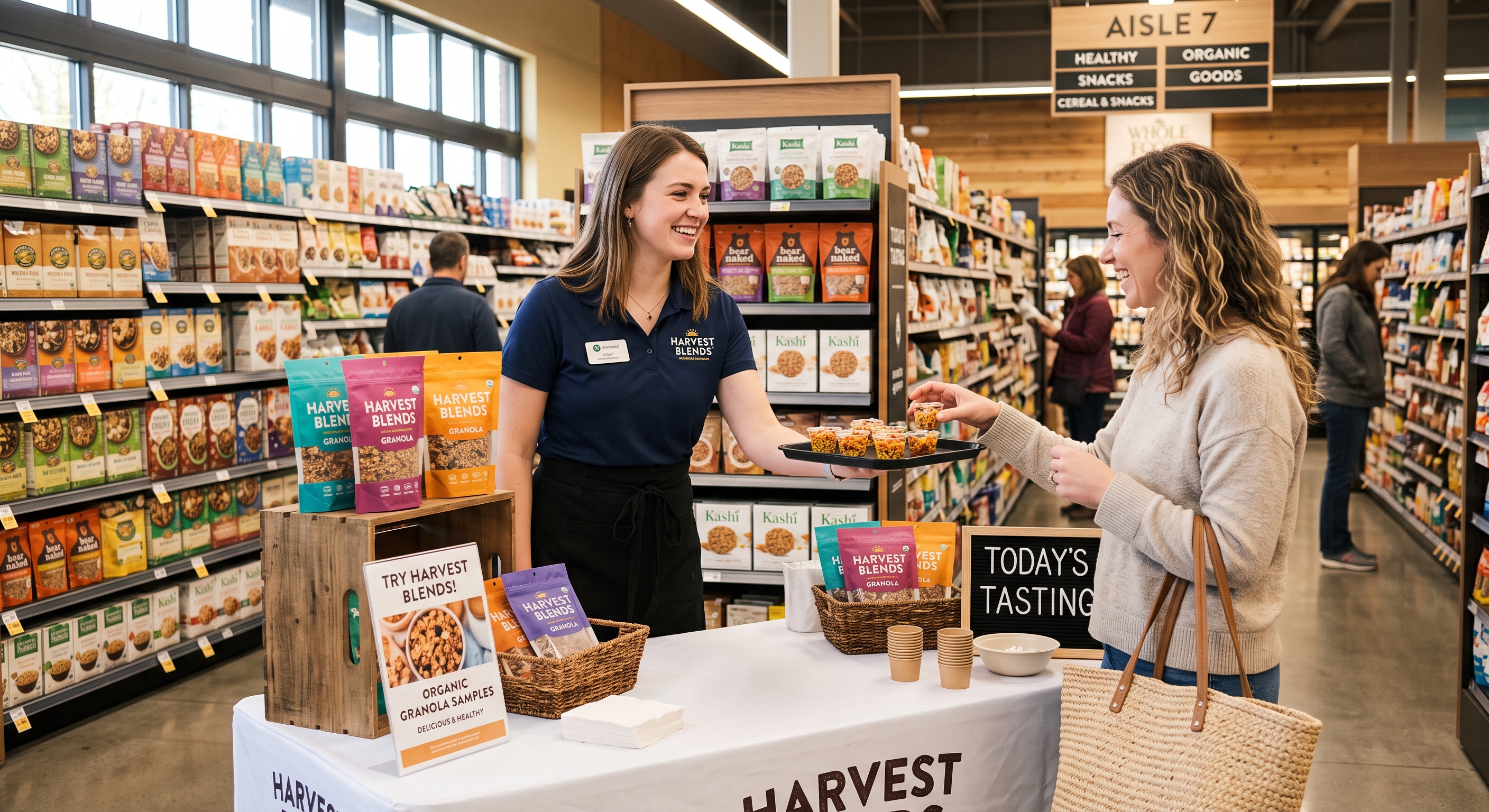
Staffing effective in-store activations means recruiting ambassadors who know the product cold, then using demo workforce management systems to schedule them correctly and verify they did the job right without a manager standing over their shoulder.
The best brand ambassadors combine three things: deep product knowledge, the ability to hook a shopper's attention within seconds, and the sales instinct to turn a free sample into an immediate cart add. Products featured in retail demos often sell over 40% better than non-sampled items [2], but that lift depends heavily on who's running the table. An ambassador who can't answer a basic ingredient question, or who lets a shopper walk away with just a nibble and no nudge to buy, leaves that upside on the table.
Training matters as much as personality. An ambassador working a food or beverage roadshow needs to speak fluently about sourcing, flavor profiles, and how the product compares to what's already on the shelf. That knowledge, paired with a bias toward closing, pointing at the display pallet, mentioning the bundle discount, asking directly if they'd like to grab one, is what separates a demo that generates buzz from one that generates units sold.
Compliance gets verified through mobile check-ins, digital checklists, and photo sign-offs rather than a coordinator driving store to store to confirm setup. Ambassadors check in from their phone when they arrive, confirming location and time. A digital checklist then walks them through required setup steps, table placement, signage, sampling station configuration, so both the brand and the retailer know the activation matches what was promised, without a store employee needing to babysit the process.
Scheduling has to account for more than just open time slots. Matching the right ambassador to the right store means factoring in product-specific training, past performance at similar locations, and availability, something manual spreadsheets handle poorly once a brand runs more than a handful of demos per week. Photo verification at setup and teardown, combined with a digital sign-off, creates a documented trail that protects the brand if a retailer questions execution and gives the retailer confidence the space was used as agreed, all without adding to store staff's workload. Good demo workforce management practice ties these compliance steps directly into the same system used for scheduling, so nothing depends on a separate manual check.
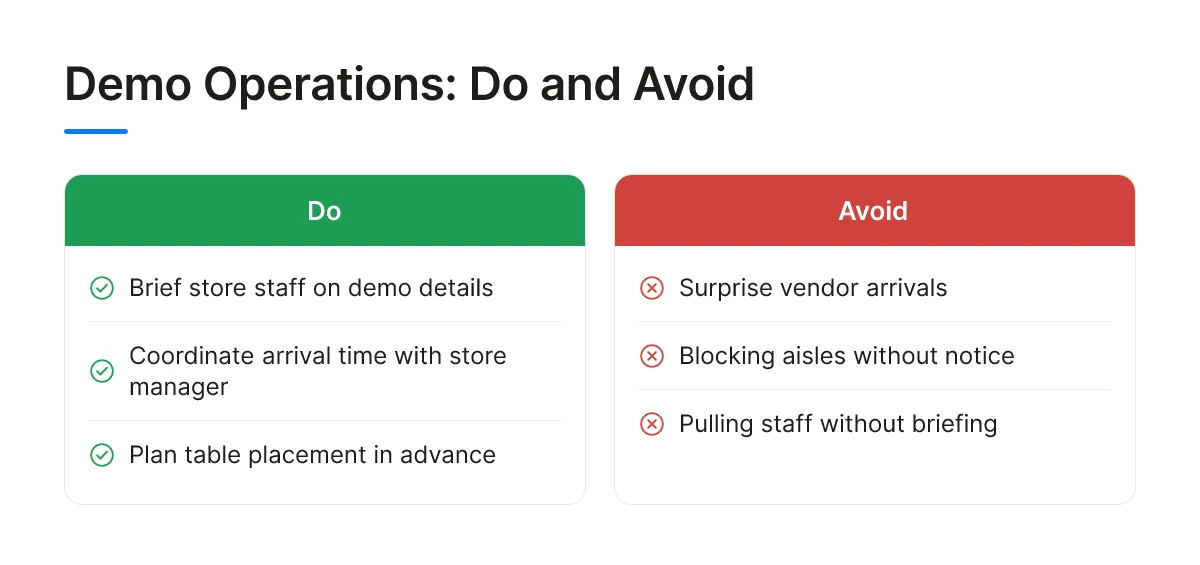
Uncoordinated demo programs create friction for store staff long before the first sample gets handed out, blocked aisles, surprise vendor arrivals, and employees pulled off their own tasks to answer questions they were never briefed on.
Most disruptions trace back to a single root cause: the store didn't know the demo was happening, or didn't know the details. A brand ambassador shows up expecting a table near the entrance, finds another vendor already set up there, and now a store manager is improvising a solution mid-shift. Multiply that by a dozen brands running demos across a chain in the same week, and the disruptions compound, conflicting setups, tables blocking restock carts, cashiers fielding product questions they can't answer.
This is where demo workforce management shifts from a brand-side convenience to a retailer-side necessity. When scheduling, ambassador assignment, and location approval run through one system rather than a string of emails and phone calls between brand, broker, and store, the retailer gets a program that shows up where and when it's supposed to, not a series of surprises to manage on the fly.
Store managers need one place to see every scheduled demo, who's coming, when, and where, so they can plan staffing and floor layout instead of reacting to whoever walks in with a folding table. A shared calendar visible to store management eliminates the surprise-visit problem entirely: no more vendors arriving unannounced during a truck delivery or a staffing crunch.
Automated coordination also enforces the conditions a retailer sets, approved demo zones, permitted time windows, equipment restrictions, without requiring a store employee to police every vendor manually. Platforms built for this, including Demo Wizard, apply those rules at the scheduling stage, so an ambassador booked outside an approved window or location simply can't confirm the slot. That's a meaningful shift from the industry pattern documented across in-store activation guides, where compliance and retail integration are treated as an ongoing enforcement burden [2] rather than something built into the schedule itself.
The payoff for store staff is time back. Fewer vendor calls to field, fewer coordination emails to answer, and fewer ad hoc decisions about where a table can go, while the retailer keeps full visibility into who's on the floor and when.
Scaling from a handful of stores to hundreds requires replacing manual coordination with standardized, automated workflows before spreadsheets and phone calls collapse under their own weight.
A brand activation manager running 8 demos a month can track everything in a spreadsheet and confirm ambassadors by phone. That approach fails once the program hits 50 or 100 simultaneous locations. The math simply doesn't work: each added store multiplies the emails, reminder calls, and manual reconciliation needed to confirm who showed up, what sold, and where a table went unstaffed.
Growing programs need three things a spreadsheet can't provide: standardized ambassador onboarding, templated compliance checklists, and centralized reporting that behaves identically at 10 stores or 500. Onboarding has to produce the same trained, brand-consistent ambassador whether she's working a Kroger in Ohio or a regional grocer in Texas. Compliance checklists, proper signage, table setup, sampling procedure, need to be built once and applied everywhere, not reinvented by each field rep. Attack! Marketing's guide to in-store demos notes that products featured in retail demonstrations often sell over 40% better than non-sampled items [2], which is exactly the upside a brand risks losing when execution quality drifts across an expanding footprint. Demo workforce management at this stage stops being about filling shifts and becomes about protecting that consistency at volume.
This is where a platform like Demo Wizard changes the math: instead of hiring a second or third coordinator for every 50 new stores, one person can manage scheduling, ambassador assignment, and payroll for hundreds of monthly events because the system, not a person's memory, handles the repetitive coordination work.
A demo workforce management program that scales successfully generally shows these traits as it grows:
Consistency at scale comes from repeatable digital workflows, not from trusting that field staff and store managers remember informal agreements. Automated scheduling sends the same confirmation sequence and reminder cadence to every ambassador regardless of region, cutting the no-show risk that grows with geographic spread. Centralized reporting pulls store-level and time-of-day performance into one dashboard, so a coordinator overseeing a national rollout sees the same conversion and sales-impact data for a store in Oregon as one in Florida, no chasing down regional managers for a status update. That structure is what lets a single coordinator credibly manage a footprint that would have required a full team under manual methods, without sacrificing the store-by-store visibility that finance and retail partners now expect.
Yes, with automated scheduling software a single coordinator can run hundreds of monthly demos across 20-plus states. Demo Wizard is built around this model specifically: it removes per-location restrictions and consolidates ambassador assignments, calendars, and payroll into one system, so headcount doesn't need to grow just because store count does.
Centralized visibility gives store managers a single calendar of every demo, so vendor activity never surprises staff or overlaps with other in-store events. It also cuts down on phone calls and emails between store employees, brand ambassadors, and distributors, since everyone checks the same schedule instead of separate spreadsheets.
Attendance tracking confirms a demo happened; ROI tracking shows whether it actually drove sales. Attendance answers "did the ambassador show up and complete the shift," while ROI ties that shift to experience-to-purchase conversion, sales lift by store, and which time slots performed best. CPG brands need both, but only ROI data justifies the marketing spend to finance or retail partners.
It reduces no-shows by matching ambassador availability to shifts automatically and flagging gaps before the event date, not the morning of. Built-in payroll and confirmation workflows also give ambassadors fewer reasons to miss a scheduled shift.
No. Smaller brands running demos at a handful of stores still benefit from demo workforce management because it removes manual scheduling errors and gives clearer sales-lift data from day one. The efficiency gains simply compound as the program grows, but the core benefits, fewer no-shows, cleaner reporting, less back-and-forth, apply at any scale.
Scaling in-store demos comes down to three things: centralized scheduling that one person can run, real ROI data tied to actual sales rather than attendance counts, and less manual back-and-forth between brands, agencies, and store staff. Brands that fix these get more demos done with the same headcount and better answers when retailers ask for proof of impact. Retailers get a calendar they can trust instead of surprise vendor visits.
Start by auditing next month's demo calendar: count how many hours your team spends on scheduling emails and spreadsheets, then compare that to what a platform built for demo workforce management could automate instead.
Explore more from our content library:
About the Author
Written by the SaaS / Retail Marketing Technology experts at Demo Wizard. Our team brings years of hands-on experience helping businesses with SaaS / Retail Marketing Technology, delivering practical guidance grounded in real-world results.
Demo Wizard is the Ultimate Store Sampling & Demonstration management software for Brick and Mortar Retailers and CPG Vendors.
Chat with usPhone