
Demo Wizard is the Ultimate Store Sampling & Demonstration management software for Brick and Mortar Retailers and CPG Vendors.
Chat with us

Phone
Copyright © 2026 Demo Wizard
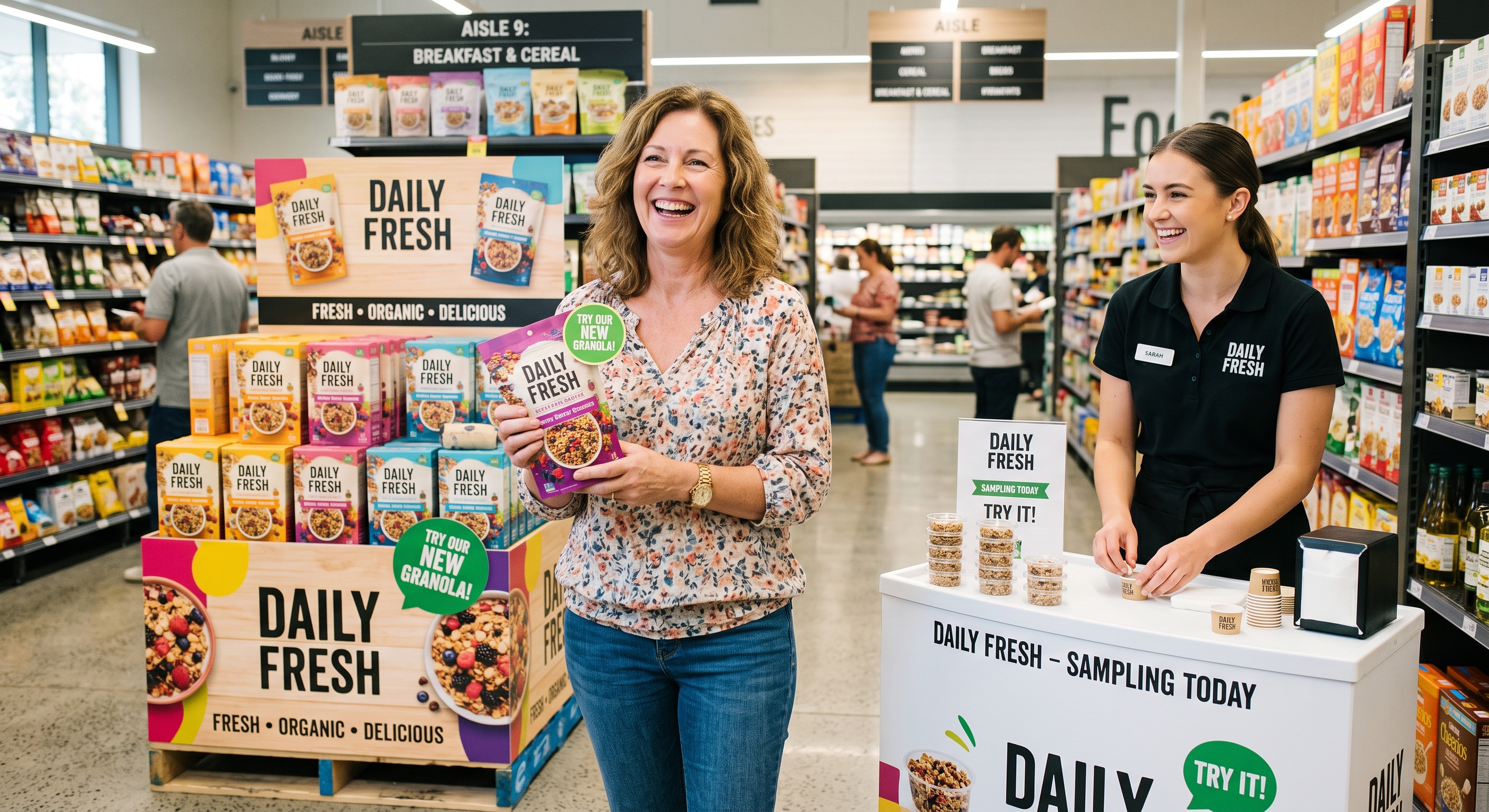
Understanding retail brand ambassador role is essential. Brand ambassadors function as the on-the-ground execution layer of in-store demo programs: they set up displays, engage shoppers, explain products, and drive same-visit purchases that a shelf tag alone cannot. Their value to CPG brands and retailers depends less on individual charisma and more on how well scheduling, training, compliance, and reporting are coordinated across many stores at once. Without centralized coordination, ambassador programs lose consistency, create store-level friction, and make ROI difficult to prove, which is why brands increasingly pair ambassador staffing with dedicated demo management systems rather than manual, store-by-store coordination.
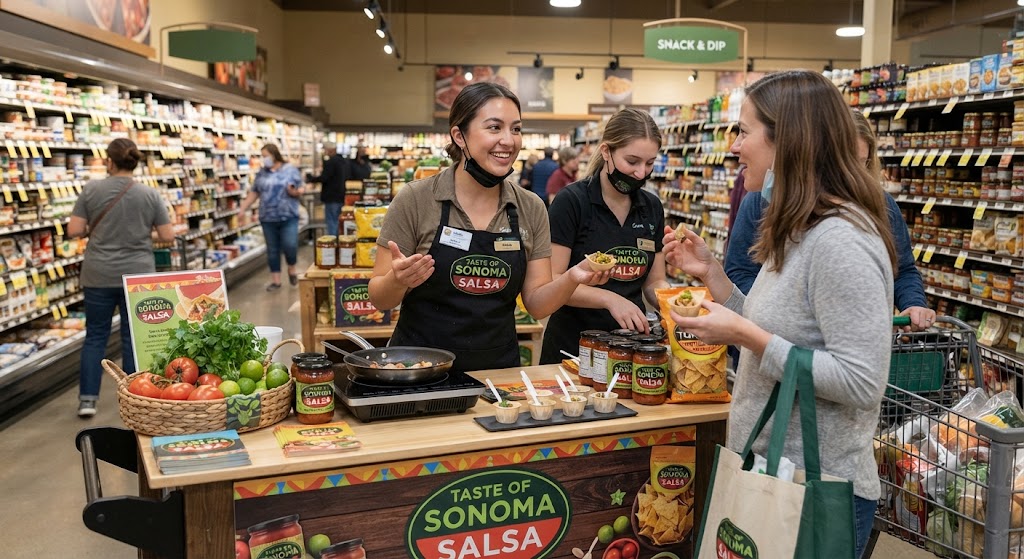
The retail brand ambassador role covers a fixed sequence of on-site tasks: building the display, prepping product, engaging shoppers, running the sample or trial, and closing the sale at the point of purchase. Each step depends on the one before it, a poorly stocked table undermines even the most skilled ambassador, and a rushed setup shortens the window available for shopper conversations.
This is what separates an ambassador-led demo from passive tactics like shelf signage or an unstaffed end-cap display. A sign can inform a shopper, but it cannot answer a question, adjust a pitch based on hesitation, or hand someone a sample that turns browsing into a cart addition. That live, responsive interaction is the core value an ambassador adds, and it's also the reason ambassador-led activations cost more to run than static merchandising, the labor has to be scheduled, trained, and managed correctly to pay off.
Ambassadors typically arrive ahead of shift start to unpack product, set up signage and cooking or sampling equipment, and stage the display in the assigned location. Once shoppers start passing, the job shifts to engagement: initiating conversations, describing product benefits, offering a taste or trial, and guiding interested shoppers to the shelf or display pallet to complete the purchase before they walk away [3].
Attackmarketing's coverage of demo staffing notes that the ambassadors who convert best combine product knowledge with the ability to read a shopper's body language and adjust their pitch in real time [3]. That skill matters more in food and beverage demos, where taste is the deciding factor and the sample itself does most of the persuading.
An ambassador's shift doesn't happen in isolation, it happens inside a store that has its own staff, layout rules, and daily rhythm. Ambassadors typically check in with a department manager or front-end supervisor, confirm their assigned footprint doesn't block an aisle or fire exit, and coordinate around restocking schedules and store traffic patterns.
The scope of this coordination changes with the activation format. A single demo table for an afternoon requires minimal store-side involvement beyond a check-in and a designated spot. A multi-day roadshow, occupying a high-traffic footprint like a front lobby or center aisle for a week or more, requires ongoing coordination with store management around inventory drops, signage placement, and daily setup and breakdown.
Either way, ambassadors function as a field labor resource that brands and retailers must actively schedule and manage, not an independent channel that runs itself once staffed. That coordination burden is exactly why brands running dozens of ambassador shifts a month often replace spreadsheet-based scheduling with a platform like Demo Wizard, which centralizes ambassador assignment, availability, and store-level scheduling across many locations at once.
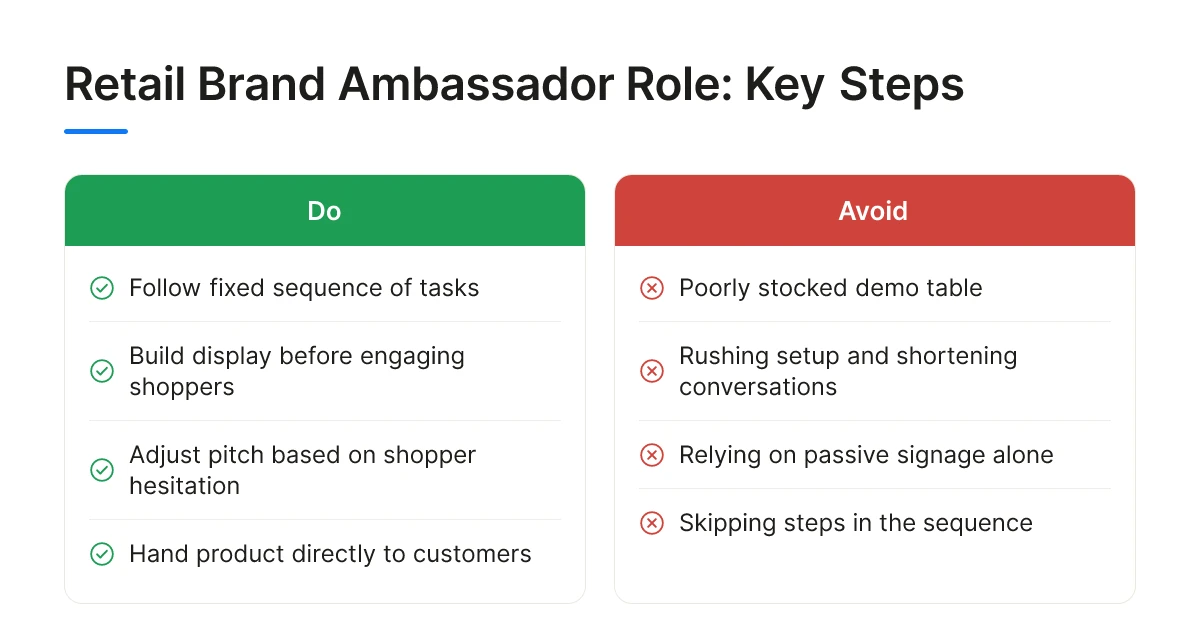
Running ambassadors at scale requires centralized scheduling, standardized training, and compliance tracking that replace store-by-store phone calls and spreadsheets with one coordinated system.
A single demo is easy to manage with a phone call and a calendar reminder. The math changes fast once a brand is running demos in 40 stores across three states in the same week. Each store has its own approval process, its own preferred demo hours, and its own point of contact, a produce manager here, a store director there. Multiply that by dozens of doors and the retail brand ambassador role stops being a staffing question and becomes a logistics problem that spreadsheets and email threads cannot handle.
Centralized scheduling is the mechanism that matches ambassador availability against store-approved demo windows without a coordinator manually cross-referencing calendars for every location. Instead of calling each store to confirm a Saturday slot and then separately confirming which ambassador can cover it, a coordinator working from one system sees open windows, assigned staff, and confirmation status across every store at once. Demo Wizard's scheduling tools are built around this exact gap, automating the coordination across multiple retail locations so one person can manage hundreds of monthly events instead of hiring additional coordinators for each new market.
Compliance tracking closes the loop after scheduling. Check-ins, photo verification of the table setup, and confirmation that signage and product were displayed correctly give the brand proof a demo happened as planned, not just that it was booked. Without this layer, brands find out about a no-show or a poorly executed setup only when sales data looks off weeks later, which is too late to fix the campaign.
Fragmented communication is what makes all of this necessary in the first place. Brand, distributor, retailer, and ambassador each hold a piece of information, inventory status, store hours, ambassador availability, retailer sign-off, and none of them see the full picture without a shared system connecting those pieces.
Mobile-first onboarding modules keep product messaging, sampling procedure, and food-safety handling consistent whether an ambassador is working a Texas warehouse club or a New England grocery chain. Consistency matters most for food and beverage demos, where handling errors carry health risk and inconsistent messaging undercuts the sampling event's ability to convert a taste into a sale.
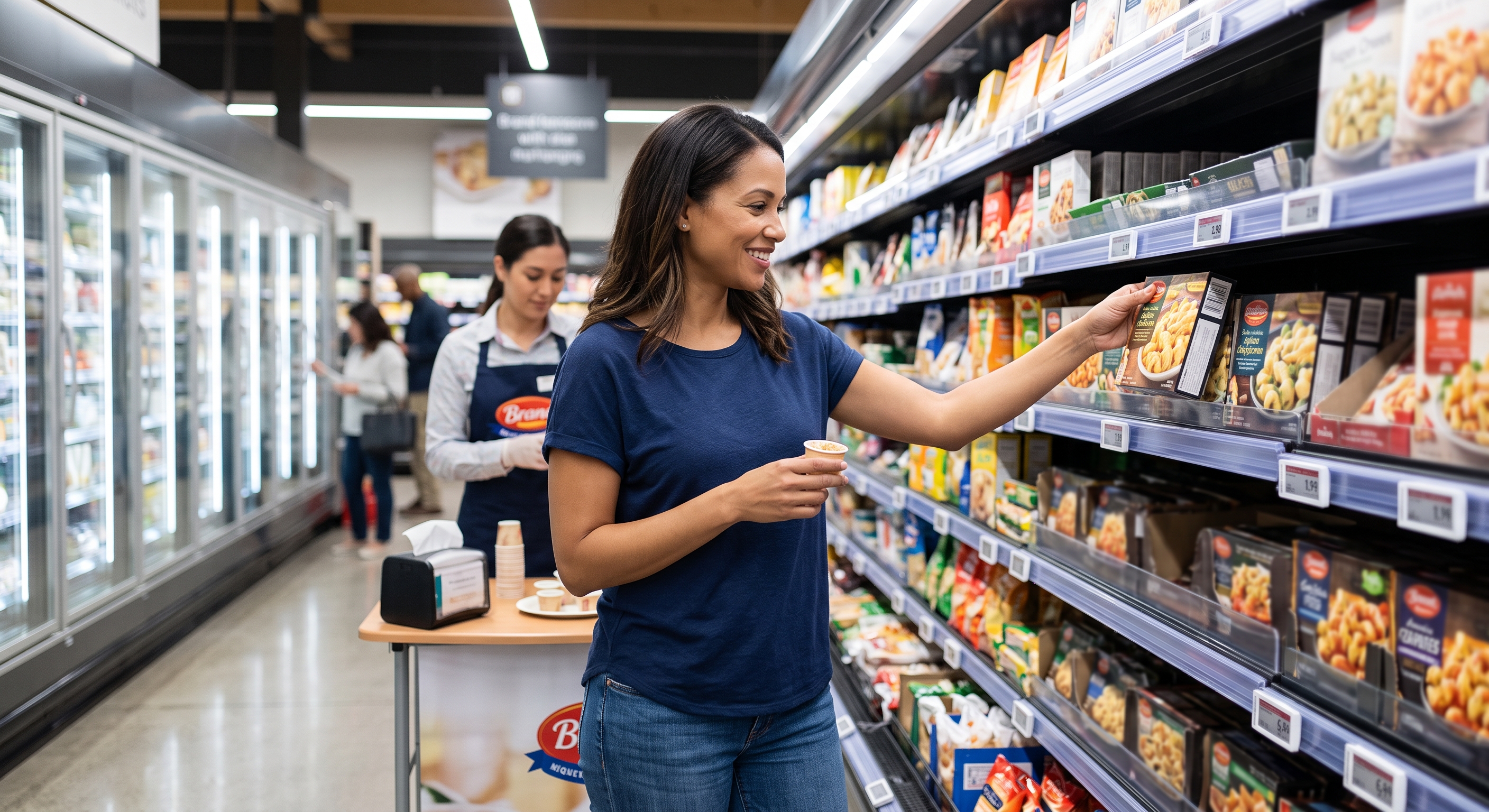
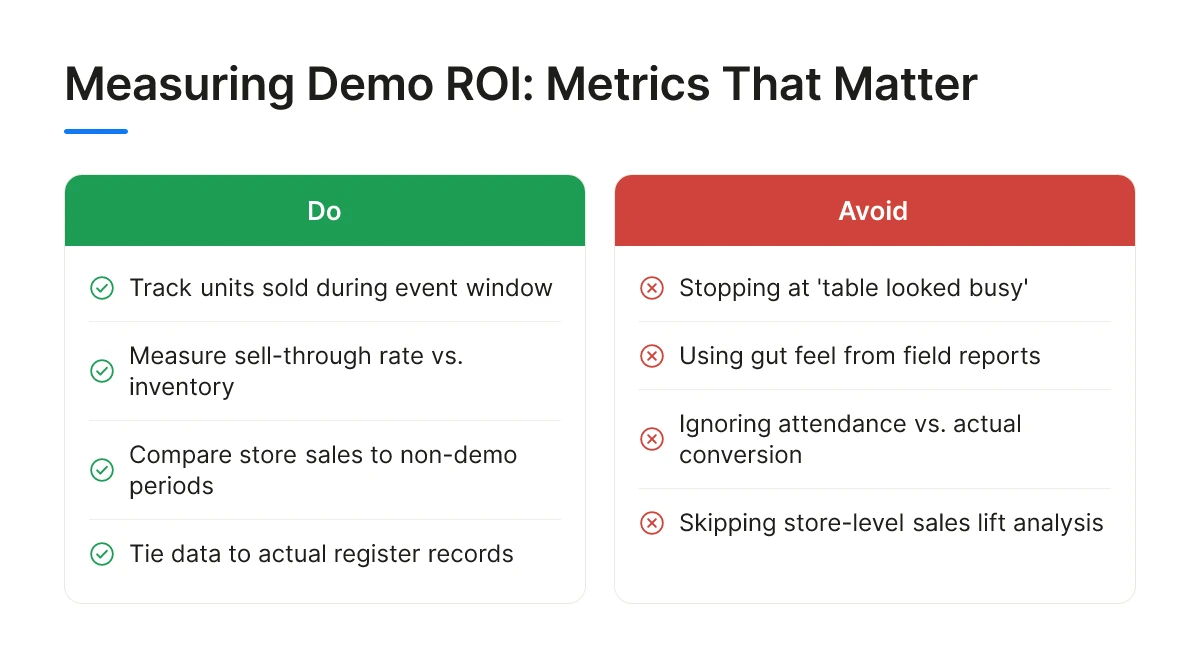
Brands measure demo ROI through three linked data points: units sold during and after the event window, sell-through rate against inventory delivered, and store-level sales lift compared to non-demo periods.
Anyone who has managed a multi-state sampling calendar knows the temptation to stop at "the table looked busy." That impression isn't a metric. Evaluating the retail brand ambassador role on operational terms means tying attendance and enthusiasm to actual register data, not gut feel from a field report.
The baseline metric set is simple: units moved during the demo shift, units moved in the days following it, and sell-through rate relative to what was staged for the event. Store-level lift, sales during the demo window compared to a typical week at the same store, is what separates a genuinely productive activation from one that just gave away free samples.
None of that data means anything without a compliance check first. Photo and check-in verification confirms the ambassador arrived, set up the display correctly, and worked the assigned hours before anyone trusts the sales numbers attached to that shift. A retailer or brand manager reviewing a spike in sales needs to know the demo actually happened as scheduled, not just that a POS report shows movement that week.
Consumer feedback gathered on-site adds a second layer: which variant shoppers preferred, what objections came up most often, and who asked about buying in bulk or asked when the product would return. That feedback loop feeds directly into future SKU selection, staffing decisions, and where to prioritize the next round of demos.
Manual, spreadsheet-based reporting slows every one of these decisions down, data arrives late, formats vary by ambassador, and errors compound across dozens of store reports each week. Dashboard-based reporting, by contrast, consolidates units sold, compliance status, and feedback into one view a coordinator can check the same day, not weeks later.
Demo Wizard's analytics dashboard was built around this gap: it segments performance by store and time period so a brand can see which locations and days actually convert, rather than waiting on aggregated monthly totals. That kind of visibility is what lets a brand walk into a retailer renewal conversation with sales-lift data instead of anecdotes, and it's the difference between a demo budget that survives the next budget cycle and one that gets cut.
A staffed ambassador demo converts shoppers in the moment; end-caps, shelf talkers, and digital signage only get noticed by people already looking for the category.
Passive tactics work at scale and cost little per store, but they depend on a shopper already leaning toward purchase. An end-cap display can lift visibility, and a shelf talker can nudge a price-sensitive comparison, but neither generates trial the way a person handing over a sample does. Trocglobal makes this point about the retail floor generally: shoppers arrive having researched online, but they still look for someone they can trust to help them decide [1]. That trust-building moment is exactly what static signage cannot replicate.
Choose a staffed demo when the goal is trial for a new or reformulated product, not just reminder awareness for an established one. A single-table demo, one ambassador, one weekend day, a tray of samples, fits routine sampling programs or a modest launch where the brand needs proof of concept in a handful of doors before committing further budget.
A multi-day roadshow footprint makes sense for a bigger swing: a national launch, a reformulation relaunch, or a push into a new retail banner where the brand needs volume data fast. Roadshows occupy prime real estate, a lobby or center aisle, for several days running, with bundled offers and dedicated inventory staging that a single table can't support. The decision comes down to how much proof the brand needs and how fast it needs it.
The defining advantage of a staffed demo is frictionless taste-to-purchase: the shopper samples the product and grabs it from the display pallet in the same moment, with no need to remember a brand later or search for it online. Digital signage and in-app promotions can't close that loop because they're built for awareness and reminder, not for the instant of decision.
That's also why ambassador programs and digital promotions aren't competing for the same budget line, they serve different points in the shopper's path to purchase. The tradeoff for brands is real: a staffed retail brand ambassador role demands scheduling, training, and payroll coordination that a shelf talker never will. But that investment is what turns a passing glance into a completed sale on the spot.
A purpose-built coordination platform replaces phone calls, spreadsheets, and email chains with one shared system that schedules, verifies, and reports on every demo automatically.
Once a CPG brand, a distributor, and a retailer are all relying on the same in-store calendar, the guesswork that causes scheduling conflicts mostly disappears. A single ambassador can't be double-booked at two stores on the same Saturday because the system shows every commitment in one place. Store managers can see exactly who is arriving, when, and for which brand, instead of fielding separate calls from three different vendors trying to book the same end-cap.
Automated scheduling and check-in tools remove the back-and-forth that otherwise lands on store employees who never signed up to manage vendor logistics. Without a shared system, someone at the store has to confirm ambassador arrival times, relay setup instructions, and chase down no-shows by phone, on top of their actual job. A centralized platform lets ambassadors check themselves in, confirms the visit automatically, and flags exceptions only when something needs a manager's attention. That shift matters most for grocery retailers running dozens of vendor activations weekly across a single location, where every unmanaged demo request is a distraction from store operations.
Compliance tracking that used to depend on a store employee eyeballing a table setup now happens through the platform itself. Arrival confirmations, setup photos, and in-store condition checks get logged automatically at the moment an ambassador checks in, giving brands and retailers a verified record without anyone walking the floor to confirm it manually. This is where the retail brand ambassador role becomes measurable rather than anecdotal, a brand can see not just that a demo happened, but whether it matched agreed conditions.
That data feeds directly into reporting dashboards that turn raw check-in and sales figures into renewal-ready proof of performance. Instead of a coordinator assembling spreadsheets after each campaign, the numbers, store-by-store attendance, conversion trends, compliance rates, are already organized and ready to present to a retail buyer or a finance team. Demo Wizard, for example, was built specifically around this workflow: scheduling, ambassador management, and post-demo analytics in one system, rather than bundled into a broader all-in-one retail suite or messaging platform. That narrower scope is also why tools built for demo coordination tend to sit at a lower cost tier than enterprise retail execution software trying to do everything at once.
Ambassadors work on behalf of the CPG brand or its agency, but they must follow the retailer's in-store rules and staff directions. In practice, that means checking in with a store manager or department lead on arrival, respecting aisle and footprint limits, and complying with any store-specific safety or sampling policies, even though pay and performance accountability run back to the brand or agency.
Most CPG brands lock staffing two to four weeks ahead of the demo date, especially for multi-store or multi-state campaigns. This buffer allows time for retailer approval, ambassador confirmation, and inventory coordination so the product is on-shelf and staged before the assigned ambassador arrives.
Yes, one ambassador can demo several products in a shift if the brands are compatible and the schedule allows enough time per product. This is common in agency-staffed roadshows covering a portfolio of items, but it requires clear briefing on each product's talking points and enough inventory staged for each one to avoid rushed or thin demonstrations.
A no-show usually means a lost sampling day unless the coordinator has a backup ambassador or a same-day replacement process in place. Without a centralized schedule and contact list, store staff often end up fielding the confusion, which is why brands increasingly build backup coverage and automated alerts into their staffing plans rather than relying on manual check-ins.
Brand ambassadors only deliver sales lift when the coordination around them holds up: clear store-level scheduling, fast backup coverage for no-shows, and reporting that ties a shift to actual units sold. Brands that still run this through spreadsheets and phone calls lose visibility exactly where retailers demand proof, at the shelf. Platforms like Demo Wizard address this by pairing ambassador scheduling and payroll with store-by-store conversion data, so one coordinator can manage hundreds of monthly demos without losing track of who showed up and what it sold. As a next step, audit your last quarter of demos against three questions: which stores no-showed, which time slots converted best, and how long it took to get that answer.
Explore more from our content library:
About the Author
Written by the SaaS / Retail Marketing Technology experts at Demo Wizard. Our team brings years of hands-on experience helping businesses with SaaS / Retail Marketing Technology, delivering practical guidance grounded in real-world results.
Demo Wizard is the Ultimate Store Sampling & Demonstration management software for Brick and Mortar Retailers and CPG Vendors.
Chat with usPhone