
Demo Wizard is the Ultimate Store Sampling & Demonstration management software for Brick and Mortar Retailers and CPG Vendors.
Chat with us

Phone
Copyright © 2026 Demo Wizard
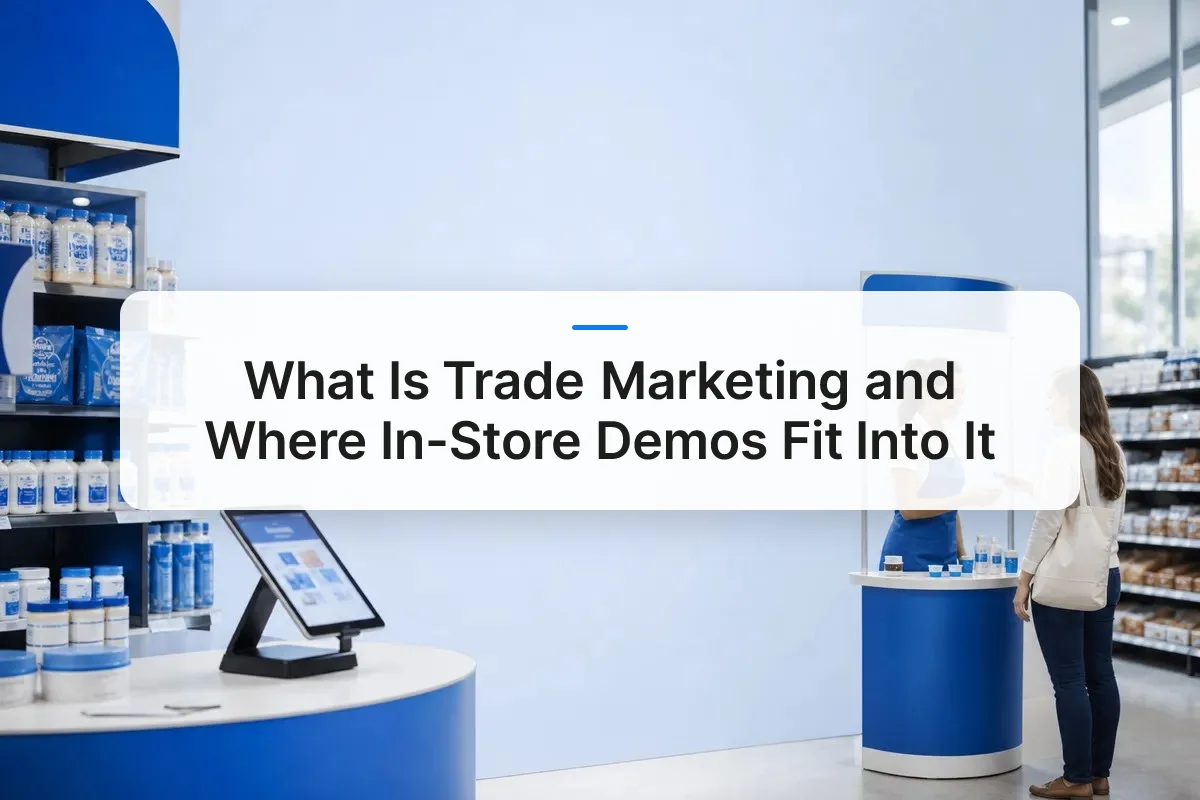
Understanding what is trade marketing is essential. Trade marketing is the set of strategies CPG brands and retailers use to drive sales at the point of purchase, and in-store product demonstrations and brand activations are among its most direct tactics. Where trade marketing covers pricing, promotions, and merchandising deals negotiated with retailers, demos and activations execute that strategy on the floor—putting product in shoppers' hands to convert planning into actual sales velocity.
Trade marketing is the discipline of influencing what happens at the shelf: pricing, promotions, merchandising, and in-store execution, all coordinated with a retail partner rather than aimed straight at a shopper's inbox or feed. Answering what is trade marketing means starting with that point-of-sale focus, because everything else in the discipline, promotional calendars, retailer deals, demo schedules, exists to move product at the moment a shopper is standing in the aisle.
Consumer marketing works upstream of that moment. It builds awareness and desire through advertising, social content, and brand storytelling long before a shopper enters a store. A CPG brand might spend months building demand for a new beverage line through digital ads and influencer content, that's consumer marketing. Trade marketing takes over once that demand needs to convert into a transaction: negotiating end-cap placement, funding a promotional price, or staffing a sampling table so the shopper who saw the ad actually buys the product in front of them.
Shopper marketing is a subset of trade marketing that zeroes in on shopper behavior along the path to purchase, how people move through a store, what they notice, and what tips them from browsing to buying [1]. Where trade marketing sets the broader deal structure with a retailer (pricing tiers, promotional windows, merchandising commitments), shopper marketing uses insight into shopper psychology to decide how those tactics get executed on the floor: display placement, timing, message design [1]. In practice, the two overlap heavily. A trade marketing plan might allocate budget for an in-store activation; shopper marketing determines where in the store that activation will actually catch attention.
Brands and retailers both lose money when trade marketing execution falls out of sync with what's actually happening on the shelf. A promotion that runs before inventory arrives, a demo scheduled at a store that's out of stock, or a sampling event that a store manager never approved all undercut the investment both parties made, the brand paid for the activation, the retailer gave up floor space, and neither gets the sales lift they expected. Coordination matters precisely because trade marketing spans two organizations with different priorities and no shared calendar by default.
In-store demos and brand activations sit exactly at the intersection of trade marketing's retailer-facing deals and shopper marketing's point-of-purchase execution. A demo is a trade marketing tactic, it requires a retailer agreement and inventory planning, but it succeeds or fails based on shopper marketing fundamentals like placement and timing. That intersection is where the rest of this discussion focuses: how demos and activations translate trade marketing strategy into measurable sales at the shelf.
Demos convert trade marketing plans into sales by putting the product in a shopper's hand at the exact moment they're deciding what to buy. That's the mechanism behind every dollar of trade spend: turning a line item in a plan into a transaction at the shelf.
Anyone answering "what is trade marketing" in practical terms has to explain the frictionless taste-to-purchase moment. A shopper samples a sauce, a snack, or a cold brew and can grab it from the display pallet right there, no need to remember the brand on a future trip, no reliance on a coupon redeemed weeks later. That immediacy is what separates in-store sampling from most other trade tactics, which rely on shoppers acting on a memory rather than an impulse.
Standard sampling tables work, but a dedicated, temporary footprint, a roadshow-style activation, tends to outperform them on both trial volume and basket size. Occupying a high-traffic zone like a center aisle or store entrance for a few days creates a "pop-up store within a store," complete with branded signage, staged inventory, and often an exclusive bundle or multi-pack not normally on the shelf.
That limited-time footprint manufactures urgency. Shoppers who see a display that won't be there next week are more likely to buy multiples, and retailers see the same effect show up in weekend foot traffic and basket size, not just individual sample-to-sale conversion [5].
Conversion depends on the ambassador working the table, not just the product on it. An effective demo blends a short story about the product's origin or ingredients, real command of what's in it and why it matters, and the ability to answer the objection a shopper is already forming, price, dietary concerns, or "I already have a brand I like."
Ambassadors who can do all three turn a curious taster into a repeat buyer, which is the outcome every trade spend line item is ultimately funding [5].
Demos also generate the proof a brand needs to keep that spend flowing. Sell-through data, unit velocity, and direct shopper feedback collected on the day become the evidence a brand manager brings back to a retail buyer to justify another quarter of trade dollars. A strong activation series, repeated, well-documented, consistently converting, is often what moves a brand from occasional demo slots to permanent shelf placement.

Executing trade marketing at the shelf takes two distinct roles: people who can sell a product face-to-face, and someone who keeps dozens of those interactions running on schedule. Understanding what is trade marketing at the ground level means looking at who actually shows up in the aisle and who makes sure they get there.
A brand ambassador needs product knowledge deep enough to answer any question a shopper throws at them, plus the sales instinct to turn a free taste into a cart addition. That means fluency in sourcing and ingredients, where the coffee beans come from, why the protein bar uses monk fruit instead of sugar, not just a script of talking points. Products featured in retail demos often sell over 40% better than non-sampled items [5], but that lift depends on staff who can handle objections and close the sale on the spot, not just hand out samples.
This is the same skillset the Demo Wizard team profile emphasizes for CPG brands running roadshows: ambassadors who can turn casual tasters into repeat buyers, not just distribute product.
Someone has to own scheduling, logistics, and communication so ambassadors arrive prepared, on time, and with the right inventory waiting for them. That coordination role is separate from the selling role, it's operational, not persuasive, but without it, even the best ambassador shows up to an empty display or a store that wasn't expecting them.
The challenge compounds with scale. Coordinating demo teams across 20 stores in one weekend by phone and spreadsheet means constant call-backs, missed confirmations, and no clean record of who worked where. Demo Wizard was built for exactly this gap: it lets one coordinator manage hundreds of monthly events across multiple states without hiring additional staff, replacing the phone-and-spreadsheet grind with a single scheduling system.
Store employees should never become the default point of contact for vendor coordination. Every call a stocker or manager fields from a brand rep is time pulled from restocking, checkout support, or customer service, a hidden cost retailers absorb when there's no centralized system routing that communication elsewhere.
Finally, one-off staffing for a single roadshow differs from building a repeatable bench of trained ambassadors for recurring activations. Brands running monthly or quarterly programs need a roster they can redeploy, not a fresh hiring scramble every time.
Planning an in-store activation means locking down location, inventory, and scheduling weeks before a single sample gets handed out. Get any one of those wrong and the whole event underperforms, regardless of how good the product is.
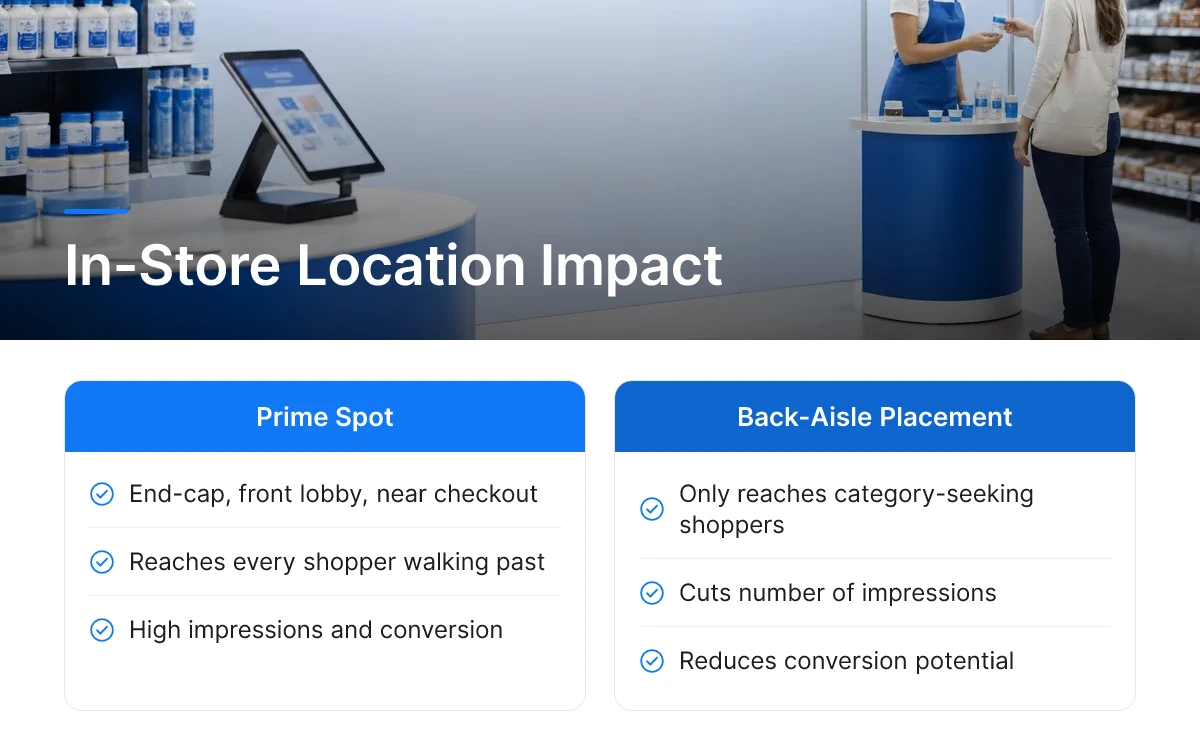
Location comes first. A prime spot, an end-cap, the front lobby, or a table near checkout, puts the product in front of every shopper who walks past. Back-aisle placement, by contrast, only reaches people already looking for that category, which cuts the number of impressions and, with it, conversion. Negotiating for high-traffic real estate is worth the extra effort it takes with a store or category manager, because foot traffic is the single biggest lever an activation manager controls.
Inventory forecasting matters just as much. A well-placed demo on a busy Saturday can move product fast, and running out of stock by early afternoon kills momentum for the rest of the day. Forecasting needs to account for the store's typical weekend traffic, not just the brand's average sell-through, so ambassadors have enough product staged to last the full activation window.
Scheduling has to give store managers visibility weeks in advance, not a same-week phone call. A shared calendar that shows exactly when ambassadors will arrive, how long setup takes, and when they'll be gone lets store staff plan around the activation instead of scrambling to accommodate it. Defined setup and teardown windows, plus a clear check-in protocol when ambassadors arrive on-site, remove the guesswork that causes friction between brand teams and store employees. This is where trade marketing execution tends to break down in practice, brands negotiate the placement but never solve the day-to-day coordination that keeps the store running smoothly around it.
Every retailer has its own conduct rules: supervisor sign-off before setup, footprint limits on how much space a display can occupy, and restrictions on sampling methods or waste disposal. Attack! Marketing's guide to in-store demos treats compliance and retail integration as a distinct planning stage precisely because missing a rule can shut down an otherwise well-run event mid-day [5]. Meeting these requirements consistently, across dozens of stores, is a coordination problem before it's a compliance problem.
A centralized calendar that's visible to the brand, the retailer, and the demo staff solves both issues at once. It's the mechanism that answers what is trade marketing looks like operationally: fewer double-bookings, no ambassador showing up to a store that wasn't expecting them, and no last-minute conflicts with other vendor activity.
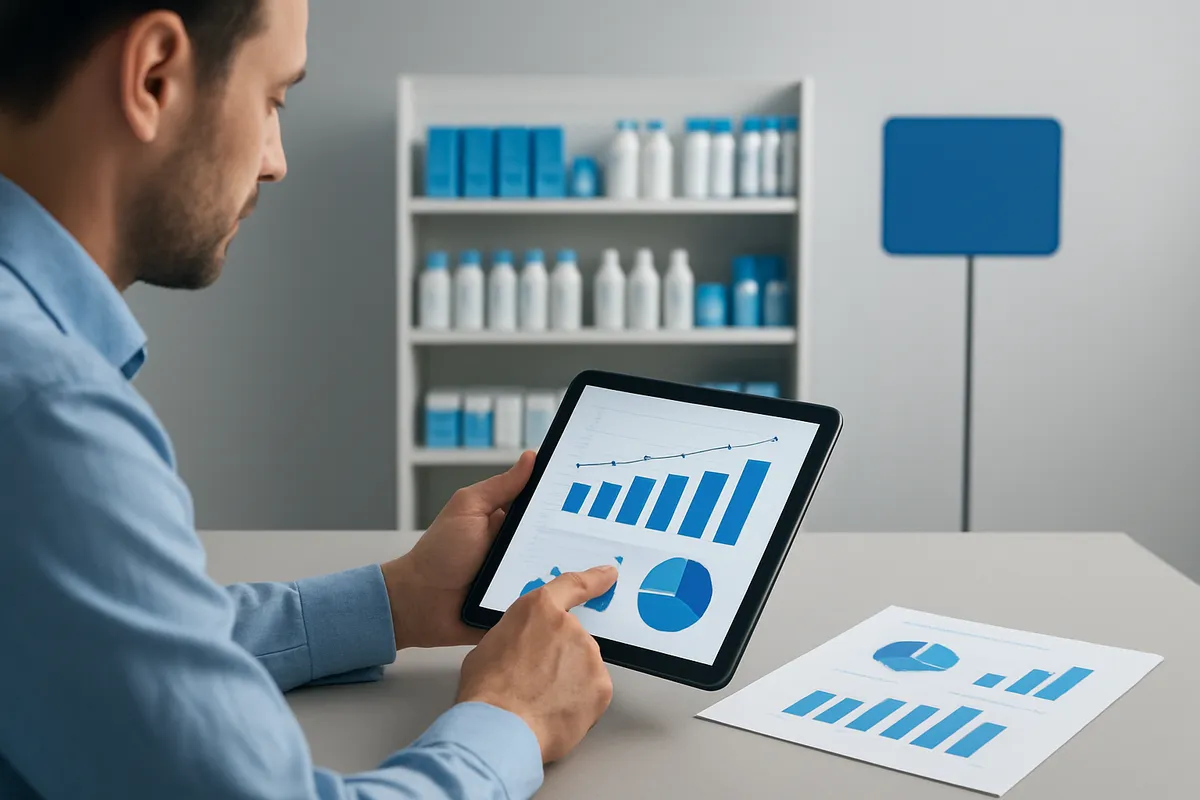
Four numbers separate a proven activation from a guess: units sold per hour, sell-through rate, conversion rate at the display, and shopper feedback collected on the spot.
Units sold per hour shows whether a demo is driving volume during the hours it runs, which matters when negotiating staffing costs against results. Sell-through rate tells you what share of the stocked inventory actually moved, a number retailers care about because it affects their own shelf-space decisions. Conversion rate at the display, shoppers who sampled versus shoppers who bought, is the clearest signal that the activation itself, not just foot traffic, caused the sale. Qualitative feedback (objections, favorite flavors, repeat-purchase intent) rounds out the picture and often explains why a number moved the way it did. Anyone answering what is trade marketing in practical terms will point to this mix of hard sales data and shopper reaction as the proof that separates a working program from a table with free samples on it.
Incrementality means isolating the sales lift caused by the demo from everything else happening in the store that week. The standard approach compares sales during the activation window against a baseline, the same store, the same day of week, a recent period without a demo running. If a competing promotion, a price cut, or a seasonal spike overlaps with the activation, that lift has to be separated out or the ROI number is inflated. This is where a lot of manual tracking falls apart: a spreadsheet built after the fact rarely captures what else was on promotion in that store that same weekend, so the attribution ends up fuzzy at best.
Real-time data collection during the event, not a spreadsheet compiled weeks later, is what lets a brand catch an underperforming location while there's still time to fix it, swap an ambassador, adjust the display, or move inventory before the weekend is over. Waiting for end-of-campaign reports means the money's already spent by the time anyone sees the problem.
Demo Wizard replaces that manual collection process with automated scheduling and a live analytics dashboard that tracks experience-to-purchase conversion by store and time period, so brand managers and retail partners see the same numbers as they happen instead of waiting on a mailed report. That shared, real-time view does more than save admin hours, it's the documentation that earns a brand expanded shelf space or a renewed activation calendar, because retailers renew programs they can see are working, not ones they have to take on faith.
No, they overlap but serve different purposes. Trade marketing covers the deals, funding, and terms a brand negotiates with a retailer to secure shelf space and promotional support, while shopper marketing focuses on influencing the shopper's decision at or near the point of purchase, in-store displays, sampling, and retail media [1]. In-store demos sit inside shopper marketing but often get funded through trade marketing budgets.
A standard sampling demo usually runs a single day or a weekend shift, while a roadshow typically stays in place for 3 to 10 days. The longer window lets a brand build the sense of urgency and repeat foot traffic that a one-day demo can't generate on its own.
The CPG brand typically funds the demo, covering ambassador wages, product cost, and any display materials, while the retailer provides the space and foot traffic. Some retailers charge a fee or require a minimum sales commitment for prime locations like entrances or end-caps. Larger brands often negotiate demo costs into their broader trade marketing agreements with the retailer.
A standard demo is a brand ambassador handing out samples from a table or tray for a shift or two, while a roadshow is a larger, temporary "store within a store" with dedicated inventory, signage, and bundled offers. Roadshows run longer, occupy higher-traffic real estate like center aisles, and aim for immediate bulk purchase rather than simple trial. Both fall under the same trade marketing umbrella but differ in scale and investment.
In-store demos and roadshows work because they turn a trade marketing agreement into a moment a shopper can taste, touch, and act on immediately. The brands that win aren't necessarily running the biggest activations, they're the ones who track which stores and time slots actually convert, then shift budget toward those combinations. That requires real data, not a spreadsheet updated after the fact.
If you're coordinating more than a handful of monthly demos across stores, start by auditing how you currently track experience-to-purchase conversion. If the answer is "we don't, reliably," that's the gap to close before scaling further.
Explore more from our content library:
Demo Wizard is the Ultimate Store Sampling & Demonstration management software for Brick and Mortar Retailers and CPG Vendors.
Chat with usPhone