
Demo Wizard is the Ultimate Store Sampling & Demonstration management software for Brick and Mortar Retailers and CPG Vendors.
Chat with us

Phone
Copyright © 2026 Demo Wizard
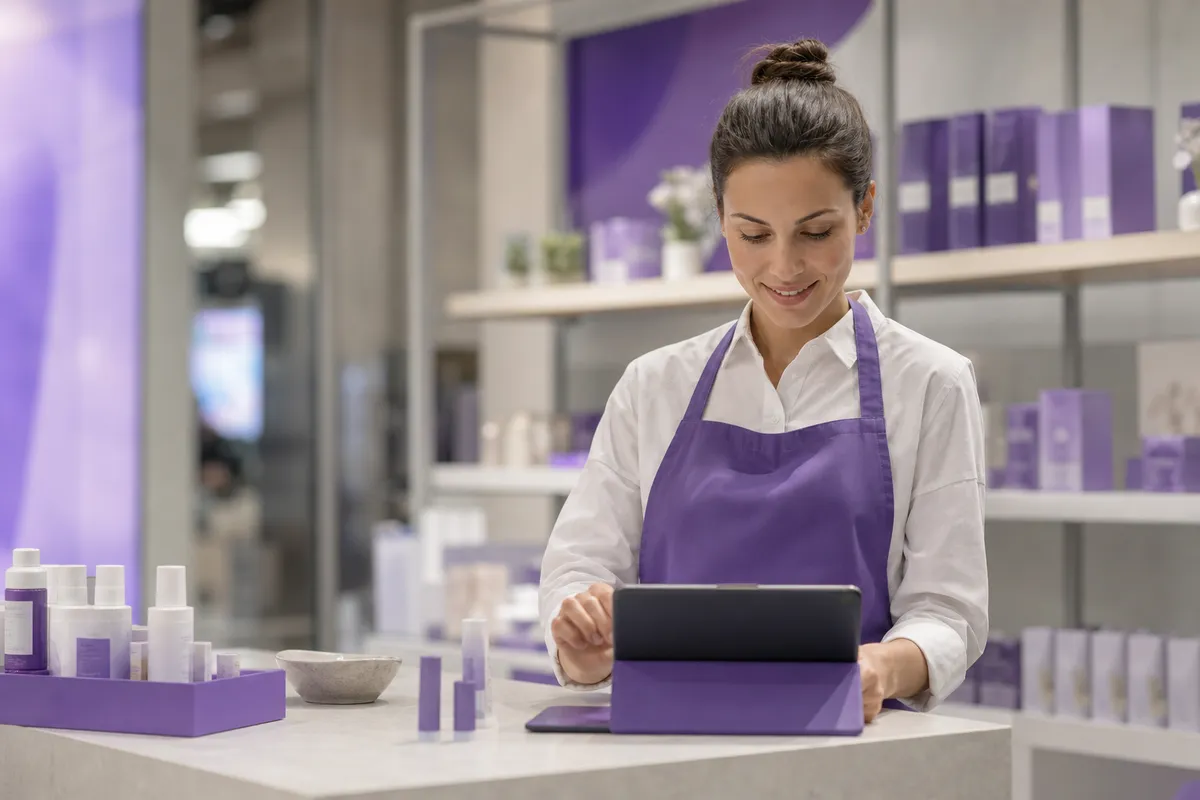
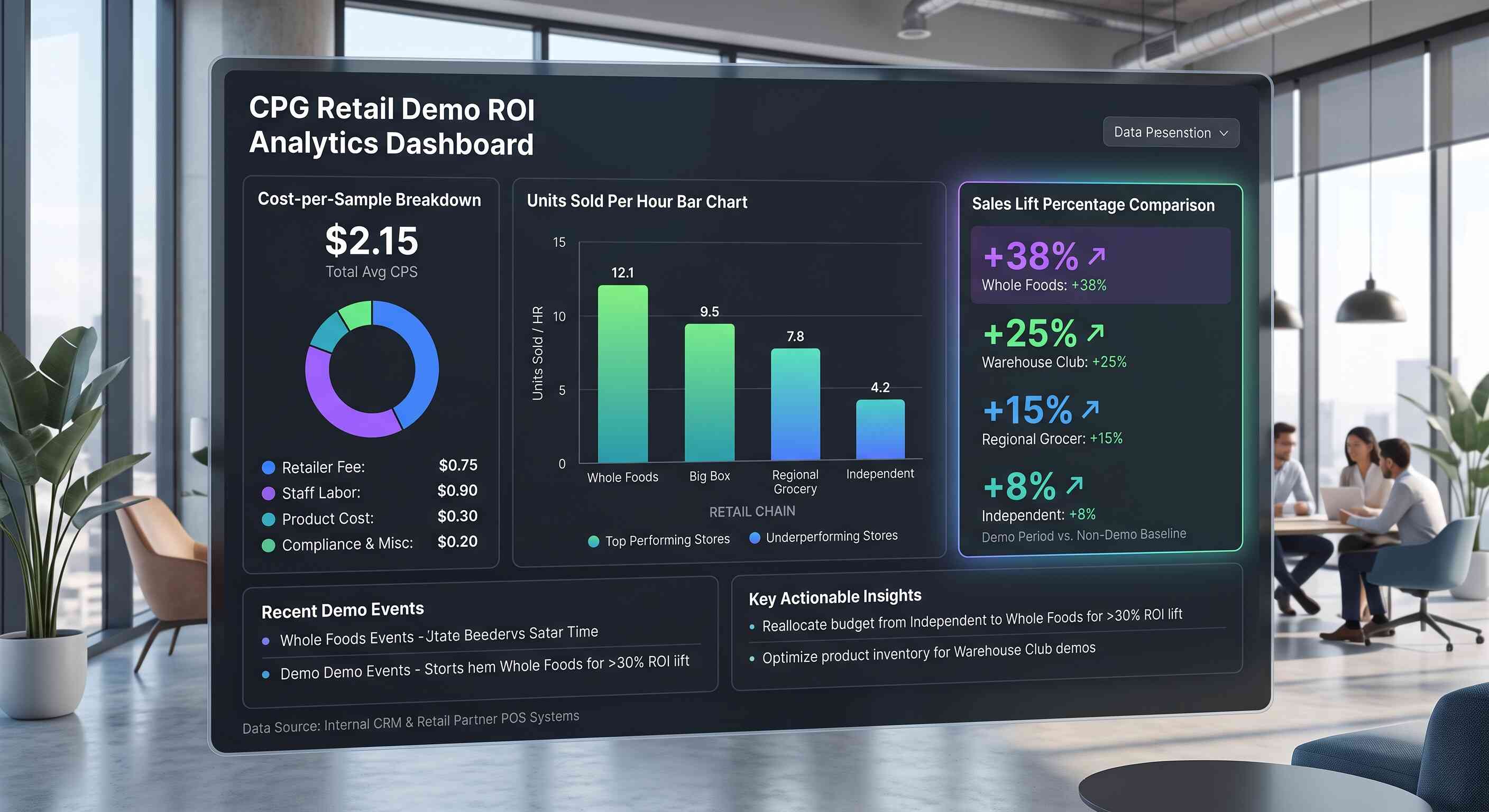
Understanding Retail execution software for brand sampling and demos is essential. Retail execution software connects CPG brands, retailers, and brand ambassadors on one system to schedule in-store demos, confirm staff show up and follow plan-o-gram setup, and report sales lift and engagement data back to brand managers automatically. Instead of coordinating by phone, email, and spreadsheets, a brand or agency uses one calendar to book shifts across hundreds of stores, track sample inventory, and capture proof-of-performance—photos, units sold, and shopper counts—right after each shift ends.
Retail execution software for brand sampling and demos coordinates scheduling, ambassador staffing, and performance reporting for in-store events, rather than checking shelf compliance or merchandising standards.
The core job is operational: a brand or agency books a demo shift at a specific store on a specific date, assigns a brand ambassador to staff it, confirms the ambassador showed up and set up correctly, and collects proof afterward, sales lift, units sampled, photos of the table or display. That workflow repeats across dozens or hundreds of stores every month for a mid-market CPG brand running a national sampling program. Without dedicated software, this coordination happens through phone calls, email chains, and shared spreadsheets, which breaks down fast once a brand passes a few dozen monthly events.
General retail execution and audit platforms track shelf compliance, planogram accuracy, and store visit checklists, recurring tasks performed by merchandisers on a routine cadence [2]. That category exists to answer a different question: did the store set up the promotion correctly, and is the product on shelf where it should be [5]. Demo coordination software answers a narrower, more time-sensitive question: did a trained ambassador show up for a scheduled shift and run the event as planned.
The distinction matters because demos are transactional and temporary. A sampling event runs for a few hours, or across a multi-day roadshow, and then it's over. Audit software checks persistent store conditions; demo software manages a one-time or short-run staffing commitment with a hard start and end time. Trying to force demo coordination into a general audit tool usually means bolting a calendar onto a checklist app that was never built for staffing logistics or ambassador payroll.
The compliance surface here is about labor records and in-store proof, not shopper data. Demo software tracks ambassador work records, shift confirmations, hours worked, assignment history, along with photo or video proof that a table was set up correctly and inventory was stocked. This is fundamentally different from consumer engagement platforms that collect shopper names, emails, or purchase behavior. A coordinator using this kind of system never touches personal data belonging to the people sampling the product; the records in the system belong to the ambassador workforce and the event itself.
The people who use this software reflect that focus: CPG brand activation managers, demo agencies and food brokers staffing shifts on a client's behalf, distributors coordinating ambassador availability across regions, and retailers who want visibility into what's happening on their floor. Demo Wizard, for example, is built around this exact group, brand ambassador management, shift scheduling, and payroll processing live in one system, so a single coordinator can run hundreds of monthly events without adding headcount.
A shared calendar assigns ambassadors to stores by region and availability, triggers automatic shift confirmations, and gives every party the same real-time view of what's booked where. That single mechanism replaces the spreadsheet-and-phone-call routine most teams still rely on.
Retail execution software for brand sampling and demos works because it centralizes three things that used to live in separate inboxes: the schedule, the ambassador roster, and the confirmation trail. A brand activation manager sets up a campaign, enters the target stores and date range, and the system matches available ambassadors to each slot based on location and skill set, no manual roster-matching across time zones or regions. For a brand running demos in 20 states, this matters more than it sounds: ambassador availability shifts weekly, and manual matching eats hours that a filter-based assignment tool handles in minutes.
Running concurrent campaigns gets cheaper per event once one system handles all of them instead of separate email threads for each. A coordinator managing five simultaneous regional campaigns no longer needs five parallel tracking methods, one calendar carries the full load. Demo Wizard is built around this specifically: a single coordinator can manage hundreds of monthly events without hiring additional staff, because the scheduling, ambassador assignment, and payroll processing sit in one system rather than fragmented across tools. Confirmation workflows add the second layer of savings. Automated shift reminders and check-in requirements cut down on no-shows and last-minute cancellations without anyone picking up a phone, which is the single biggest hidden cost in field activation, a no-show ambassador means a wasted store slot and a product sitting unopened on a shelf.
It gives brands, retailers, and ambassadors the same picture of which stores have demos booked, closing the gap between double-booked weekends and empty ones. Retailers get a particular benefit here that's easy to undervalue: store staff stop fielding vendor phone calls and stop having to referee scheduling conflicts between competing brand requests. When the calendar is visible to the store manager directly, questions about who's showing up and when get answered by checking a screen, not by chasing down a broker. For CPG brands coordinating across multiple retail chains, that same visibility means fewer scheduling collisions and a clearer audit trail of what ran, where, and when.
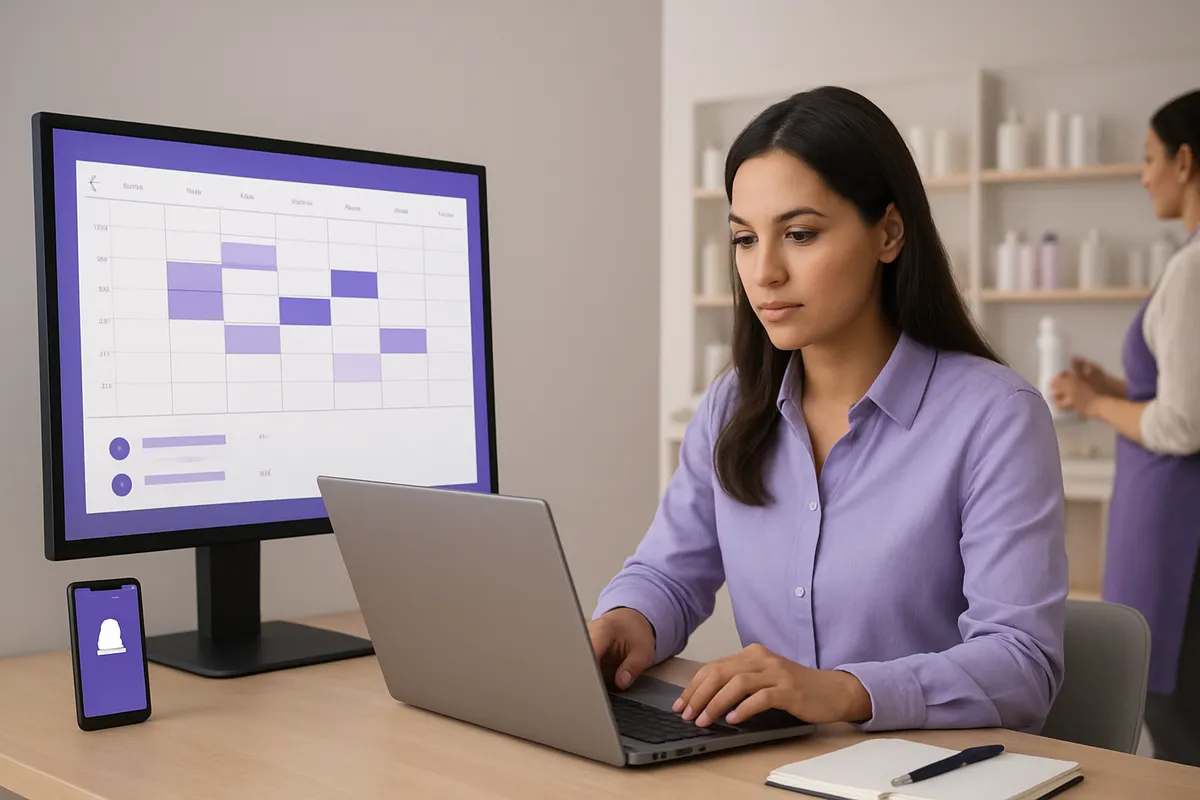
Track units sold during and after the shift, sample redemption counts, shopper engagement tallies, and cost per sample, attendance numbers alone tell you nothing about sales impact.
Many brand managers still equate a successful demo with a busy table and a friendly ambassador. Retail execution software for brand sampling and demos exists precisely to move past that assumption and replace it with numbers tied to the register, not just the booth.
The core link between a demo and a sales lift is store-level sales velocity: comparing unit movement during the demo window against the same store's baseline sales in a comparable non-demo period.
If a 12-ounce cold brew SKU typically sells 8 units a day at a given store, and it sells 34 units on the Saturday a brand ambassador ran a four-hour tasting shift, that delta is the number finance and retail buyers actually care about. Products sampled in-store often sell meaningfully better than non-sampled items, which is why attendance and foot-traffic counts alone understate the case for a program's renewal [1]. The metrics that matter most are units sold during the shift window, units sold in the 24 to 72 hours after (to catch delayed purchases), sample redemption counts, and cost per sample, total shift cost divided by samples distributed, which lets a brand compare efficiency across stores and regions on equal footing.
Ambassadors log redemption and engagement counts directly during the shift, using tally sheets or digital counters built into the scheduling platform, not shopper tracking or facial recognition.
A typical shift note captures how many samples were handed out, how many shoppers stopped to talk versus walked past, and how many coupons or QR codes were redeemed at checkout. None of this requires identifying or following individual shoppers; it is a count of interactions and products distributed, logged by the person running the table. Photo and video compliance proof, a shot of the display setup, signage placement, and inventory levels at shift start and end, adds qualitative context that raw numbers miss. If a store's unit lift came in flat, a photo showing an empty shelf at 11 a.m. explains why: the demo worked, but the store ran out of product to sell.
Ambassador shift notes round out the picture with observations a spreadsheet can't capture: a competitor sampling nearby, a store manager request, or feedback on flavor preference. Demo Wizard's analytics dashboard pulls these data points, units, redemptions, engagement counts, and photo proof, into one view, replacing the week-old spreadsheet roundup with results a brand manager can see the same day. That shift from delayed manual reporting to real-time dashboards is what lets a coordinator catch an out-of-stock problem on day one of a multi-day roadshow instead of reading about it in a post-mortem report three weeks later.
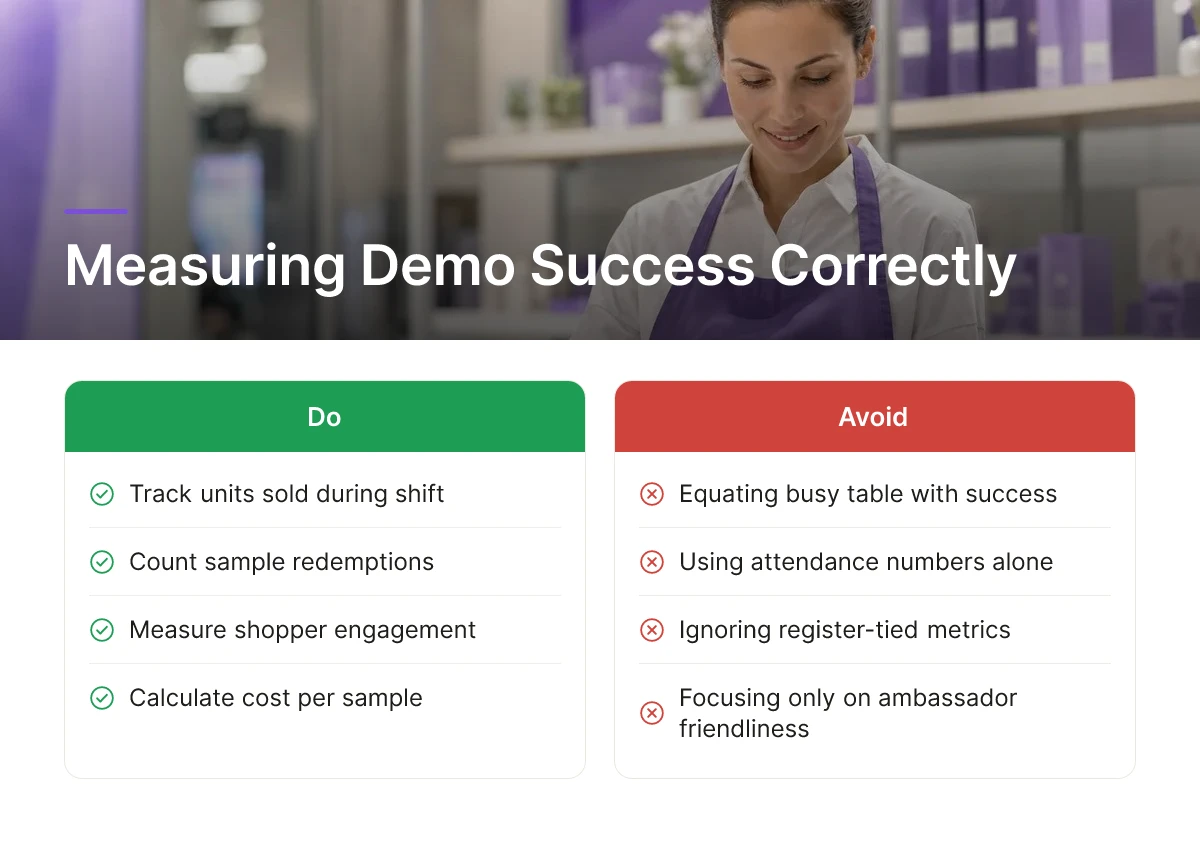
Demo coordination software connects to point-of-sale and inventory systems so schedules, stock levels, and sales data sync automatically instead of living in separate spreadsheets no one cross-checks.
For a brand activation manager running 40 demos a month across several regions, that connection determines whether reporting takes minutes or consumes an afternoon of manual exports. Retail execution software for brand sampling and demos earns its keep by closing the gap between what gets scheduled and what the point-of-sale system actually records afterward.
Two data flows matter more than any other: sales data and inventory status. Pulling POS sales figures from before and after a scheduled demo is how a brand proves lift rather than estimates it, comparing a Saturday with a sampling table against a Saturday without one is the simplest ROI test available. Inventory integration matters just as much in the other direction: a system that flags low stock on a SKU ahead of a scheduled demo prevents the common failure mode of an ambassador working a table with nothing to hand out.
Multi-vendor coordination is where this gets harder for retailers specifically. A regional grocery chain hosting demos from several CPG brands in the same week needs one shared calendar view showing every vendor's bookings, not five separate spreadsheets from five separate brand teams. Without it, two ambassadors show up for the same end-cap on the same Saturday, a scheduling conflict that costs both brands a wasted shift and costs the retailer goodwill with both vendors.
Not every integration needs to be deep. Full, bidirectional POS integration, where the platform reads and writes transaction-level data in real time, suits large retailers with dedicated IT resources. Most mid-size brands and regional chains get equivalent value from simpler export and reporting compatibility: scheduled CSV pulls or dashboard exports that line up demo dates against sales reports already generated by the existing POS. It's less elegant but far easier to stand up, and it covers the ROI question that actually matters to finance.
Integration depth should scale with vendor volume. A retailer hosting a handful of demos a month can manage fine with basic shared scheduling and manual sales comparison. A chain running daily activations across dozens of doors, or a brand coordinating national rollouts, needs tighter system connections simply to avoid the floor-space conflicts and stock-outs that volume makes inevitable.
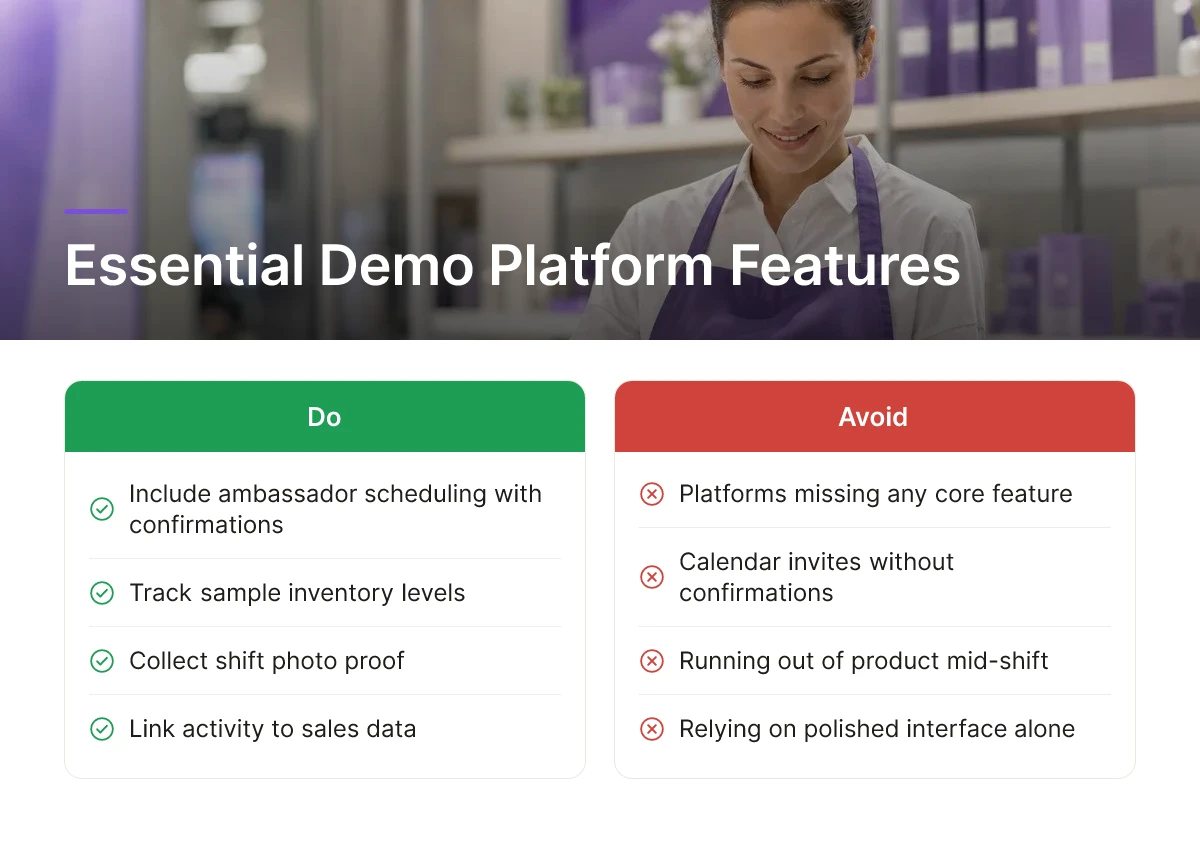
The must-have features are ambassador scheduling with confirmation, sample inventory tracking, shift photo proof, and a reporting dashboard that ties activity to sales. Skip any platform that can't deliver all four, regardless of how polished the interface looks.
Ambassador scheduling needs to handle confirmations and no-show replacement, not just a calendar invite. Sample inventory tracking matters because running out of product mid-shift, especially during a weekend roadshow, kills the momentum a brand paid for. Shift photo proof gives both the brand and the retailer evidence the table was staffed, branded correctly, and placed where it was supposed to be. Reporting dashboards should break performance down by store and time period, not just show a total unit count.
Platforms split into two camps: those that bundle staffing and payroll into one system, and those that expect you to run ambassador management through a separate agency tool. The bundled approach removes a handoff, one coordinator assigns an ambassador, tracks their hours, and triggers pay from the same dashboard, which is how Demo Wizard's ambassador management and payroll integration work together rather than as separate steps. Platforms that leave staffing to a third party require reconciling two systems after every event, which adds the exact administrative overhead a scheduling tool is supposed to remove. Sample inventory tracking shows a similar split, some tools log stock counts against each scheduled event automatically, others treat inventory as a manual spreadsheet task outside the platform.
Broader retail execution suites cover shelf audits, planogram compliance, and merchandising checks across dozens of task types [2]; demo management software focuses narrowly on event staffing and sampling ROI. That narrower scope is a feature, not a limitation, for a team whose entire job is coordinating in-store demonstrations. Retail execution software for brand sampling and demos doesn't need audit workflows or planogram scoring, it needs scheduling, ambassador coordination, and conversion data tied to specific stores and shifts. A general suite built for merchandising compliance will have fields and workflows your team never touches, adding setup time without adding value to a sampling program.
Cost should be evaluated in tiers rather than feature-for-feature. Budget-friendly tools typically cover basic scheduling only, enough for a single brand running occasional single-store samplings. Mid-range and premium platforms add reporting dashboards, multi-brand calendars, and full ambassador management, which matters more for an agency coordinating hundreds of monthly events across multiple CPG clients. Match the platform's scope to your actual event volume: paying for premium ambassador management you don't use wastes budget, and outgrowing a budget tool mid-contract wastes time.
No, this software coordinates brand ambassadors and in-store staff, not individual consumers. Platforms like Demo Wizard schedule events, manage ambassador deployment, and track experience-to-purchase conversion by store and time period. Any shopper engagement happens face-to-face at the demo table, not through the software.
It depends on volume: a store hosting a handful of vendor demos a month can manage with a shared calendar, but frequency changes that math fast. Once multiple CPG brands request the same weekend slots, or staff spend hours fielding vendor calls, a centralized schedule that's visible to vendors, ambassadors, and store managers prevents double-bookings and cuts back-and-forth communication.
A good platform flags the gap immediately and surfaces available ambassadors nearby so a coordinator can rebook without working the phones. Because scheduling, availability, and payroll data sit in one system, a replacement can be assigned and confirmed in minutes rather than hours. This matters most during multi-day roadshows, where an empty table for even part of a Saturday erodes the sales momentum the event was built to create.
A single demo needs basic scheduling and one ambassador; a roadshow needs coordinated staffing, inventory tracking, and performance data across several consecutive days. Roadshows run 3 to 10 days with dedicated footprint and bundled offers, so software must track unit sales by hour, flag low-stock conditions before a weekend rush, and assign multiple ambassadors across shifts, not just book a single appointment.
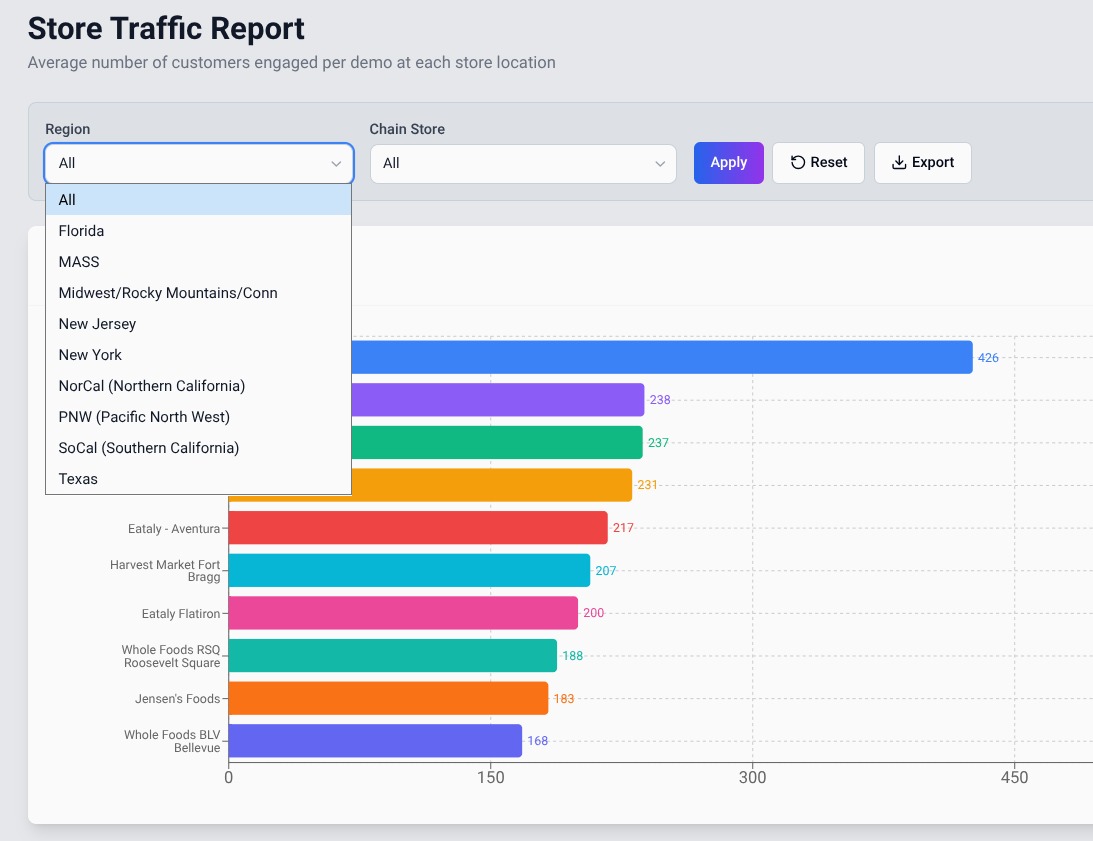
Scaling in-store demos without software means choosing between hiring more coordinators or losing visibility into which stores and times actually drive sales. The fix isn't more headcount, it's a system that handles scheduling, ambassador payroll, and conversion tracking together, so one coordinator can run hundreds of monthly events instead of dozens.
Before your next roadshow or multi-state sampling push, audit how much coordinator time currently goes to spreadsheets and phone calls versus strategy. Platforms like Demo Wizard, priced per demo rather than per user or location, make that shift measurable starting with your very next campaign.
Explore more from our content library:
About the Author
Written by the SaaS / Retail Marketing Technology experts at Demo Wizard. Our team brings years of hands-on experience helping businesses with SaaS / Retail Marketing Technology, delivering practical guidance grounded in real-world results.
Demo Wizard is the Ultimate Store Sampling & Demonstration management software for Brick and Mortar Retailers and CPG Vendors.
Chat with usPhone