
Demo Wizard is the Ultimate Store Sampling & Demonstration management software for Brick and Mortar Retailers and CPG Vendors.
Chat with us

Phone
Copyright © 2026 Demo Wizard
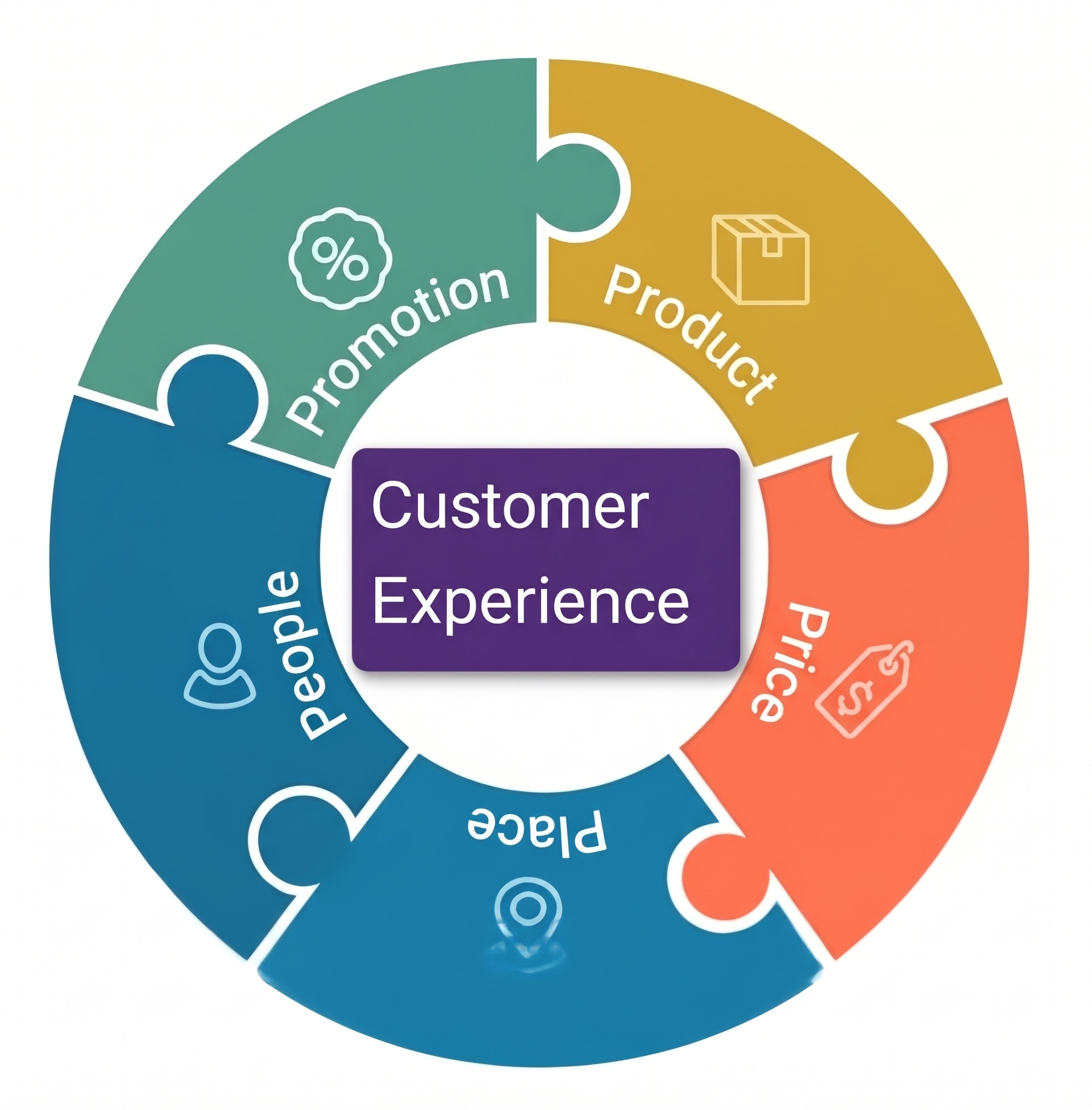
In-store product demonstrations effectively close the gap between shopper curiosity and purchase decisions by removing uncertainty through product sampling. However, success relies heavily on eliminating operational friction—such as scheduling conflicts, missed staff approvals, and inventory mismatches—through centralized, automated coordination tools.
In-store product demonstrations shape the retail customer experience by closing the gap between shopper curiosity and purchase decision—a well-run demo lets someone taste, touch, or test a product and buy it on the spot. For CPG brands and retailers, that experience only drives conversion when the operational side (scheduling, staffing, compliance, inventory) runs without friction. When coordination breaks down—no-shows, double-booked tables, out-of-stock displays—the in-store experience suffers regardless of how good the product or ambassador is. Reliable execution, not just a charismatic brand ambassador, is what makes the experience repeatable at scale.
A demonstration changes the retail customer experience by removing the one thing that stops most shoppers from trying something new: uncertainty. Tasting a sauce or sampling a drink answers the question "will I like this?" before the shopper has spent a dollar, which shortens the distance between curiosity and a cart.
That risk reduction is the actual mechanism behind demo-driven sales lift. A shopper walking past a shelf of unfamiliar products has to imagine the taste, texture, or smell and decide based on packaging alone. A shopper who just sampled the product has already answered that question with their own senses, the purchase decision that follows is less a gamble and more a confirmation. For a broader look at what shapes shopper perception beyond the demo table, this overview of retail customer experience and how to improve it lays out the full set of touchpoints that influence a purchase decision.
Proximity between the demo table and the product on shelf determines whether that moment of confirmation turns into a sale. In-store brand activation works because it puts a trained representative in front of the shopper at the exact moment they're forming an opinion about the product [1], and that moment only converts if the product is within arm's reach.
A weekend beverage sampling set up next to an end-cap display lets a shopper taste the product and grab a bottle from the same spot, in the same minute. The same demo run from a table in the back aisle, disconnected from the shelf, forces the shopper to remember the product, relocate it, and decide again later, and much of that intent evaporates before they reach the shelf. Retail activation guidance consistently points to this kind of placement decision as a primary driver of measured ROI, separate from the quality of the ambassador or the product itself [1].
Friction drops when the gap between sampling and buying disappears, and it rises every time a shopper has to make an extra decision to complete the purchase. A single ambassador handing out samples from a tray creates a brief, pleasant interaction, but it rarely holds a shopper's attention long enough to shift behavior at scale.
A dedicated activation footprint, branded signage, staged inventory, a defined area shoppers recognize as a destination, changes that perception. It signals investment and permanence rather than a one-off promotion, and it gives the brand a repeatable structure for turning a sampling moment into a purchase, week after week, store after store. CPG brands increasingly pair this kind of in-store footprint with shoppable tools that extend awareness beyond the store visit itself, connecting the in-person moment to a digital follow-through.
Most damage to the retail customer experience happens before a single sample reaches a shopper's hand, in the scheduling gaps, missed approvals, and compliance lapses that play out behind the demo table. These breakdowns are operational, not strategic, and they're largely preventable with the right coordination system.
Phone calls, spreadsheets, and email chains are still how many CPG brands and demo agencies coordinate in-store activations, and that manual process produces double-bookings and coverage gaps that store managers then have to untangle on the spot. A grocery store manager who discovers two vendors assigned to the same end-cap on a Saturday morning has no good options, someone gets turned away, and the shopper experience at that display suffers regardless of which brand wins the slot.
Lack of real-time visibility compounds the problem. Without a shared calendar that both the brand and the store can see, vendors show up without confirmed staff approval, or worse, during a blackout period the store set for inventory counts, remodels, or holiday traffic. Store employees end up fielding a vendor at the door with no record of the booking, pulling them away from their actual job to resolve a scheduling error that isn't theirs to fix. A centralized calendar visible to store staff, brand coordinators, and ambassadors removes this friction by making every booking, approval, and blackout date visible to everyone involved before a single truck gets loaded.
The most common operational breakdowns that undermine an otherwise well-planned demo campaign include:
Double-booked tables or end-caps, where two vendors show up for the same space on the same day.
Missed staff approvals, where an ambassador arrives without the store's confirmation on file.
Blackout date conflicts, where a demo is scheduled during a remodel, inventory count, or holiday rush.
Late or incomplete check-ins, which delay setup and compress the window for shopper engagement.
Inventory mismatches, where product fails to arrive on time or runs out mid-event.
Demo staff are expected to meet basic, specific standards every time they work a store: arriving within an agreed check-in window, setting up the booth according to the retailer's footprint and signage rules, and following food safety basics like glove use, temperature control for perishables, and proper sampling utensils. When nobody monitors these standards, the result is visible disruption, a late check-in that delays setup, a booth that blocks an aisle, or a food safety shortcut that puts the retailer's reputation at risk. Platforms like Demo Wizard address this by tracking check-in times and compliance data automatically, giving store managers a record of what happened without having to supervise every activation personally.
Inventory timing causes a different kind of damage. When product drops arrive late or run out mid-event, momentum built over the first hour of a weekend roadshow evaporates, shoppers who tasted the product can't buy it, and the ambassador has nothing left to sell. Coordinating inventory forecasts against the demo schedule, rather than treating them as separate workstreams, is what keeps a high-traffic activation converting from open to close. For more information, see Customer Success Manager.
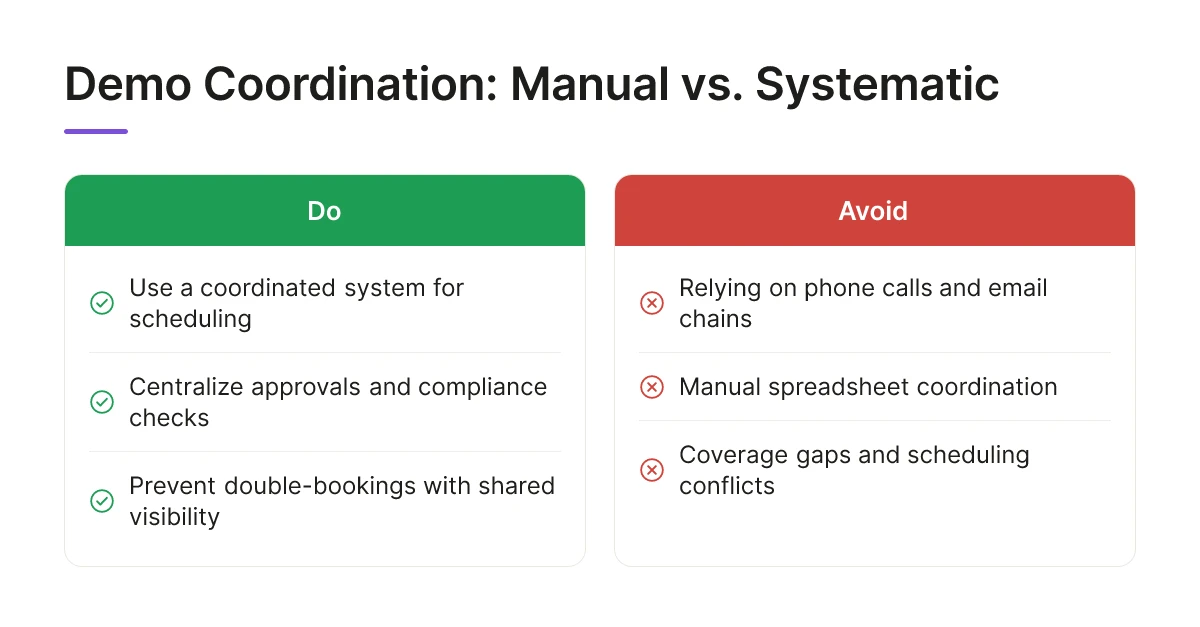
Proving demo ROI means tying specific execution records to sales results, not counting how many photos an ambassador uploaded. A brand or retailer judging retail customer experience quality needs numbers finance will accept, not activity for its own sake.
Units moved per shift, cost per demo, and repeat visits to the same store tell a brand far more than headcount or photo volume ever will. A table that photographs well but sells nothing is a wasted Saturday; a modest-looking table that moves 40 units in four hours is the one worth repeating.
Cost per demo matters because it lets a brand activation manager compare a club-store turnkey shift against a self-scheduled slot at an independent grocer and decide where the next quarter's budget goes. Repeat visits to the same store, tracked over months, reveal whether a location is building loyal buyers or just absorbing free samples. T-ROC's research on in-store activation notes that well-executed programs can lift category conversion by 20-40 percent [1], the kind of range that only becomes credible when it's backed by consistent, comparable data from every shift, not a handful of standout events.
Brands connect demo records to sales outcomes by lining up timestamped execution data against the sell-through numbers retailers or distributors already report, not through a built-in point-of-sale integration. Demo Wizard, for example, logs store, date, time, and ambassador for every scheduled event; a brand then matches that schedule against weekly or monthly retailer sales reports to see whether stores with demos outsold stores without them in the same period. The platform doesn't pull sales data directly from a register, it gives you the clean activity record that makes the comparison possible.
That evidence trail depends on discipline: check-in and check-out timestamps, photo compliance, and notes on stockouts or display issues, captured consistently across hundreds of events rather than a dozen. When a retailer asks for proof before renewing shelf space or expanding a roadshow series, a coordinator with months of clean records answers in minutes. Automated capture also removes the manual spreadsheet reconciliation that used to eat a coordinator's week, freeing that time for negotiating next quarter's store list instead of chasing ambassador paperwork. Broader CPG marketing guidance echoes this same shift toward measurable, data-backed tactics over one-off promotional spend [CPG marketing strategies].
A shared demo calendar that every store manager, brand coordinator, and agency can see at once stops double-bookings before they ever reach the sales floor and protects the retail customer experience from avoidable disruption.
Without one calendar, two brands can easily reserve the same end-cap or demo table for the same Saturday afternoon. One of them finds out only when their ambassador arrives with a cart full of product and nowhere to set up.
A centralized calendar removes the guesswork. Store managers see every scheduled activation across every vendor, brand coordinators see open slots before they commit staff and inventory, and agencies can place ambassadors without calling the store to confirm availability. In-store brand activation works best when human interaction, product staging, and store timing line up [1], and that alignment starts with a calendar everyone can actually see.
Store employees stop fielding vendor phone calls and email chains once a central calendar handles the coordination directly. That matters because front-line staff were never meant to be dispatchers for CPG brands, their job is running the store, not relaying messages between a distributor, a brand's marketing team, and a sampling agency.
Consider a multi-day roadshow: a branded pop-up that occupies a high-traffic spot near the entrance for a week or more. Pulling that off requires inventory arriving on schedule, staffing locked in across every shift, and store approval secured well in advance, all without colliding with another vendor's event already booked in that same space. Any single missed handoff can sink the whole activation.
A single source of truth cuts the back-and-forth that normally eats days between a retailer's approval, the distributor's delivery schedule, and the brand's staffing plan. Demo Wizard's scheduling system gives store managers, brand coordinators, and ambassadors the same live view of upcoming events, so a coordinator managing hundreds of monthly demos across multiple chains doesn't have to confirm every booking by phone. That visibility is what keeps a roadshow, or any in-store activation, from becoming the thing that disrupts the retail customer experience instead of improving it. Research on improving retail customer experience and brand loyalty points to this same principle: consistency across every touchpoint is what builds lasting trust, not any single standout event.
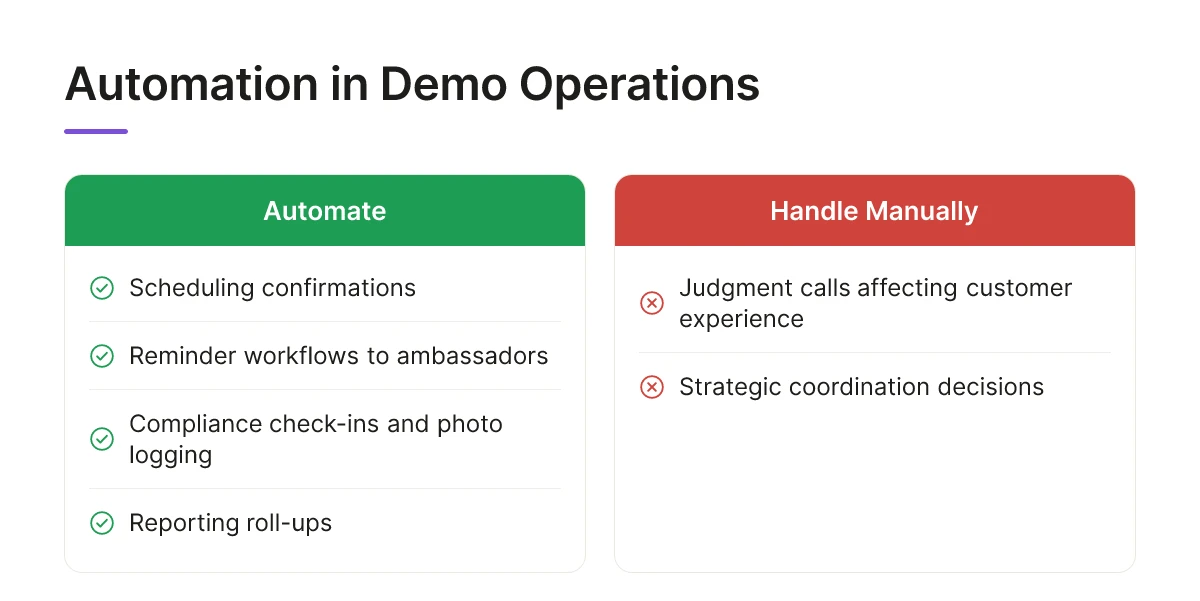
Automation handles the repetitive coordination work, confirmations, reminders, compliance checks, so coordinators and store staff spend their time on judgment calls that actually affect the retail customer experience, not paperwork.
Some coordination tasks are mechanical enough that a platform does them faster and with fewer errors than a person checking a spreadsheet, while others depend on human judgment that no workflow can replicate. Broadly, the split looks like this:
Good candidates for automation: scheduling confirmations, reminder workflows sent to ambassadors ahead of a shift, in-store compliance check-ins that log arrival time and setup photos, and reporting roll-ups that combine results across dozens of stores.
Better left to a person: training an ambassador to talk about product sourcing with real knowledge, handling a shopper's objection on the spot, and negotiating table placement or schedule changes with a store manager.
A tool like Demo Wizard runs the automatable tasks as standing workflows rather than one-off items a coordinator has to remember for each of hundreds of monthly events. CPG brands that try to script the human-judgment side of the job tend to produce flat, forgettable activations, the kind that undercut the trial-to-purchase moment a roadshow or sampling event is built to create.
Centralizing vendor communication through one platform removes store employees from the back-and-forth that normally lands on their phone or inbox. Instead of a deli manager fielding calls from three different brand reps about three different Saturday demos, every ambassador, distributor, and brand coordinator works off one shared calendar that the store can see without picking up the phone.
Confirmation workflows also cut down on the last-minute cancellations and no-shows that damage the shopper-facing experience, an empty table with signage but no ambassador reads worse to a customer than no activation at all. Automated reminders sent 48 and 24 hours out, paired with a backup-staffing trigger when an ambassador flags unavailability, catch problems before they become a gap on the sales floor.
Cost scales with the number of activations run, not with how many coordinators or store staff get pulled into logistics. A brand running a handful of regional roadshows sits in a budget-friendly tier; a national CPG account running hundreds of monthly events scales into enterprise territory, but headcount doesn't have to grow alongside it. That's the gap generic scheduling tools and spreadsheets can't close [1], and it's the reason retail-specific coordination software is becoming the default rather than a nice-to-have for brands serious about retail execution.
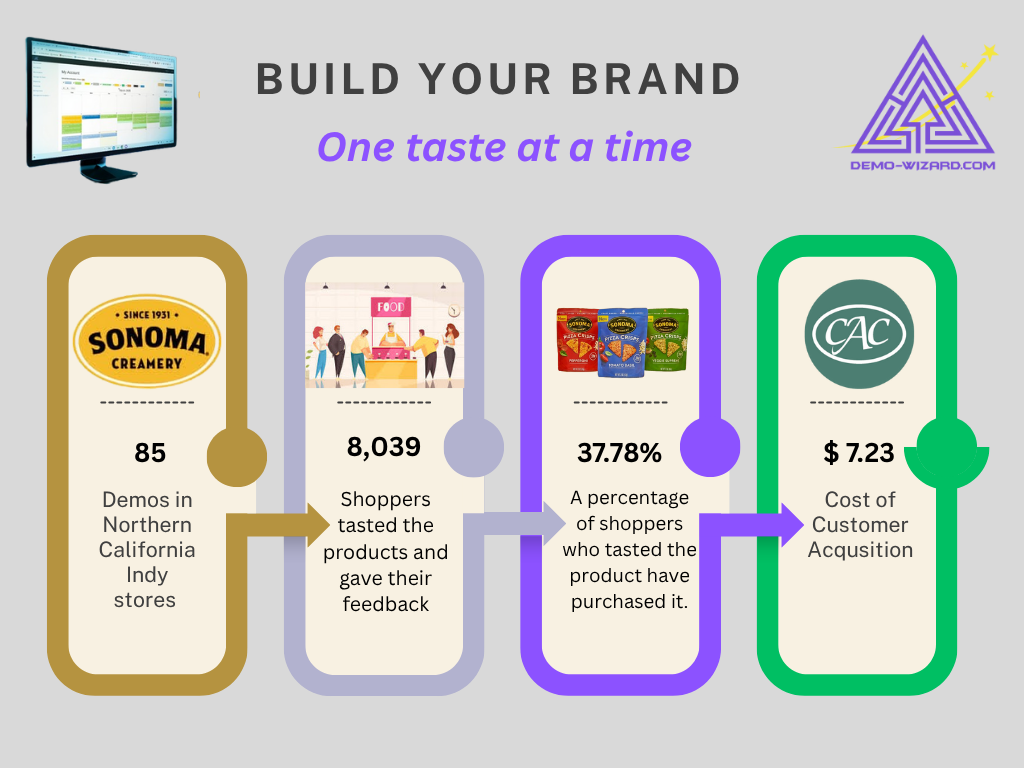
Roadshows and structured sampling events, not casual tray sampling, tend to produce the clearest sales lift. A multi-day display near a store entrance or end-cap, staffed by a trained ambassador selling bundle packs, creates frictionless taste-to-purchase: shoppers sample a product and grab it from the pallet in front of them rather than remembering to find it later on the shelf. In-store brand activation of this kind can lift category conversion by 20-40% [1].
Running out of product mid-demo kills momentum and wastes the foot traffic a roadshow is designed to capture. A Saturday stockout means ambassadors are talking to shoppers about a product they can't buy, which frustrates customers and erases the ROI the brand was counting on. Accurate demand forecasting tied to store volume prevents this.
Store managers and department staff are usually left to enforce compliance, even though demo staff work for the brand or an outside agency. Without a shared calendar visible to store, brand, and ambassador, employees end up policing setup times, footprint rules, and check-ins manually, which pulls them away from their own jobs and creates friction with vendors.
Not reliably, spreadsheets and email threads from multiple vendors create blind spots across dozens of locations. A centralized calendar visible to store staff, brand ambassadors, and vendors eliminates the guesswork and gives every location manager a single source of truth for what's happening on the floor.
No, automation handles scheduling, payroll, and reporting, but it can't replicate what a trained ambassador does on the floor. Ambassadors still need deep product knowledge, storytelling skill, and the ability to overcome shopper objections to turn a taster into a buyer; platforms like Demo Wizard remove the administrative burden so ambassadors can focus on that conversation.
Scaling in-store demos without losing quality comes down to three things: protecting the shopper's moment of trial, keeping store staff out of vendor logistics, and proving conversion with real data rather than guesswork. Out-of-stock pallets and uncoordinated vendor schedules do more damage to retail customer experience than most brands realize, and both are fixable with a shared calendar and better forecasting. Demo Wizard addresses the coordination side directly—letting one person schedule, staff, and track hundreds of monthly demos across stores without adding headcount. The next step: audit your last quarter of demo events for stockout rates and store-manager complaints, then decide whether a dedicated scheduling system would have prevented them.
Explore more from our content library:
About the Author
Written by the SaaS / Retail Marketing Technology experts at Demo Wizard. Our team brings years of hands-on experience helping businesses with SaaS / Retail Marketing Technology, delivering practical guidance grounded in real-world results.
Demo Wizard is the Ultimate Store Sampling & Demonstration management software for Brick and Mortar Retailers and CPG Vendors.
Chat with usPhone