Demo Wizard is the Ultimate Store Sampling & Demonstration management software for Brick and Mortar Retailers and CPG Vendors.
Chat with us

Phone
Copyright © 2026 Demo Wizard
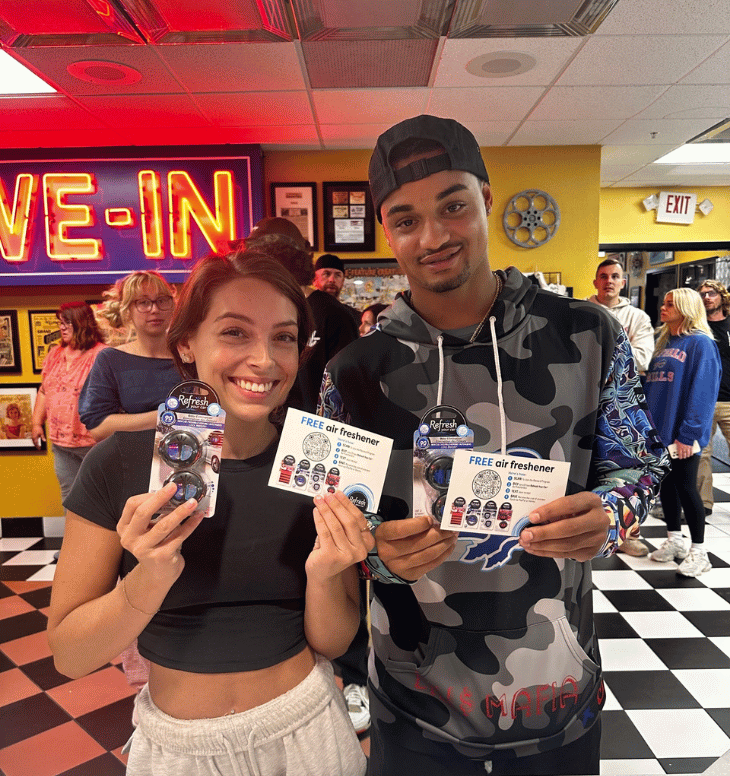
The Recess – Sampling & Brand Activation Platform (alongside similar tools like Demo Wizard) replaces fragmented emails and spreadsheets with a single, centralized system to manage CPG in-store demo scheduling, approvals, staffing, compliance, and ROI reporting across retail networks.
Understanding Recess – Sampling & Brand Activation Platform is essential. CPG brands, retailers, and demo companies use a sampling and brand activation platform to put scheduling, staffing, and ROI reporting for in-store demos into one shared system instead of scattered emails and spreadsheets. Brands submit activation requests, retailers approve them against a centralized calendar, and demo staff check in and report results from the floor—giving every stakeholder the same real-time view of what's happening in which store, and whether it drove sales lift.
A sampling and activation platform gives each party in a demo campaign, brand, retailer, agency, ambassador, one shared view of approvals, schedules, and results instead of four separate ones. The Recess – Sampling & Brand Activation Platform model reflects this broader category: a single system of record that replaces fragmented communication with one traceable workflow.
Without that shared system, coordination happens through a patchwork of emails, phone calls, and spreadsheets passed between people who each hold only part of the picture. A brand manager knows the campaign calendar but not which stores actually have an open slot. A store manager knows which aisle is free on Saturday but has no idea an ambassador is supposed to show up. That gap is where no-shows, missed inventory, and wasted sampling budget come from. This is particularly relevant for Recess – Sampling & Brand Activation Platform.
Four distinct actors touch every in-store demo, and each one needs different information to do their part:
A platform built for this work, Demo Wizard, for example, organizes those four roles around a single activation record rather than four separate conversations. Each party sees the status, inventory, and performance data relevant to their role without chasing the others for updates.
A centralized calendar replaces the email thread as the source of truth, so retailer staff, brand managers, and field ambassadors all look at the same schedule in real time. When a brand submits an activation request, the retailer approves or declines it against existing store bookings, and an ambassador is assigned to the confirmed shift automatically. Nobody has to reconcile three different versions of the week's demo schedule.
This request-to-approval sequence is the operational backbone that platforms like Recess, Sampling & Brand Activation Platform and Demo Wizard are built around: request, approval, assignment, execution, in one traceable chain.
It's worth distinguishing this coordination layer from consumer engagement software. A scheduling and ROI platform manages the people and timing behind the demo, not communication with the shoppers who walk by the table. That distinction matters because brands sometimes conflate "activation platform" with tools that message or track individual consumers, which is a different category of software with a different job to do. For a broader look at how brands structure these programs, see this guide to in-store brand activation strategies.
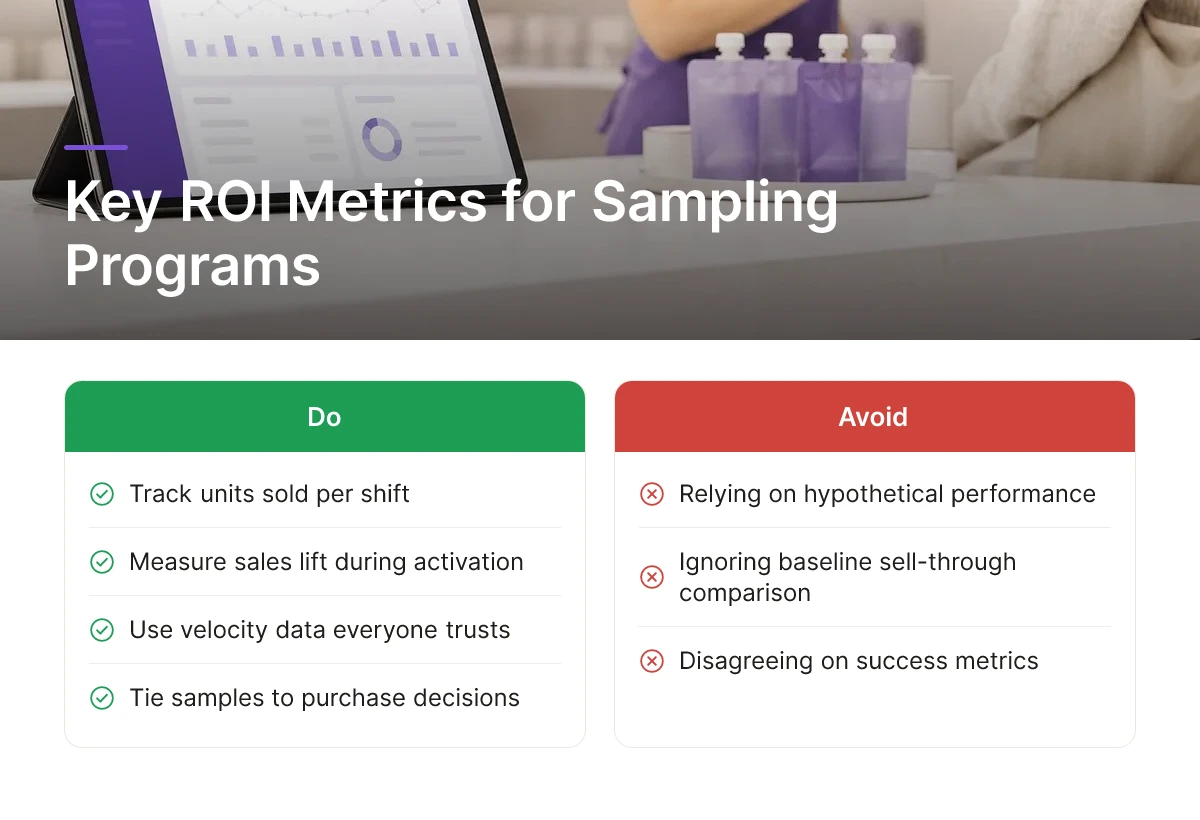
The metrics that matter most are units sold per shift, sales lift during the activation window, and conversion signals that tie a sample directly to a purchase decision.
Retailers and brands don't always agree on which number proves success, but velocity data is the one everyone trusts. Units-sold-per-shift tells a store manager whether the display or table is earning its square footage right now, not hypothetically. Sales lift, the difference between baseline sell-through and sell-through during the activation window, is what justifies the labor and product cost of running the event in the first place. Products sampled in-store commonly see sell-through outperform non-sampled baselines, a pattern that holds across multiple industry studies [2], though the exact magnitude depends heavily on category and format, covered below.
Brands track conversion through point-of-sale correlation, coupon redemption, and direct basket pickup at the display, none of which require guessing at shopper intent. When considering Recess – Sampling & Brand Activation Platform, this point stands out.
This frictionless path from sample to cart is one reason roadshow-style footprints with dedicated inventory staging tend to outperform a single sampling table tucked in a back aisle. For more detail on structuring these formats, see this guide to in-store demo strategy and scale.
Expect lift to vary by category and format, a sampling table and a multi-day roadshow are different investments with different realistic outcomes.
A frozen food brand sampling a new flavor behaves differently than a beverage brand running a weekend roadshow near the entrance. Impulse categories with low price points tend to convert faster on the spot; considered purchases need more ambassador storytelling to move a shopper. Brands should treat lift benchmarks as directional within their own category, not as a universal number borrowed from a different product type [1].
Beyond the numbers, qualitative proof-of-performance matters to retail partners just as much: photo compliance showing the display was built correctly, ambassador shift reports noting foot traffic and objections, and consumer feedback jotted down on the floor. A platform like the Recess, Sampling & Brand Activation Platform approach, and tools built for this exact workflow, including Demo Wizard's retail demo ROI tracking, exist because strong reporting from one activation is what earns a brand its next slot, a longer footprint, or an expanded store count.
Automated scheduling removes store staff from vendor coordination entirely, replacing phone calls, paper sign-up sheets, and manual approvals with a shared, rules-based calendar.
Store managers absorb a surprising amount of unpaid logistics work on behalf of CPG brands. A typical week involves fielding phone calls from vendors requesting table space, approving ad hoc sampling requests that weren't planned in advance, untangling double bookings when two brands show up for the same aisle on the same Saturday, and chasing down a brand ambassador who never arrived.
None of this is in a store employee's job description, yet it falls to whoever picks up the phone. Each unplanned interruption pulls someone away from stocking shelves, running registers, or helping customers, the tasks the store actually pays them for. A platform built specifically for coordinating demos removes this burden by giving every party a single, visible schedule instead of a patchwork of calls and emails. Demo Wizard, for example, replaces that back-and-forth with automated scheduling that brand teams, ambassadors, and store managers all see in real time.
A shared calendar visible to in-store managers, brand teams, and distributors stops scheduling collisions before they happen, rather than forcing a manager to resolve them on the floor. When every stakeholder can see what's booked, where, and for how long, there's no scenario where two brands arrive expecting the same end-cap. For those exploring Recess – Sampling & Brand Activation Platform, this matters.
Automated systems also enforce compliance to in-store conditions directly, rather than relying on staff to police it. Approved time windows, footprint size limits, and setup rules get built into the booking itself, so a brand can't accidentally reserve a four-hour slot in a two-hour window or set up a footprint larger than the store allows.
This matters more as activation formats grow. A single sampling table for an afternoon is low-risk. A multi-day roadshow occupying a dedicated footprint for a week needs tighter coordination, inventory restocking, staff rotations, and setup/teardown all have to align without pulling store employees into the middle of distributor and ambassador communication. A platform purpose-built for retail activation, like a Recess, Sampling & Brand Activation Platform, handles that coordination layer so stores experience the sales lift without the administrative drag.
Multi-location sampling programs stay on track when every store's rules—footprint size, approval chain, setup window—are enforced automatically instead of left to an ambassador's memory.
A regional grocery chain might allow a 10-foot table near the entrance, while the club store three miles away restricts activations to a designated endcap and requires a manager sign-off 48 hours in advance. A CPG brand running dozens of demos a month across both formats cannot rely on a shared spreadsheet or a group text to keep that straight. One missed approval or a table set up in the wrong zone can end a retailer relationship that took months to build.
Sampling programs need to enforce store-specific time windows, approved activation zones, signage requirements, and setup or breakdown checklists at the location level, not as a generic company-wide policy. A natural foods retailer waiving fees in exchange for foot traffic still expects the aisle clear by a set time; a mass retailer running an exclusive-agency model has its own shift structure and liability rules. Platforms built for this work encode those differences per store, so the correct checklist appears automatically when a coordinator schedules an event there, rather than depending on someone remembering which rules apply where.
Ambassador accountability comes from structured check-in and check-out confirmation, photo verification of the setup, and shift completion records tied to that store's specific requirements. Demo Wizard, Sampling & Brand Activation Platform builds this into the scheduling workflow: an ambassador confirms arrival, submits a photo showing the display matches the approved layout, and logs completion against the shift terms set for that location. Coordinators managing hundreds of monthly events across multiple states see this data centrally instead of chasing confirmation calls or waiting on end-of-week reports.
Consistent compliance is what keeps a retailer's door open. A single ignored footprint rule or a no-show without documentation can cost a brand its next activation slot, especially with chains that grant space selectively. Reliable, verifiable execution at every location is what earns the renewal.
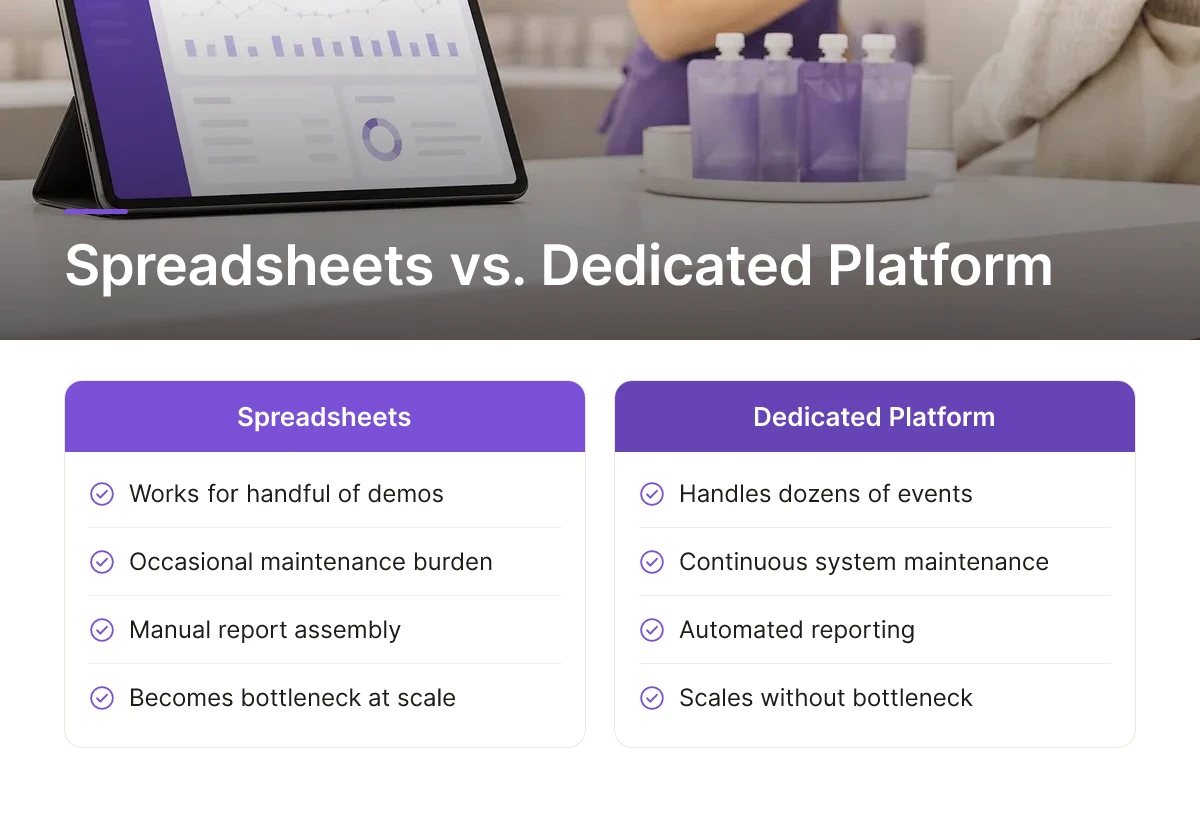
Spreadsheets work for a handful of demos a month; once you pass a few dozen events across multiple retailers, the upkeep burden shifts from occasional to constant. This directly impacts Recess – Sampling & Brand Activation Platform outcomes.
The honest comparison isn't "spreadsheet versus software", it's who owns the ongoing maintenance. With an internal build, someone on your team has to keep updating calendar logic, chasing approval rules that differ by retailer, and manually assembling reports every time a brand manager asks which stores are converting. That person becomes a bottleneck as volume grows, and the system tends to break quietly: a double-booked ambassador here, a missed compliance photo there. A platform built for this work, such as Demo Wizard, absorbs that logic into the system itself, scheduling, ambassador assignment, and ROI reporting run on rules you set once rather than rules someone re-applies by hand every week.
No tool makes onboarding instant, getting brand teams, retailer contacts, and ambassador rosters loaded into one system takes real setup time no matter the approach.
Expect to spend time mapping existing store lists, importing ambassador availability, and agreeing on what counts as a "completed" demo for reporting purposes. Teams that treat this as a one-week favor usually end up frustrated; teams that budget a realistic ramp-up period, comparable to standing up any new operational system, get a cleaner rollout. The payoff is that this setup cost is paid once, while a spreadsheet's coordination cost repeats every single month.
A platform's existing retailer relationships and approved store lists can save months of relationship-building that in-house teams would otherwise have to do from zero.
This is a genuine differentiator worth probing in any evaluation: does the platform already have approved vendor status and store-level contacts at the retailers you're targeting, or are you still building those relationships yourself? In-house coordination doesn't give you that head start, every new retailer is a fresh negotiation. Both industry guides on in-store activation point to standardized compliance and retailer integration as recurring friction points when scaling nationally [1][2], and existing network coverage directly reduces that friction.
On cost, think in tiers rather than exact figures. Pure in-house effort looks budget-friendly on paper but carries hidden labor cost as your coordinator's time gets consumed by logistics instead of strategy. Dedicated platforms sit in the mid-range to premium tier depending on features, but a tool like Recess, Sampling & Brand Activation Platform is evaluated against that same tradeoff: does the subscription cost less than the coordinator-hours it replaces? For most multi-retailer, high-frequency programs, the math favors dedicated infrastructure. A single-retailer program running a handful of events a month may reasonably stick with manual coordination until volume justifies the switch.
Responsibility usually sits with the brand's activation coordinator or an agency partner, not the store manager. Retailers generally want visibility into the calendar, not ownership of it. A platform built for retail demo logistics, rather than general event ticketing, keeps that scheduling centralized so stores, ambassadors, and brands all see the same information.
Yes, when scheduling, ambassador assignment, and reporting run through one system instead of spreadsheets and phone calls. Demo Wizard, for example, is built so one coordinator can manage hundreds of monthly events across multiple states without adding headcount, since the platform handles the coordination work manually done before. This is particularly relevant for Recess – Sampling & Brand Activation Platform.
A no-show without backup coverage usually means a wasted slot, lost product, and a retailer relationship strain. Agencies and brands that plan for this build backup staffing pools and get real-time check-in alerts, so a replacement can be dispatched or the retailer notified before foot traffic, and the sales opportunity, passes.
No, independent and natural grocers typically have fewer formal compliance rules than club stores or major chains. Still, tracking setup time, booth placement, and staff conduct protects the relationship even where it's not contractually mandated, since repeat access to a store often depends on how smoothly past events went.
A sampling program is typically a brand ambassador handing out product samples during a shift, while a roadshow is a multi-day branded footprint with dedicated space, bundled offers, and heavier staffing. Roadshows aim for immediate bulk sales and retailer relationship-building over a set window, often 3 to 10 days, while standard sampling runs as an ongoing cadence across many stores rather than a single concentrated event.

Scaling in-store sampling comes down to three things: centralized scheduling that replaces spreadsheets, reliable ambassador coverage with a backup plan for no-shows, and reporting that ties specific stores and time slots to actual sales lift. Brands and agencies that treat these as separate manual tasks hit a staffing ceiling long before they hit a budget ceiling. Platforms built specifically for retail demo logistics, rather than general event tools, let one coordinator run programs across dozens of states. If you're currently tracking demos in a spreadsheet, start by auditing which stores and time slots you can't currently measure for conversion impact.
Explore more from our content library:
About the Author
Written by the SaaS / Retail Marketing Technology experts at Demo Wizard. Our team brings years of hands-on experience helping businesses with SaaS / Retail Marketing Technology, delivering practical guidance grounded in real-world results.
Demo Wizard is the Ultimate Store Sampling & Demonstration management software for Brick and Mortar Retailers and CPG Vendors.
Chat with usPhone