
Demo Wizard is the Ultimate Store Sampling & Demonstration management software for Brick and Mortar Retailers and CPG Vendors.
Chat with us

Phone
Copyright © 2026 Demo Wizard
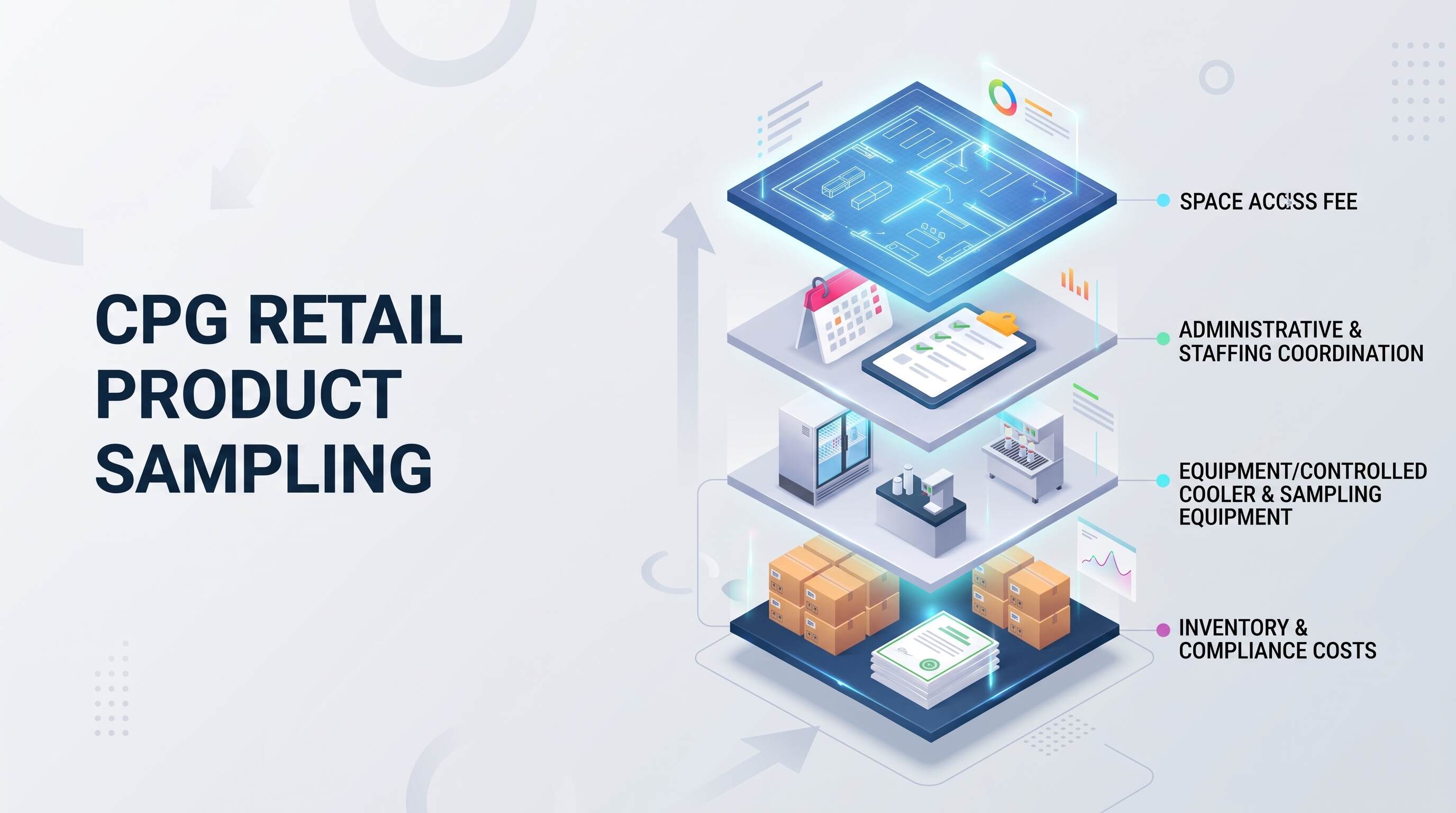
Retailer demo fees are the charges retailers bill CPG brands to conduct in-store product demonstrations, covering floor space, staff coordination, and administrative overhead. Fees vary widely by retailer size and format, big-box chains and warehouse clubs often charge more due to higher foot traffic and stricter compliance requirements, while regional grocers may charge less or waive fees for strong vendor relationships. Brands should budget for these fees as a fixed cost per event, then layer in staffing, product, insurance, and compliance costs to calculate true program spend and expected ROI.
Retailer demo fees typically bundle three cost centers: floor space access, staff coordination, and administrative processing, billed either as a flat rate or a tiered charge based on event scale.
Most retailer demo fees break into three parts. The first covers space or slotting access, the right to occupy a table, cart, or end-cap during store hours. The second covers scheduling and supervisor coordination, since someone on staff has to review the request, confirm timing, and check the ambassador in on the day of the event. The third is administrative processing, which includes paperwork, insurance verification, and system entry for the retailer's records. Whole Foods, for example, restructured its supplier program to route demos, shelf management, and displays through a third-party retail strategy firm, requiring brands to help fund that oversight system [2].
Retailers charge these fees because every demo pulls store employees away from their regular duties. Someone has to approve the request, walk the ambassador through store rules, supervise setup, and sometimes clean up afterward. That labor time has a cost, and so does the floor space itself, a table near the entrance or an end-cap is square footage the store could otherwise use for its own merchandising or a paying vendor's activation. Demo fees offset both of those costs at once.
Fee structures generally come in two forms. A flat per-event fee applies regardless of what happens during the demo, while a tiered fee scales with duration, the number of staff working the event, or the location's premium value. A single-day table near the dairy case costs less than a spot at the front entrance or a multi-day roadshow-style activation with dedicated signage and staging, which typically commands a different fee tier because it occupies more space for longer and demands more staff oversight.
These fees are set by retailer policy, not negotiated store-by-store or visit-by-visit. A regional manager can't waive a fee on request, though the underlying fee schedule varies considerably by chain size, category, and how strong the vendor relationship is at the corporate level.
Budget for retailer demo fees the same way you budget for shelf space: as a fixed per-door cost multiplied by how many doors you activate, plus labor, product, and logistics stacked on top.
A single-store test might feel manageable on a spreadsheet napkin. The math changes fast once a brand moves from a five-store pilot to a 40-store rollout across two states.
Demo fee costs don't shrink with scale, they multiply. The retailer's charge per event typically stays flat whether you're running one demo or one hundred, so the real budgeting question is: per-door cost times door count, plus ambassador wages, plus product given away, plus travel and shipping for each location.
Build a per-event template that separates these into distinct line items rather than one blended "activation cost" number. At minimum, track: retailer fee, ambassador labor (including any overtime for extended shifts), product cost (units sampled plus spoilage), and travel/logistics (mileage, parking, shipping product to store). Brands that lump these together lose visibility into which line is driving cost overruns when a campaign scales from 10 stores to 100.
This line-item discipline matters more once fees shift from a flat per-store rate to structures tied to sales volume, as seen when Whole Foods required suppliers doing more than $300,000 in annual sales to fund a centralized merchandising and demo program through a discount rather than a flat fee [2]. Volume-based terms change the math entirely, a brand needs its own sales data on hand to negotiate or even verify the deduction.
Smaller brands rarely have use to negotiate fee amounts directly, but they do have use over how those fees get structured. Bundling multiple demo dates into a single agreement can secure volume consideration from a retailer or its merchandising partner, since a retailer would rather lock in a quarter's worth of activations than negotiate each one separately.
Distributor relationships help too, a distributor already running programs across dozens of doors sometimes has standing arrangements that a standalone brand can't get on its own. Starting with lower-traffic stores also builds a sales track record that makes it easier to negotiate better terms once you're ready to request premium end-cap or roadshow placement in higher-volume locations.
Always reserve contingency budget beyond the line-item total. Demo days run long, retailers reschedule, and roadshow-style, multi-day footprints carry a higher risk of extended hours or inventory gaps than a single afternoon demo. Accurate inventory forecasting becomes critical here, running out of product mid-Saturday during a multi-day activation wastes the fee already paid and the foot traffic it was meant to capture.
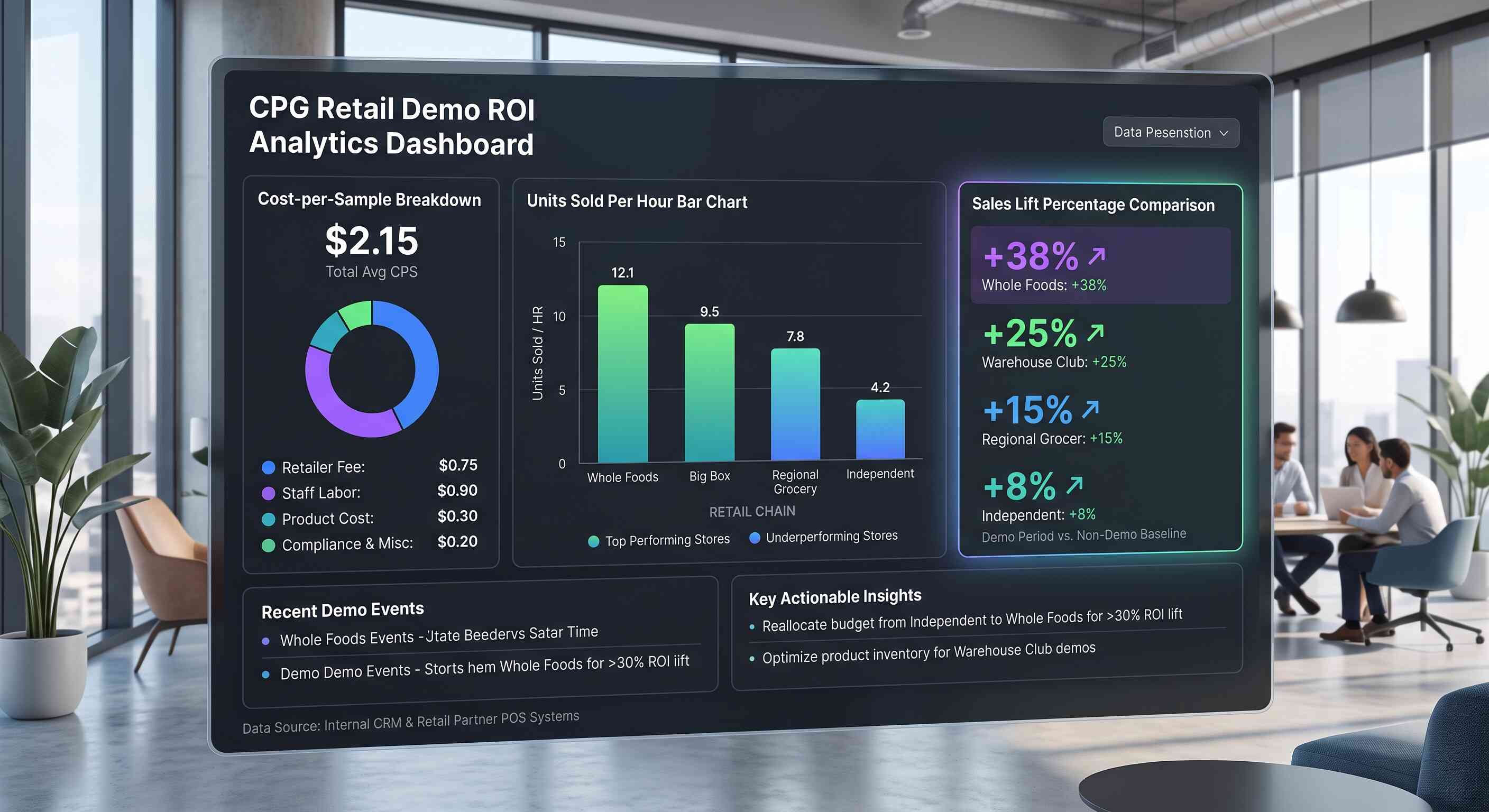
Retailer demo fees rarely cover the full cost of running a compliant, well-stocked activation, insurance, permits, product, and equipment typically sit outside the quoted fee. Brands that budget only for the line item on the retailer's rate card tend to get surprised mid-campaign when a second or third invoice arrives, or worse, when a scheduled event gets pulled entirely.
Four categories of cost show up after the initial fee is paid, and none of them are optional add-ons, they're conditions of entry.
General liability insurance certificates: Most retailers require a certificate of insurance before an ambassador sets foot in the store, and renewing or reissuing these documents across dozens of locations adds administrative cost.
Local health permits: Food and beverage sampling often requires a temporary event permit issued by the local health department, and requirements vary by county, not just by state.
Background checks: Retailers increasingly ask that ambassadors pass a background screening before working inside the store, a cost that scales with headcount.
Compliance audit fees: Some retail programs, like the merchandising oversight system Whole Foods introduced through a third-party retail strategy firm, bill suppliers directly for the administration of demo scheduling and compliance checks [2].
Retailers commonly require the brand to name the store as an "additional insured" on its policy, which is a separate line item from the base insurance premium and needs its own budget allocation. Skipping this step, or letting a certificate lapse mid-campaign, is one of the fastest ways to lose a scheduled slot, retailers will cancel a booked demo over an expired certificate or missing permit, and the fee already paid to secure that date is typically non-refundable.
Product cost is the other line item brands underestimate. Sample units, tables, warmers, coolers, and the shrink and waste that come with perishable inventory rarely appear in a retailer's fee quote, yet they're unavoidable in any real activation [1]. For food and beverage brands, this layered cost stack is proportionally heavier than for other categories, since health permits, temperature-controlled equipment, and perishable shrink stack on top of standard insurance and staffing costs. A brand running a shelf-stable snack demo faces a simpler compliance picture than one sampling refrigerated dairy or hot prepared food, where a single missed health inspection can shut down the entire event.
Retailer demo fees scale with foot traffic and vetting requirements, big-box and warehouse clubs charge the most, specialty grocers land in the middle, and small independents often waive fees entirely for trusted vendors.
Large national chains and warehouse clubs sit at the premium end of the spectrum. They can justify higher costs because they guarantee weekend foot traffic that a regional grocer simply can't match, and they often route demo access through a designated merchandising vendor rather than letting brands negotiate directly with store managers. Whole Foods took this approach in 2018 when it required suppliers doing more than $300,000 in annual sales to fund a centralized program managing demos, shelf resets, and displays through a third-party firm [2].
Natural and specialty grocers tend to land in the mid-range tier, but the fee often comes bundled with a brand-fit review, these retailers care whether a product matches their private-label standards or sourcing story before they'll grant demo access. Regional independents and single-location grocers are the most likely to waive fees altogether, especially for vendors who already deliver reliably and keep the aisle clean.
Category also shapes the fee structure. Food and beverage sampling usually falls under stricter health code requirements, temperature control, handwashing stations, allergen signage, which can add compliance costs on top of the base fee. Non-food demos, like a kitchen gadget or a skincare tool, skip most of that regulatory overhead, so retailers sometimes price them differently even within the same store.
Brands that want trial volume without retailer demo fees have a few paths outside the store entirely. Brand-owned pop-up events in parking lots or nearby public space avoid the fee structure altogether, as do farmers market and community activations, which build local goodwill while sidestepping retailer negotiations. A sampling-to-online-reorder campaign, handing out product with a QR code or discount tied to a direct reorder, extends the trial moment digitally without needing a second in-store slot.
Roadshow-style, multi-day activations carry higher upfront fees but often produce a lower cost per sample because volume spreads the fixed cost across thousands of interactions over three to ten days rather than a single afternoon. That reframes the fee comparison: the question isn't which format costs less per event, it's which format costs less per unit sampled, and coordinating that volume across many doors is exactly where a platform like Demo Wizard's scheduling and ROI tracking tools help brand teams see which stores justify the premium.
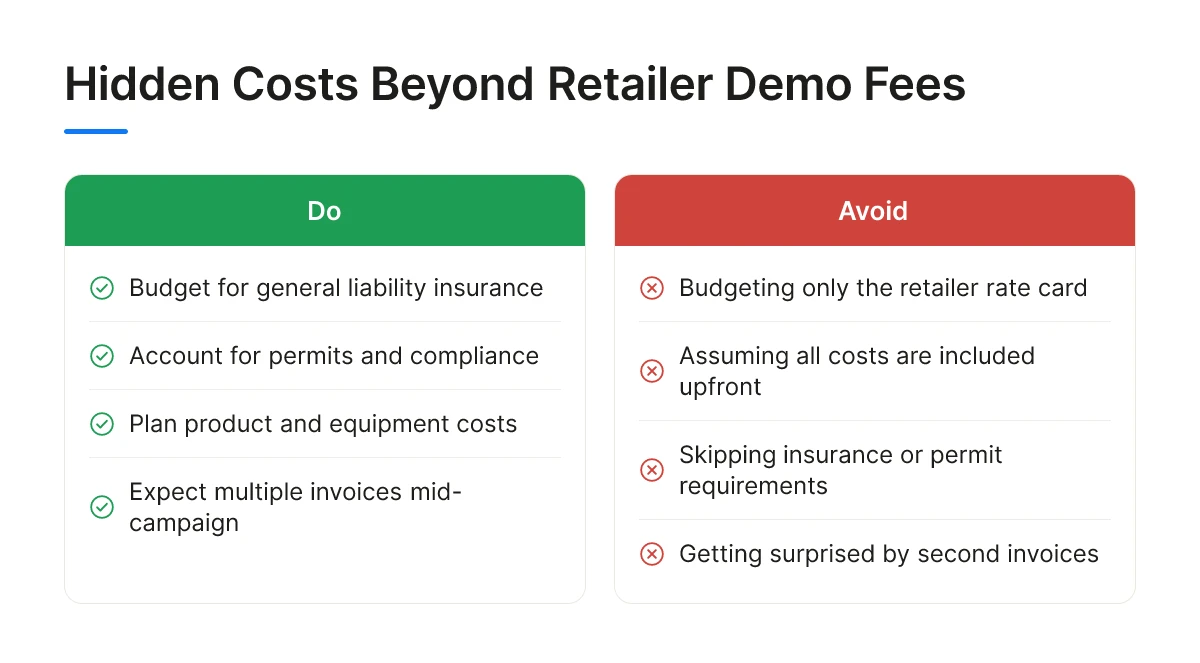
Brands calculate true ROI by dividing total program cost, retailer demo fees, labor, product, and compliance overhead, by the number of samples distributed or units sold during the demo window. Skip the retailer fee in that math and the resulting ROI figure overstates performance, sometimes badly, especially at retailers charging premium placement rates.
Cost-per-sample is the starting point, not the finish line. A demo that costs $4 per sample but drives strong repeat purchases can outperform one costing $2 per sample with no follow-through, so brands need a fuller metric set.
Units sold per hour: the clearest real-time signal of whether a demo is converting foot traffic, and the number that flags underperforming shifts or locations early.
Sales lift versus a non-demo baseline: comparing the demo period against normal sell-through at that store isolates the actual impact of the activation rather than crediting it for sales that would have happened anyway.
Repeat purchase signals: where loyalty programs or POS data allow it, tracking whether sampled shoppers return to buy again shows whether the demo built lasting demand or just moved one-time inventory.
Isolating the retailer fee as its own cost line, instead of folding it into a generic "event cost" bucket, matters because it lets brands compare ROI across retailers on equal footing. A brand running demos at three chains needs to see, retailer by retailer, whether the fee structure at one location is eating disproportionately into margin. That visibility is what determines where next quarter's activation budget goes.
Manual tracking across spreadsheets makes this kind of per-retailer, per-store comparison slow and error-prone, particularly for brands running dozens of events a month across multiple chains. Centralized platforms solve this by logging retailer demo fees, ambassador labor costs, and sales results against each scheduled event, so cost and performance data sit in one place instead of scattered across invoices and store reports.
Demo Wizard's ROI tracking and analytics feature was built for exactly this reconciliation problem, it ties experience-to-purchase conversion data to specific stores and time windows, letting a single coordinator see which locations justify their fees and which don't, without exporting spreadsheets from five different systems. Store-level performance segmentation makes it possible to spot, for instance, that a high-fee retailer is outperforming a low-fee one on repeat purchase signals, which changes where the next budget cycle should go.
Consistent, digital proof-of-performance also strengthens a brand's position when fee terms come up for renewal. Retailers that see clean, repeatable data on units sold, conversion lift, and sell-through are more likely to negotiate on fee structure or offer preferred placement than those receiving inconsistent manual reports.
No, fee practices vary widely by retailer, format, and even by region within the same chain. Some retailers waive fees for new-item launches or strategic vendors, while others, like Whole Foods, require suppliers above a revenue threshold to fund a third-party merchandising and demo management program instead of a flat per-event charge [2]. Always confirm current policy directly with your buyer or broker.
Yes, many brands fold demo fees into co-op or trade marketing budgets negotiated with distributors and retail partners. Trade spend typically covers promotions, slotting, and demo-related costs as part of a broader budget line, though brands need clean tracking to match each fee to the right agreement before deduction disputes arise [5].
Confirm and, where required, prepay fees at least three to four weeks before the scheduled demo date. Retailers and their merchandising partners often require signed approval and payment before they'll release a store's calendar slot, especially for larger chains with centralized demo scheduling.
Yes, a multi-day roadshow typically costs substantially more than a single sampling table because it requires dedicated footprint, multiple ambassador shifts, and extended inventory staging. A roadshow's "pop-up store within a store" format commands premium placement near entrances or checkout lanes, and retailers price that visibility and duration accordingly rather than charging a flat per-visit rate.
Brands often negotiate demo fees as if the retailer is a single entity with one fixed policy. In practice, the person deciding whether to waive, reduce, or hold firm on a fee is usually a category manager — and understanding what that person is actually optimizing for changes how the negotiation should be framed.
A category manager is measured on the performance of their entire category, not any single brand's campaign. When a brand asks for a fee waiver, the category manager isn't weighing "is this a nice brand to work with" — they're weighing a short list of concerns:
- Does this demo grow the category, or just shift share between brands already on the shelf? Velocity data that shows net-new category growth is far more persuasive than data showing the brand simply took share from a competitor during the demo window.
- Will this free up staff time or create friction for store employees? A brand that shows up with its own trained ambassadors, a confirmed schedule, and no day-of coordination burden on store staff is a much easier "yes" than one that requires the category manager to manage logistics.
- Is the data chain-wide or a single lucky store? One strong Saturday at one location reads as an anecdote. Velocity lift replicated across multiple stores in the chain is what justifies rolling back or waiving a fee at scale, because it de-risks the decision for the category manager across their whole territory, not just the store where the brand happened to get a good slot.
- Does this set a precedent they'll have to defend? Category managers are cautious about one-off exceptions that other brands will then expect. A brand that frames its ask as "here's reusable data that should inform category policy going forward" gives the category manager something they can defend internally, rather than a special favor that creates awkward asks from other vendors.
For CPG brands, the practical takeaway is to prepare the negotiation the way a category manager would evaluate it: lead with category-level impact and operational ease, not just the brand's own sales lift, and bring data from multiple stores rather than a single standout result. Brands that can consistently produce this kind of chain-wide, category-framed evidence put the category manager in a position to say yes without having to take on personal risk for it.
Retailer demo fees are not a fixed line item, they shift based on retailer policy, format, and negotiating use, so brands need to budget in ranges, not assumptions. Track every fee against its specific store agreement, confirm terms weeks ahead of the event date, and separate fee planning for single tables versus multi-day roadshows since the cost structures rarely match.
The bigger risk isn't the fee itself, it's running a poorly tracked demo that can't prove it earned that fee back. Before your next campaign, pull last quarter's demo data by store and time slot to identify which fee-paying locations actually converted, and cut the ones that didn't.
Explore more from our content library:
About the Author
Written by the SaaS / Retail Marketing Technology experts at Demo Wizard. Our team brings years of hands-on experience helping businesses with SaaS / Retail Marketing Technology, delivering practical guidance grounded in real-world results.
Demo Wizard is the Ultimate Store Sampling & Demonstration management software for Brick and Mortar Retailers and CPG Vendors.
Chat with usPhone