
Demo Wizard is the Ultimate Store Sampling & Demonstration management software for Brick and Mortar Retailers and CPG Vendors.
Chat with us

Phone
Copyright © 2026 Demo Wizard

Scaling in-store retail activation programs successfully relies on centralizing logistics—scheduling, inventory timing, compliance, and field reporting—into a shared operational system rather than managing fragmented store-by-store communications.
Understanding consumer activation strategies in physical retail is essential. CPG brands and retailers replacing phone, email, and spreadsheet handoffs with a shared operational system to coordinate in-store demos at scale: one calendar that gives brand teams, agencies, store managers, and brand ambassadors the same visibility into scheduling, compliance, and results. Consumer activation strategies in retail succeed when scheduling, staffing, and ROI reporting are centralized rather than negotiated store-by-store, since fragmented coordination is what causes no-shows, stockouts, and unmeasured campaigns. The brands that scale activations treat coordination infrastructure as seriously as the activation idea itself.
A single in-store demo works fine with a phone call and a handshake; a hundred demos across a hundred stores do not, because each one depends on four separate parties doing their part at the right moment. Consumer activation strategies for retail programs fail less often from a bad activation idea and more often from a missed handoff between the people who plan it and the people who execute it.
Each party in a demo event controls one piece of the chain, and the chain breaks wherever ownership is unclear. The brand ambassador runs the table and talks to shoppers, but has no control over whether the product actually arrived on the shelf that morning. Store staff manage the physical space and foot traffic patterns but are not trained on the brand's talking points or sales goals. The retailer sets the rules for where and when a demo can happen, often with little visibility into what the CPG brand's calendar looks like elsewhere. The distributor or broker sits between the brand and the store, responsible for inventory timing, and is frequently the last to know a date has shifted.
Handoffs fail at the seams between these roles: an ambassador shows up to a store that was never told to expect them, or a distributor delivers stock a day after the scheduled demo. One tool referenced in retail activation planning, T-ROC's guide, frames real activation as requiring human interaction, not just a display [1], but that human interaction only happens on schedule if the surrounding logistics hold together. Peekage's overview of retail activation makes a similar point: the strongest programs treat in-store execution as an operational discipline, not a one-off event [3].
The scheduling window, not the activation concept, is usually what breaks down first when a brand tries to scale past a handful of stores. A CPG brand's marketing calendar is built around product launches and promotional windows; a retailer's calendar is built around labor availability, aisle traffic, and competing vendor requests. Timing is one of the most consistently cited factors in demo performance across planning guides [2], and that timing has to satisfy both calendars at once, not just the brand's.
Coordinating that overlap by phone, email, and spreadsheet works for five stores and collapses at fifty, because no single party can see the full picture of what is approved, pending, or conflicting. A centralized calendar visible to the brand team, the agency, the store manager, and the ambassador removes that blind spot entirely. Demo Wizard builds this coordination into its scheduling system, so a store's approval rules and a brand's event calendar sit in the same place rather than in separate inboxes. This kind of shared visibility is a recurring theme across guidance on consumer activation strategies retail teams rely on when scaling past a single market.
Store employees should never be the default relay between vendors, distributors, and ambassadors, that role pulls them away from their actual job and introduces delay into every message. Retailers benefit most when demo activity is scheduled around their existing operational constraints, since activations that respect staffing and traffic patterns run smoother and create less friction for the store itself.
Prove a demo program works with sales velocity, basket size, and shift-level reporting, not ecommerce conversion rate, which doesn't apply to a sampling table.
"Conversion rate" assumes a measurable funnel: a visit, an add-to-cart, a checkout. A shopper walking past a sampling station doesn't leave that kind of trail. For consumer activation strategies retail teams actually use, the two brick-and-mortar equivalents are sales velocity (units sold per store per day or per hour) and average transaction value, or basket size. A demo that lifts velocity on the sampled SKU and nudges basket size upward because shoppers add a complementary item is doing its job, even though no single "conversion" moment was ever logged.
Compare the SKU's velocity on the demo day against its own baseline velocity at that same store during non-demo weeks. Retail environments run multiple promotions simultaneously, a price cut, an end-cap, a loyalty offer, so attributing a sales spike to the demo alone requires a same-store, same-SKU baseline rather than a national average. If a product typically sells eight units a day at a given store and sells thirty-one during a four-hour Saturday demo shift, that delta is a reasonable estimate of the activation's lift, assuming no other promotion launched that same weekend. Brands running roadshows, the multi-day, high-footprint events described earlier, should pull this comparison across the full event window, not just a single day, since weekend urgency tends to concentrate purchases toward the back half of the run.
Brand managers don't need a dashboard full of vanity numbers. They need three things from every shift: units moved, photo documentation confirming the display was compliant with the planned setup, and direct shopper feedback the ambassador captured in the moment, objections, favorite flavors, repeat-purchase intent. These three data points answer the question finance actually asks: did this activation earn its budget back.
Manual recap spreadsheets delay that answer by days or weeks, which is long enough for a brand to miss the window to adjust staffing or store selection before the next cycle. A real-time dashboard that aggregates shift reports as ambassadors submit them shortens that loop from "next month's review" to "Monday morning." Demo Wizard's reporting is built for that gap, it surfaces units moved, compliance photos, and shopper notes by store and time period so a coordinator can see which locations are worth repeating before the next campaign is scheduled [1].
Worth noting: this kind of platform coordinates and recaps activations, it doesn't pull live data from a retailer's point-of-sale system, unless the retailer provides API access. Sales figures still come from the retailer or a distributor's own reporting; the activation platform's job is to schedule the event, confirm it happened as planned, and package the field-level results so that POS or syndicated data can be layered in separately when brands want to confirm the velocity lift against register receipts.
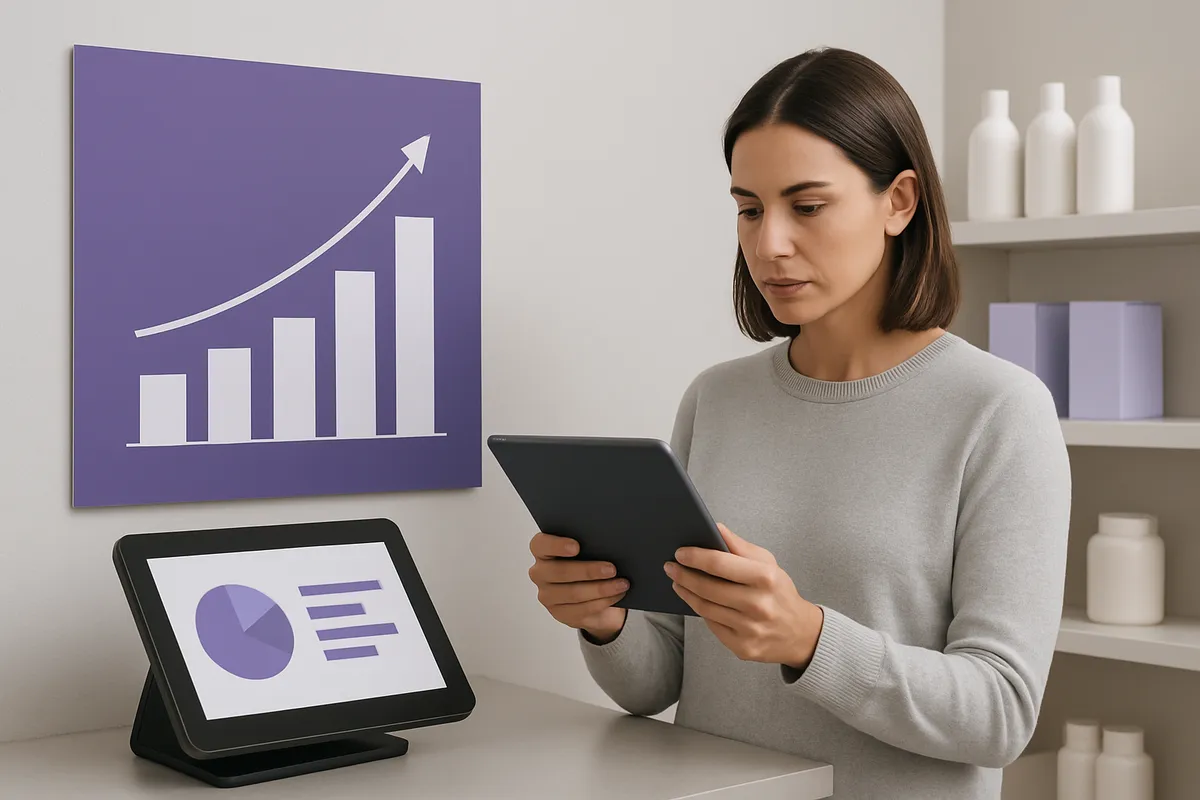
Multi-location activation budgets stack in layers: what the retailer charges to host the demo, what the brand pays its own labor and agency partners, and what it costs to coordinate the whole program. Any sound approach to consumer activation strategies retail teams build out has to treat these as three separate line items, not one blended number.
The retailer layer varies sharply by channel. Club stores and mass retailers that mandate an exclusive in-house or preferred agency sit at the premium end of the spectrum, brands pay a turnkey fee that bundles labor, management, and floor access into one charge. Regional grocery chains tend to land mid-range, charging a slotting or administrative fee to reserve table space while letting the brand supply its own staff or agency. Independent and natural grocers are frequently fee-free at the retailer level, since store owners view sampling as a traffic driver rather than a revenue line. Brand-side costs, ambassador pay, agency overhead, product given away as samples, layer on top of whatever the retailer charges, and that combination is what determines whether a given store visit is budget-friendly or premium.
Start small and let real numbers replace assumptions before committing to a national rollout. A pilot of 10 to 20 stores across one or two regional chains gives a brand enough data to validate labor cost per shift, sell-through uplift, and retailer fee structure before layering in additional markets.
Once the pilot confirms which store types and dayparts actually move product, a pattern in-store brand activation programs consistently rely on to justify broader spend [1], the brand can model national cost by multiplying validated per-store economics rather than guessing. Attack! Marketing's research notes that sampled products often outsell non-sampled items by more than 40%, which makes the pilot's uplift data the single most valuable input for a scaled budget [2]. Tecna's guide to retail activation outlines a comparable staged approach, where early pilot data informs how budget scales across regions rather than being spread evenly from day one [4].
Coordination itself carries a cost that rarely shows up on a budget spreadsheet until it's too late. Manually scheduling ambassadors, chasing store managers for confirmations, and reconciling who actually showed up takes hours per week at 20 stores and becomes close to unmanageable at 200, the time cost scales non-linearly, not in step with store count. This is where software coordination fees matter: a platform like Demo Wizard charges on a per-demo basis, and that cost sits entirely separate from whatever gatekeeper or slotting fee a given retailer charges. One coordinator using Demo Wizard can manage hundreds of monthly events without adding headcount, which keeps the hidden coordination layer from eating the budget gains a successful pilot promised.
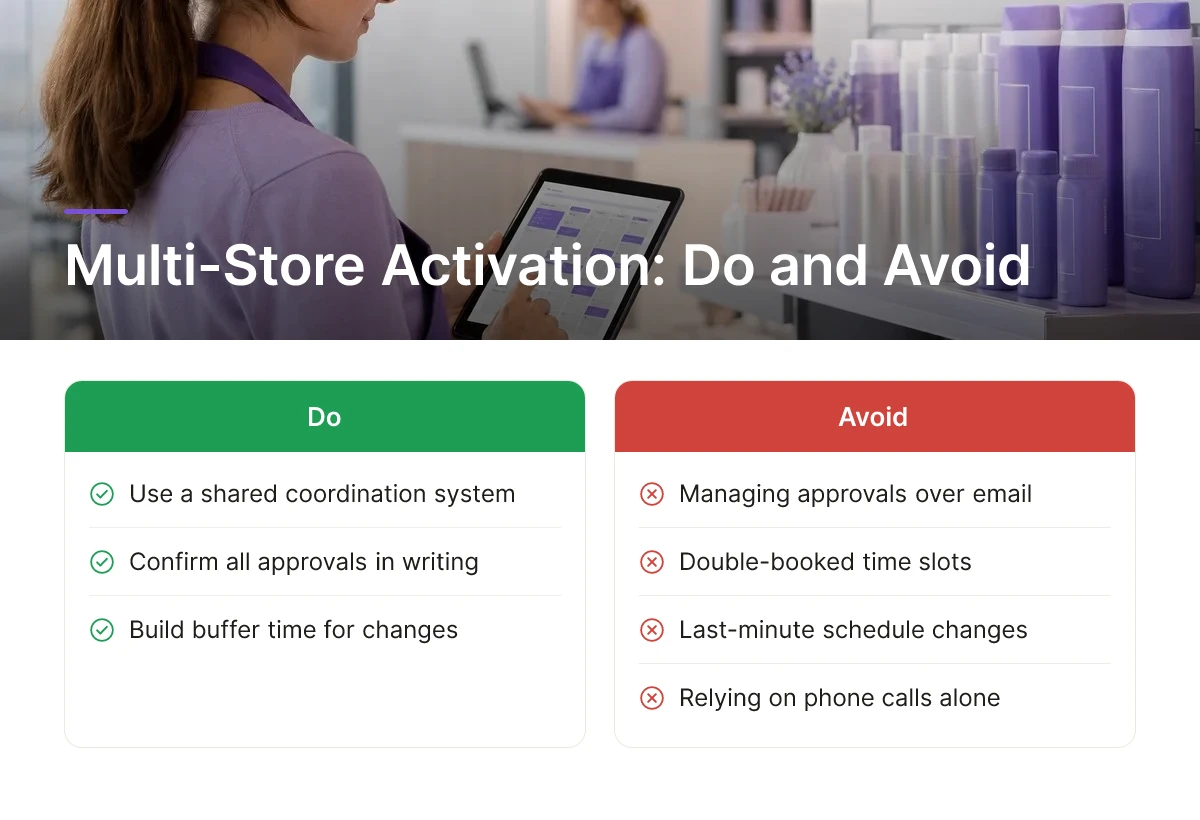
Most multi-store activation failures trace back to three things: scheduling conflicts, inventory timing, and no-shows, all made worse when coordination runs through email and phone calls instead of a shared system.
Double-booked time slots are the most common failure point. When a brand runs 40 demos across 15 stores in a month and manages approvals over email, a single missed reply, a store manager who never confirmed, or a supervisor who approved one date but not the updated one, cascades into a wasted shift. Last-minute schedule changes compound the problem: an ambassador reschedules for Tuesday, but the store only has record of the original Thursday booking, so nobody preps the floor space. Each additional store multiplies the number of email threads that can break down, which is why agencies managing dozens of monthly activations often find coordination overhead growing faster than campaign volume.
Inventory misalignment is the second recurring failure. Product scheduling and demo scheduling are often managed by different teams on different timelines, so an ambassador shows up to a store with no product on the shelf, or runs out of samples three hours into a six-hour shift. Both outcomes waste labor cost and damage the retailer relationship, since the store absorbs the shopper-facing disruption while the brand doesn't see the problem until the recap comes back. Tying demo scheduling to delivery windows, even a basic shared calendar, closes most of this gap.
No-shows are the third major cost. Brands that rely on a manual phone call the night before an event see higher cancellation rates than those using automated confirmation workflows, reminders sent 48 hours and 24 hours out, with a check-in required at arrival. The automation doesn't replace the ambassador relationship; it just removes the chance that a reminder gets forgotten in a busy coordinator's queue. This is one of the clearer operational wins available to teams building consumer activation strategies retail programs depend on for consistent execution.
Scale in stages: pilot in a small, controlled store set, standardize the recap and reporting process, then expand store count only once the workflow holds up without added headcount.
Pilot in 5-10 stores. Use this phase to surface scheduling conflicts and supply timing issues before they affect a national footprint.
Standardize the recap process. Lock in one reporting format, units sold, photos, shopper feedback, so every store and every ambassador reports the same way.
Expand in controlled increments. Add store count in batches of 20-30 once the pilot's scheduling and confirmation workflow runs without manual intervention.
Poor coordination has a cost the retailer absorbs, too. Store managers end up fielding vendor disputes, confirming schedules a brand should have already confirmed, and untangling who approved what, time that a shared, visible calendar would eliminate entirely. Platforms like Demo Wizard address this directly: multi-location scheduling, automated ambassador confirmations, and performance reporting by store and time period replace the email-chain approach that breaks down past a handful of locations.
A coordination platform needs four workflow layers working together: scheduling, compliance verification, ambassador management, and recap collection, each removing a manual task that used to require a phone call or spreadsheet update.
Most CPG brand teams planning consumer activation strategies retail-wide run into the same wall: the technology that works for five demos a month breaks down at fifty. Spreadsheets and email chains can't hold up when a coordinator is juggling multiple retail chains, dozens of ambassadors, and store managers who each want updates in a different format. The fix isn't more staff, it's a system that handles the repetitive parts automatically. A guide to in-store demos from Attack! Marketing makes a related point: scale only becomes manageable once the operational workflow, not just the sales pitch, is standardized [2].
Automated scheduling and confirmation workflows cut out the back-and-forth calls and emails between brand teams, agencies, and store staff that used to eat up a coordinator's week. Instead of a brand rep calling a store manager to confirm a Saturday slot, then calling the ambassador to confirm availability, then following up again the day before, the platform sends confirmations automatically and flags conflicts before they become no-shows. Demo Wizard builds this into its scheduling layer specifically so one coordinator can confirm events across hundreds of stores without chasing signatures or voicemails.
Compliance checks follow the same logic. Check-in and check-out timestamps, photo capture at setup, and shift confirmations happen through the ambassador's phone rather than through a store employee manually verifying that a vendor showed up and left the space clean. That shift matters more than it sounds, it means store staff can focus on their own jobs instead of babysitting vendor logistics.
Retailers need one shared calendar that shows every demo scheduled across every location, so store staff never have to manually track which vendor is coming in on which day. Without that visibility, stores end up with double-booked floor space or surprise vendor arrivals that nobody on-site anticipated. A centralized calendar solves this by giving both the retailer and the brand's coordinator the same real-time view, which also supports the kind of standardized execution that T-ROC identifies as a requirement for scaling activation across a national footprint [1].
Centralizing ambassador assignment and recap collection is what actually lets a single coordinator manage a growing event count without adding headcount, a scheduling layer assigns the nearest available ambassador, and recap forms route straight into one dashboard instead of a dozen inboxes.
Worth clarifying: this kind of platform coordinates people, schedules, and recap data. It does not message or track individual shoppers, that work stays with the ambassador in the aisle, not the software behind the scenes.
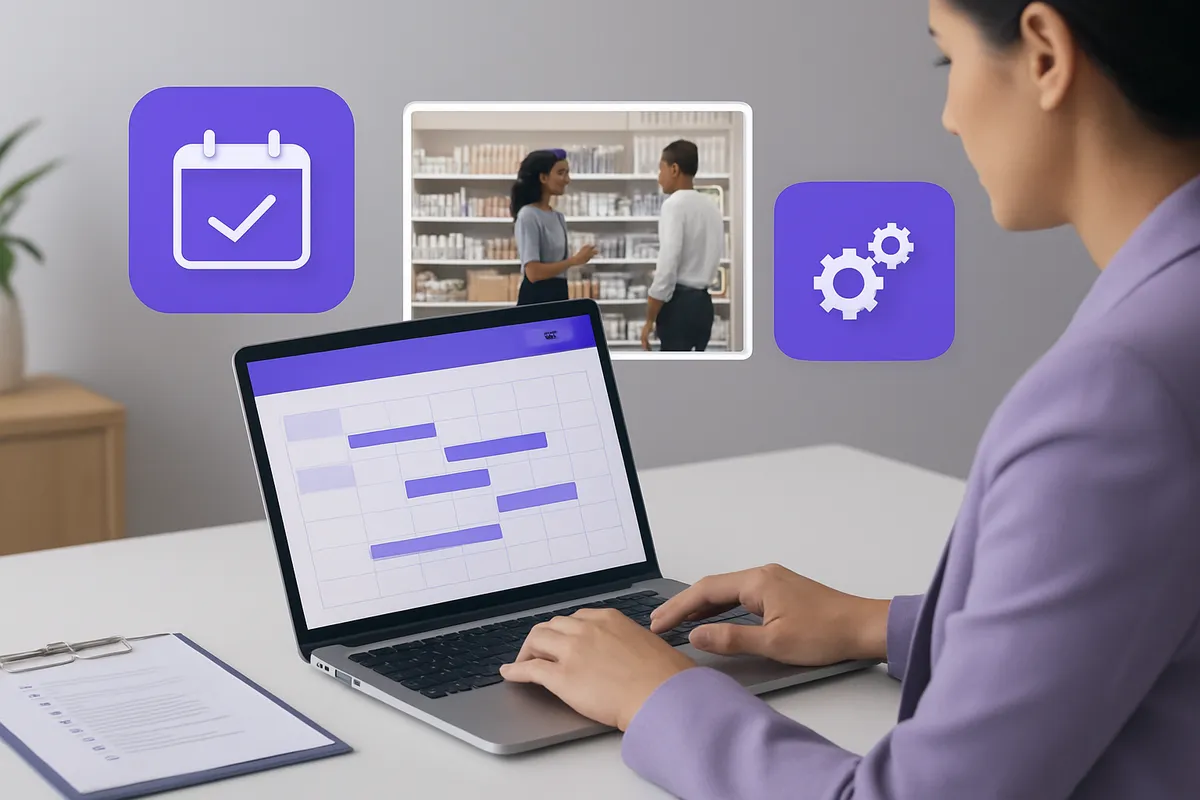
Responsibility usually splits three ways, but one party has to own the schedule or activations fall apart. The CPG brand sets budget and goals, the retailer controls floor space and compliance rules, and either an in-house coordinator or a demo agency handles ambassador staffing and day-of execution. Clarifying who owns scheduling before launch prevents no-shows and double-booked slots.
Compare unit sales velocity at the demo store against a similar control store that didn't run an activation during the same window. Track the comparison over a few days before and after, not just the event itself, since some lift carries into the following week. Pair that with ambassador-reported shopper counts and feedback to separate a strong location from a strong product moment. In-store demos often outsell non-sampled products by a wide margin [2], which makes even a rough before-after comparison worth running.
No, independent and natural grocers often charge nothing to host a demo, while big-box and club chains can charge turnkey fees per shift. Regional supermarket chains tend to fall in between, charging a smaller slotting or scheduling fee while letting the brand bring its own staff. Budgeting for demos means checking each retailer's model separately rather than assuming one fee structure nationwide.
Most brands pilot in 10 to 25 stores across two or three regions before expanding further. That range is large enough to compare store formats and day-parts but small enough for one coordinator to manage manually and catch scheduling or staffing problems before they multiply at national scale.
Most failures trace back to coordination, not creativity, a great sampling concept still falls apart if scheduling, inventory timing, or ambassador confirmations aren't handled reliably. Brands that treat consumer activation strategies retail execution as an operational system, with shared calendars and standardized recaps, consistently outperform those that rely on ad hoc phone and email coordination across stores.
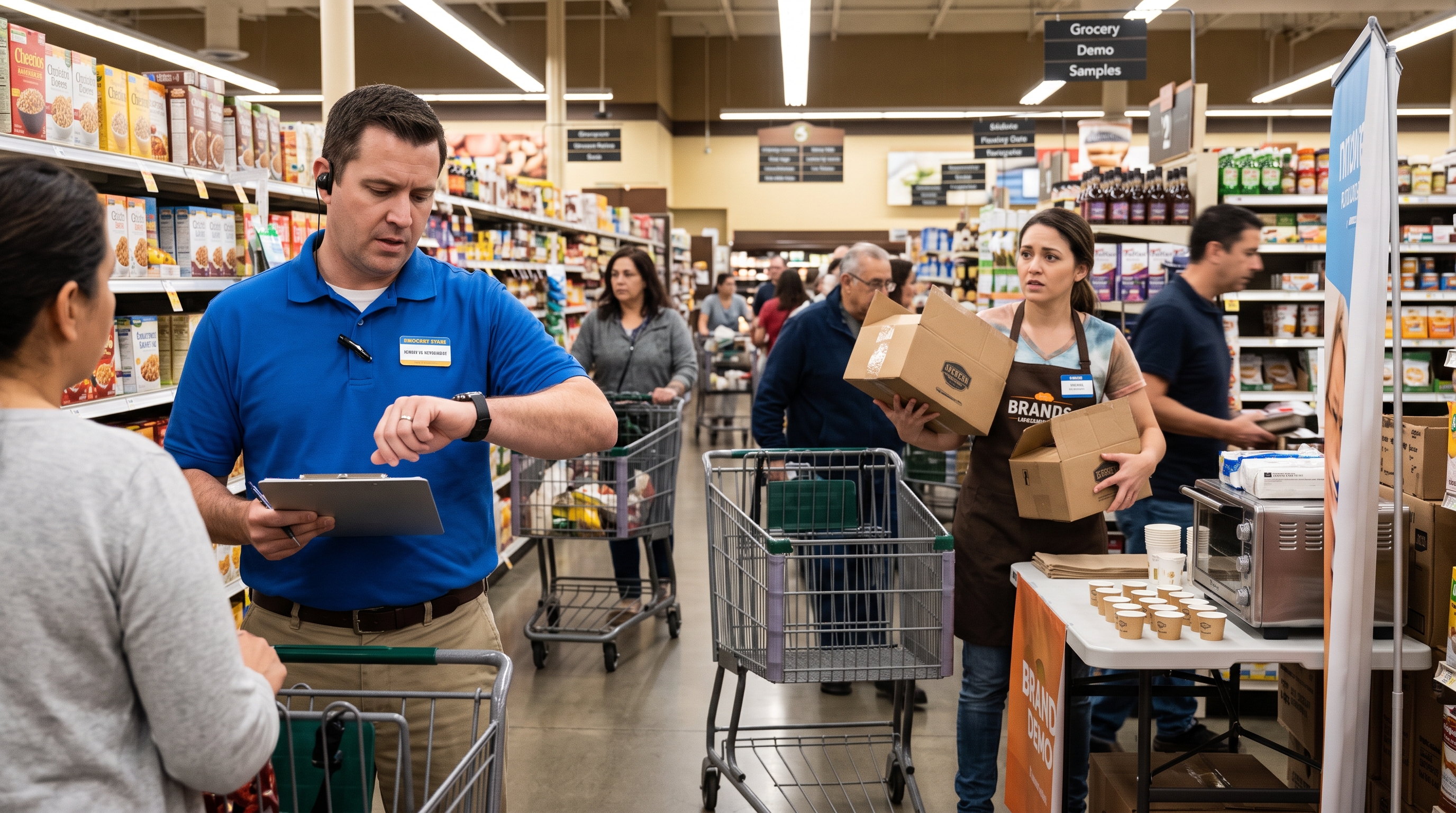
Scaling in-store demos comes down to three things: knowing who owns the schedule, measuring sales velocity against a real control rather than gut feel, and piloting small enough to catch problems before they multiply across hundreds of stores. Retailer fee structures vary widely, so budget per channel, not per blanket assumption. As monthly event counts climb past what one spreadsheet can track, the coordination work itself becomes the bottleneck. Start by auditing how many hours your team currently spends on scheduling and payroll for a single month of demos, that number usually makes the case for automating the next phase on its own.
Explore more from our content library:
About the Author
Written by the SaaS / Retail Marketing Technology experts at Demo Wizard. Our team brings years of hands-on experience helping businesses with SaaS / Retail Marketing Technology, delivering practical guidance grounded in real-world results.strategies and
Demo Wizard is the Ultimate Store Sampling & Demonstration management software for Brick and Mortar Retailers and CPG Vendors.
Chat with usPhone